Better for dry skin?
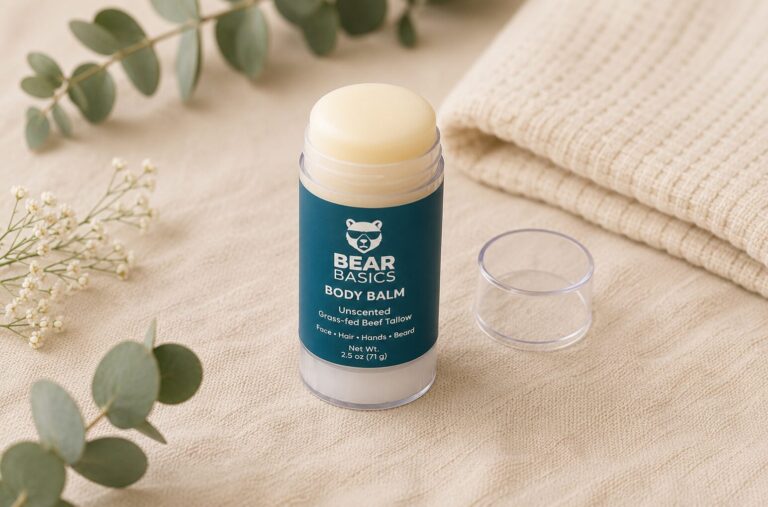
Tallow — richer and cushioning.

The honest answer: neither wins outright — it depends on your skin and your season. Tallow is the rich, cushioning base; coconut oil is the light, fast one. This guide shows you exactly when to reach for each, and why most people end up using both.

Beef tallow is better for dry, mature, or barrier-stressed skin; coconut oil is better for lighter routines, oily skin, and humid weather. Tallow's fatty-acid profile is close to skin's own, so it cushions and seals moisture without feeling like a coating. Coconut oil is lighter and absorbs faster, but it rates higher on the comedogenic scale, so acne-prone skin often prefers tallow or a blend. Most people don't have to choose — tallow in winter, coconut in summer.
If you're standing in the aisle (or the checkout) and just need a decision, here it is. Reach for beef tallow if your skin runs dry, mature, or easily chapped, or if it's cold and dry where you live. Reach for coconut oil if your skin is normal-to-oily, you want something that absorbs fast and feels light, or it's warm and humid out. If you're genuinely torn, a tallow-coconut blend splits the difference and suits most people.
Everything below is the why behind that answer — the skin science, the pore-clogging question, the feel, the sourcing, the cost, and the specific situations (face, babies, men, weather) where one clearly beats the other. Skim the table of contents and jump to whatever you care about.
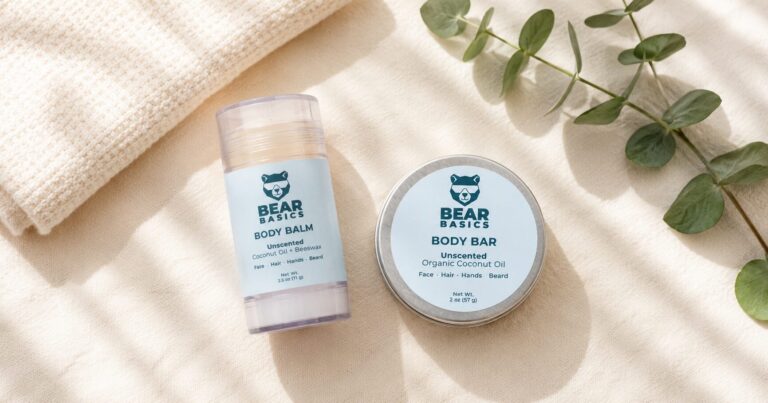
Both are single-ingredient fats with short, honest labels — which is exactly why we build with them at Bear Basics. But they come from very different places.
If you want the deeper sourcing story on the animal fat, see our guide to what "grass-fed" really means on a tallow label.
The headline difference is biological. Beef tallow is an animal fat whose fatty-acid makeup sits remarkably close to human sebum — the oil your own skin produces. Coconut oil is a plant fat with a different profile and a lighter, faster-melting texture.
A fat is called "biocompatible" when its makeup resembles skin's own sebum. Tallow is frequently described this way, which is part of why it tends to absorb and cushion rather than sit on top of the skin as a film.
That single difference cascades into almost everything else: how each one feels, how fast it sinks in, who it suits, and how it behaves on acne-prone skin. Keep it in mind as you read the rest.
This is where the choice usually gets made. Here's the clean split:
The simplest way to choose: reach for tallow when the air is cold and dry, coconut when it's warm and humid. Your skin's needs shift with the weather — your base can shift too.
For a full daily routine built around dry skin, see our everyday routine for naturally dry skin.
This is the single biggest deciding factor for anyone acne-prone, so it's worth getting right — and worth explaining, because the numbers look more official than they are.
It's a 0–5 score for how likely an ingredient is to clog pores (0 = won't, 5 = very likely). The catch: the scores come from old lab tests on the pure ingredient — not the finished product — and no official body governs them. Treat them as a rough guide, not a verdict. Full breakdown in Comedogenic Ratings: Do They Actually Matter?
With that context: coconut oil is commonly rated around 4 out of 5, which is why some acne-prone people find it congests their face. Tallow isn't on the classic plant-oil charts at all — animal fats generally aren't — but it's widely considered low-comedogenic because of how closely it resembles skin's own oils. Practical takeaway: if you break out easily, start with tallow or a blend, patch-test, and keep coconut below the neck if you use it at all.
Feel is subjective, but the pattern is consistent. Coconut oil melts fast at skin temperature and absorbs quickly, so it feels light going on and disappears sooner. Tallow is firmer and more cushioning — a little goes a long way, and it lingers as a soft, protective layer.
| Everyday feel | Beef Tallow | Coconut Oil |
|---|---|---|
| On application | Rich, buttery | Light, slippery |
| Absorption speed | Slower, cushioning | Fast |
| After-feel | Soft, protected | Fresh, barely-there |
| How much you need | A little | A little more |
| Best moment | Nighttime, deep dry | Morning, quick |
For cracked heels and rough elbows after a long day outside, that lingering tallow feel is the point. For a quick morning swipe before you're out the door, coconut's speed wins.
Here's a useful mental model: think of coconut oil as a light drink of water for the skin and tallow as a warm blanket over it. One refreshes and is gone; the other stays and protects. Neither is objectively better — they're answering different requests. If your skin feels tight and papery, it's asking for the blanket. If it just feels a little thirsty on a warm day, the drink of water is plenty.
Two practical points people forget until the jar's on the shelf:
Keep either one cool and out of direct sun. Coconut oil will melt to liquid above about 76°F and re-solidify below it — totally normal, and it doesn't hurt the oil.
Tallow stays semi-solid across a much wider range, which is part of why it travels well and holds its balm form in a bag or pocket. If you like a product that behaves the same in July and January, tallow has the edge. If you don't mind an oil that shifts between solid and liquid with the room temperature, coconut is easy to live with — just give a melted jar a stir before it re-hardens so it sets evenly.
Not all tallow or coconut oil is equal, and the label is where you find out.
In both cases, a short, honest label tells you most of what you need to know. If you can't tell what's in it, that's your answer. Not sure how to read one? Start with how to read a skincare ingredient label.
A quick sourcing gut-check for each: for tallow, look for the words "grass-fed" and as few other words as possible. For coconut oil, look for "cold-pressed" and "food-grade" or "virgin," and be wary of anything padded out with fragrance or fillers it doesn't need. In both categories, the best products tend to have the shortest labels — a good sign a maker trusted the ingredient to do the work on its own.
Sticker price and cost-per-use aren't the same thing, and this trips people up. Coconut oil is cheap by the tub, but you tend to reapply more often. Tallow costs more up front, but its density means a pea-sized amount covers a lot — so a jar lasts.
The honest framing: think in weeks of use, not price per ounce. A jar that costs more but lasts three times as long — and that you reach for less often because it lingers — can quietly be the cheaper choice over a season. Run the math on how often you actually reapply each one; that number usually settles the value question faster than the price tag does.
Faces are where the comedogenic question matters most. Dry or mature faces often love tallow — it cushions and doesn't strip. Oily or acne-prone faces are where you slow down: many people do better keeping coconut off the face entirely, or using just a whisper of it, and relying on tallow or a blend where congestion is a concern.
Facial skin is more reactive than body skin. Whichever base you try, patch-test a small area for a couple of days before going all-in, and stop if you notice congestion or irritation.
A practical routine for the face: use the smallest amount that works — often less than a grain of rice for a balm. More product doesn't mean more moisture; it just means more sitting on the surface. Warm it between clean fingertips first so it spreads in a thin, even layer, and apply to slightly damp skin so you're sealing in water that's already there. If you're acne-prone and want the barrier benefit without the coconut risk, this is exactly where a tallow-forward blend earns its place.
Both are gentle, single-ingredient options that families choose when they want fewer unknowns on delicate skin. That said, every baby is different.
For sensitive adult skin, the same logic applies: fewer ingredients means fewer things that can react. A single clean fat is often the calmest choice you can make.
Hard-working, weather-exposed skin tends to love tallow's staying power — hands, knuckles, and beard-adjacent dry patches especially. Coconut is the lighter grab for a fresh post-shower feel. Neither is fussy, and both skip the long ingredient lists most guys would rather not think about.
The appeal for a lot of guys is that both are genuinely low-effort. There's no routine to memorize and no ten-step regimen — one jar handles hands, face, beard, and heels. If you've avoided "skincare" because it felt fussy or over-marketed, a single honest fat is about as un-fussy as it gets. Keep tallow by the sink for winter and a small coconut oil in the gym bag, and you've basically covered it.
Here's the move most people land on eventually: don't pick a side — blend. Tallow brings the cushioned, barrier-like feel while coconut lightens the texture and speeds absorption. If tallow alone feels too rich or coconut alone feels too light, a blend usually lands right in the middle.
Many people like roughly two parts tallow to one part coconut for a rich-but-not-heavy balm. Adjust from there: more coconut for a lighter summer feel, more tallow for deep winter dryness.
Blending is also how you get the best of both comedogenic-wise — the coconut is diluted, and the tallow does most of the barrier work.
If you want to experiment at home, start small and keep notes. Melt the two together gently, let the blend set, and try it for a week before adjusting. Skin gives clear feedback: too greasy and slow to sink in means add coconut; still tight and thirsty by midday means add tallow. Within a jar or two you'll dial in a ratio that fits your skin and your climate — and that personal blend is often better than anything a chart could tell you.
We build with both bases on purpose. Tallow anchors our richer balms for dry, hard-working skin; coconut oil keeps lighter formulas fresh and fast-absorbing. It's the same idea behind everything we make: a short list of food-grade ingredients, matched to the job.
Browse the beef tallow line or the coconut oil line to feel the difference yourself — or grab a lip balm in each, which is the cheapest way to run your own side-by-side test.
Ian founded Bear Basics on one idea: personal care built from a short list of food-grade ingredients we all recognize. Everything is small-batch and made in Colorado. Read the full story →