Spend $50, Get 10% Off

Chapped lips keep coming back because most people treat the symptom, not the cause. Here's how to break the cycle — stop the triggers, seal with the right balm, and keep them soft.

To fix chapped lips for good, treat the cause — not just the surface. Stop the triggers (licking, harsh or fragranced balms, wind and sun), seal and soothe with a simple occlusive balm free of menthol, camphor, and fragrance, stay hydrated, and address mouth-breathing if it applies. Chapped lips keep returning when you only cover them; remove what's causing the dryness and the right balm can finally keep them comfortable. Persistent or cracked lips warrant a doctor.
To fix chapped lips, it helps to understand why they're so prone to it in the first place — because lips are genuinely different from the rest of your skin.
Lip skin is very thin and, crucially, has no oil glands of its own. The rest of your skin makes oils that protect it and lock in moisture; your lips can't. That's why they dry out fast, chap easily, and need help holding onto moisture from the outside.
Add the everyday assaults — dry air, wind, sun, cold, dehydration — and lips lose moisture faster than they can cope with. The result is the tight, flaky, cracked feeling you know too well. None of this means your lips are broken; it means they're structurally vulnerable and need protection you provide, consistently.
This structural point reframes the whole problem. You're not fighting a flaw in your lips or a failure of willpower — you're compensating for the fact that lips simply can't self-moisturize the way cheeks and hands can. Once you accept that lips will always need a bit of outside help, the goal shifts from 'why won't they just heal and stay healed on their own?' to 'what's the smallest, simplest routine that keeps them protected?' That second question actually has a good answer, which is what the rest of this guide is about.
Here's the mistake almost everyone makes: reaching for balm the second lips feel dry, over and over, without ever asking why they keep drying out. That's treating the symptom while the cause runs free.
If you're licking your lips all day, or using a balm that quietly irritates them, or facing constant wind and sun, no amount of reapplication fixes it — you're bailing water without plugging the leak. "Fixing chapped lips for good" means doing two things together: sealing and soothing the lips and removing whatever keeps drying them out. Do only the first and you'll be buying balm forever. This whole guide is built around doing both.
It's a bit like a scab you keep knocking off: the body is perfectly capable of recovering, but only if you stop re-injuring the spot. Chapped lips are the same. Give them a stable, protected environment for a few days — no licking, no irritants, a good seal — and they bounce back remarkably fast. Keep interrupting that with the very habits that caused the problem, and you can apply balm ten times a day and never get ahead. The order matters: remove the harm first, then protect.
This one surprises people: the balm you're using to help might be part of the problem.
Balms with menthol, camphor, phenol, strong fragrance, or flavor can irritate already-sensitive lips for some people. They create a cooling or tingling sensation that feels active, but that tingle can be mild irritation — which keeps lips inflamed and needing more balm, in a frustrating loop.
The tingle-y, minty, flavored balms are often the worst offenders precisely because they feel like they're "doing something." What lips actually want when chapped is the opposite: something simple, soothing, and boring — a plain occlusive balm with nothing to react to. If your lips get worse the more balm you apply, look hard at what's in the balm.
A simple test: read the label of whatever you're using right now. If you see menthol, camphor, phenol, salicylic acid, 'flavor,' or a fragrance near the top, that's a strong candidate for why your lips won't settle. It doesn't mean the product is bad or that everyone reacts — plenty of people use tingly balms fine — but if yours are stubbornly chapped, the tingle is exactly the wrong thing to be feeling. Swap to something you feel nothing from, and see how the next week goes.
You've probably heard that lip balm is "addictive." Let's be honest about what's really going on, because the truth is more useful than the myth.
There's no true chemical addiction to lip balm. What people experience as dependence is usually one of two things: an irritating ingredient (see above) that keeps lips inflamed so they always feel like they need relief, or simply never addressing the underlying cause, so lips never fully recover and always feel dry. In both cases it's not that balm hooked you — it's that the wrong balm or the unfixed cause kept the cycle going.
Switch to a simple, non-irritating balm and fix the triggers, and the "can't stop using it" feeling tends to fade — because your lips finally get to recover instead of being kept in a loop.
This is the step people skip, and it's the most important. Before any balm can work "for good," remove what's drying your lips:
If you do nothing else, break the lip-licking habit. It's the single most common reason chapped lips won't heal, and it quietly sabotages every balm you own.
Now the balm — but the right kind. What chapped lips want is a simple occlusive balm that seals in moisture and soothes, with nothing irritating in it.
Look for beeswax and skin-friendly oils or butters — ingredients that form a soft, protective seal so lips can hold their moisture and stay comfortable. Apply it generously and often while lips recover, especially before bed and before going outside. This is where a short-ingredient balm shines: there's simply nothing in it to react to, so it can protect and soothe without feeding the cycle.
Before bed (lips recover overnight), before heading into wind or cold, and after eating or drinking (which wipes balm away). Consistency in those windows does most of the work.
Lips take a beating from the elements, and protecting them from wind, cold, and sun is part of fixing them for good.
Wind and cold strip moisture fast — a good occlusive balm acts as a barrier, so reapply before you go out in rough weather. Sun matters too: lips can burn, and sun exposure contributes to dryness and damage over time. In strong sun, keeping lips shaded and covered helps. Living somewhere dry and high like Colorado, this protection isn't optional — the air itself is a constant trigger, and a barrier balm is your everyday defense. High altitude adds stronger sun and lower humidity on top of the wind, which is why so many people notice their lips get dramatically worse after moving somewhere dry or spending a day on the slopes. If that's your environment, treat lip protection as a daily habit like sunscreen, not a reaction to trouble.
Two easy-to-miss factors round out the fix: hydration and how you breathe.
Lips worst in the morning? Suspect mouth-breathing and dry overnight air. A generous bedtime balm and a bedroom humidifier can make a real difference.
Here's roughly how it goes once you're doing it right:
The reason it works "for good" is that you've fixed the cause, not just reapplied over it. Slip back into lip-licking or a tingly balm, though, and the cycle returns — so the habits are the real cure.
Choosing the right balm is simple once you know what matters:
| Look for | Avoid |
|---|---|
| Beeswax (a protective seal) | Menthol, camphor, phenol |
| Skin-friendly oils/butters | Strong fragrance or flavor |
| A short, recognizable list | Long lists of unknowns |
| Occlusive, sealing texture | Tingle/cooling effects |
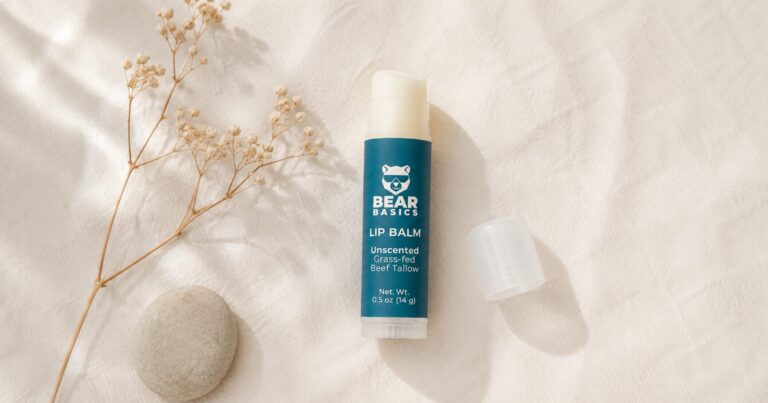
In short: simple, occlusive, and unfragranced beats "active" and tingly every time for chapped lips. Our lip balms are built to exactly this spec — a short list, a proper seal, nothing to react to.
One more practical note on texture: a firmer, waxier balm tends to seal and last longer than a soft, glossy one, which is exactly what you want overnight and outdoors. Glosses and thin, oily balms feel nice but wear off fast and don't hold a barrier as well. For fixing chapped lips specifically, lean toward the sturdier, beeswax-forward balms and save the light stuff for when your lips are already healthy and you just want a little shine.
A quick list of the counterproductive habits to drop:
Most "my lips never get better" stories are hiding in the left column. Move to the right, and things change.
Ordinary chapped lips respond well to the steps above. But some lip problems need a professional, not more balm.
This guide is about everyday chapped lips — cosmetic dryness, not a medical condition. If yours seem like more than that, trust that instinct and check with a professional. There's no prize for toughing out a lip problem that a five-minute appointment could sort out, and persistent cracking in particular is worth ruling out properly rather than treating with balm after balm that isn't the right tool for it.
Once your lips are comfortable again, keeping them that way is genuinely easy — the hard part was breaking the cycle. Maintenance is just the good habits, kept up:
That's the whole maintenance routine. Do it and chapped lips stop being a recurring problem and become a rare, easily-handled one. That's what "for good" really means.
Chapped lips keep coming back when you only cover them. Fix them for good by treating the cause: stop the triggers (especially lip-licking and irritating balms), seal and soothe with a simple occlusive balm, protect from wind and sun, hydrate, and mind mouth-breathing. Do those together and lips recover in days and stay soft — no forever-cycle of reapplication.
Choose a balm that's simple, occlusive, and unfragranced, keep the good habits, and see a doctor for anything persistent or cracked. That's the honest path to lips that stay comfortable. Start with our short-ingredient lip balms, built for exactly this job.
Ian founded Bear Basics on one idea: personal care built from a short list of food-grade ingredients we all recognize. Everything is small-batch and made in Colorado. Read the full story →