Spend $50, Get 10% Off

A calm, realistic month-long plan — no purge, no panic, no big spend. Take stock, swap the daily leave-ons, go fragrance-free, and declutter, one week at a time.

Simplify your routine in phases over 30 days: Week 1, take stock and read your labels; Week 2, swap the daily leave-ons (deodorant, moisturizer); Week 3, simplify lips and cleanser and go fragrance-free; Week 4, declutter and settle in. Swap as products run out rather than purging — it's gentler on your budget and your skin. This is about simpler, fragrance-free, recognizable products as a preference and an upgrade, not a panic about conventional ones, which are regulated and generally safe.
Let's be realistic about what "simplify your routine in 30 days" actually means, so you're not set up to fail. It does not mean throwing out everything you own and rebuilding from scratch this weekend. It means: in one month, you'll have audited your products, started swapping the ones that matter most, adopted a couple of simple habits, and settled into a shorter, calmer routine.
Some swaps will finish naturally as products run out over the following weeks — that's fine and by design. The 30 days is when the plan is in motion and the habits are set, not a deadline to have bought everything. By day 30, your routine is simpler, your shopping habits are better, and the momentum carries the rest of the way with almost no effort on your part.
That's an achievable, sustainable promise — and a much kinder one than a crash overhaul you'd likely abandon by week two. Here's the week-by-week plan.
The reason a 30-day framing helps at all is psychological, not logistical. "Simplify your routine" as an open-ended goal tends to sit undone forever, because there's no starting gun and no finish line. Breaking it into four weeks with a clear focus each gives the project a shape you can actually act on: this week I'm just looking, next week I'm swapping deodorant, and so on. The month isn't magic — it's just a container that turns a vague intention into a sequence of small, obvious steps.
Before day one, two mindset points that make the whole month work:
You're simplifying because you prefer shorter ingredient lists, fewer fragrances, and less clutter — not because your current products are dangerous (they're regulated and generally safe). And you'll use up what you have, swapping as things run out. No fear, no waste, no guilt.
Hold onto those two ideas and this stays calm and enjoyable rather than stressful or expensive. Simplifying should make your routine feel lighter, not add a new source of anxiety. With that settled, let's begin.
It's worth naming why the "use it up" rule matters so much beyond just avoiding waste. Purging a cabinet creates a sudden, expensive gap you feel pressured to fill fast — which is exactly when people panic-buy a whole new routine they haven't thought through. Letting products run out naturally means every replacement happens at a calm, considered moment, one at a time, with no financial shock. The pace protects both your budget and the quality of your decisions.
Week one is about looking, not buying. Resist the urge to shop — you're gathering information first.
Most people have never actually looked at their whole routine at once. Just seeing it laid out — and reading a few labels — is genuinely eye-opening, and it tells you exactly where to focus. This week does the thinking so the rest is easy.
A small trick that makes the audit stick: jot a quick two-column note on your phone — "daily leave-on" products in one column, "occasional or rinse-off" in the other. That single list instantly ranks your whole routine by priority, so in week two you're not deciding what to tackle, you're just working down the left column. Five minutes of sorting now saves a lot of dithering later.
Week two, you start swapping — beginning with the highest-impact products: your daily leave-ons.
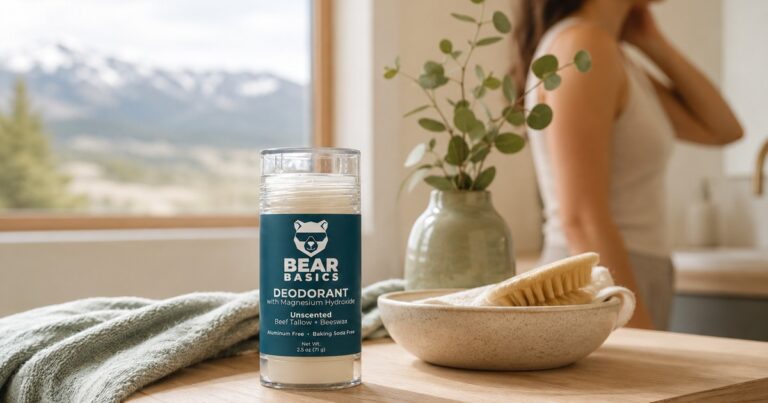
Focus on deodorant and everyday moisturizer first. These are used every day and stay on your skin, so simplifying them delivers the most benefit. As each runs low (or if it already is), replace it with a simpler, fragrance-free, short-list version. Introduce one at a time so you know how your skin responds, and give a new deodorant its couple-week adjustment. That's really the whole week: one or two meaningful swaps, done thoughtfully.
Resist the temptation to do more than that this week, even if you're motivated. Two thoughtful swaps you can actually evaluate beat five rushed ones that leave you unsure what agreed with your skin. The whole design of this plan is to keep each change small enough that you notice its effect — momentum is good, but the one-at-a-time discipline is what keeps the month calm and the results legible.
Deodorant and daily moisturizer are the classic starting swaps because they score highest on use and skin-contact. Nail these two and you've done a big share of the meaningful work already. More in the 5 swaps with the biggest impact.
Week three, keep the momentum with the next tier — and adopt the one habit that ties everything together.
This week, make "fragrance-free" your default. Fragrance is a common irritant, so favoring fragrance-free across your routine has broad, compounding benefits — especially for sensitive skin. It's less a single swap and more a habit you carry from here on.
Again, swap as things run out — you're not buying it all today, just making the simpler choice each time you restock.
Week three tends to be the one where the whole thing starts to feel genuinely worth it, because the fragrance-free habit begins paying off broadly. Once your daily leave-ons and a couple of other products are all fragrance-free, people with sensitive skin often notice a low-grade background irritation quietly easing — the kind they'd stopped noticing because it was always there. That first "huh, my skin feels calmer" moment is usually what turns this from a chore into something you actually want to finish.
The final stretch is about decluttering and letting the simpler routine become your normal.
By day 30 the routine is simpler and the habits are set. A few products may still be finishing up — that's fine. You've built a system that keeps simplifying itself as you restock. The hard part (the thinking and the habits) is done.
At every step of the 30 days, the same two qualities guide every choice — memorize these and you never need a rulebook:
These apply to every category and every week. Whether you're swapping deodorant on day 9 or cleanser on day 18, the test is the same. That consistency is what makes the plan simple to follow.
The whole month at a glance:
| When | Focus | What you do |
|---|---|---|
| Days 1–7 | Take stock | Audit & read labels; don't buy yet |
| Days 8–14 | Daily swaps | Deodorant & moisturizer, as they run out |
| Days 15–21 | Simplify more | Lip balm, cleanser & go fragrance-free |
| Days 22–30 | Settle in | Declutter, multipurpose, review & enjoy |
Four gentle phases, one meaningful step at a time — no week asks much of you, and together they add up to a genuinely simpler routine you'll be glad to keep.
A few missteps can derail a simplify-your-routine month, so avoid these:
The left column is how people burn out or overspend; the right column is how the plan actually sticks. When in doubt, go slower and gentler.
Because you swap only as products run out, the 30-day plan is naturally easy on your wallet — there's no big outlay, just better choices at your normal restock moments. Simple products are often affordable, and multipurpose items can replace several single-use ones, saving money and space.
On pace: 30 days is the plan's active window, but there's zero shame in some swaps finishing in month two as slower-to-run-out products empty. Faster or slower, the method is the same. Don't let "clean = expensive" or an artificial deadline pressure you — go at the pace your products (and budget) set.
The real win isn't day 30 — it's that simpler becomes your default. After the month, keeping the routine simple takes almost no effort:
Once simple is just how you shop, the routine stays simple on its own — no ongoing project, no maintenance. That's the whole point: a one-month effort that pays off indefinitely.
A few common snags and how to handle them:
Simplifying is a direction you're heading, not a purity test to pass. A missed week or an imperfect swap changes nothing about where you'll end up.
To make it concrete, here's what a real week (say, week two) might actually look like — reassuringly undramatic:
Your deodorant runs low midweek, so you pick up a simple, fragrance-free one and start using it, judging it by odor and giving it time to adjust. You notice your body lotion is about a third left, so you note it as "next" but don't rush. You read a couple of labels while you're at it and skip a fragranced product you'd been eyeing. That's the whole week — one real swap, one planned, a little label-reading. No overhaul, no stress, no big spend. Multiply that gentle pace over four weeks and you've genuinely simplified your routine.
Notice how little any single day asks of you. There's no marathon decluttering session, no afternoon lost to research, no dramatic before-and-after. That undramatic quality is the point: plans that demand a lot of energy get abandoned, while plans that fit into your normal shopping and barely register as effort actually get finished. Boring and doable beats ambitious and abandoned every time.
Simplifying your personal-care routine in 30 days is realistic when you treat it as four gentle phases: take stock and read labels (week 1), swap the daily leave-ons (week 2), simplify lips and cleanser and go fragrance-free (week 3), and declutter and settle in (week 4). Swap as things run out, keep the same simple criteria at every step, and let the habits carry you past day 30.
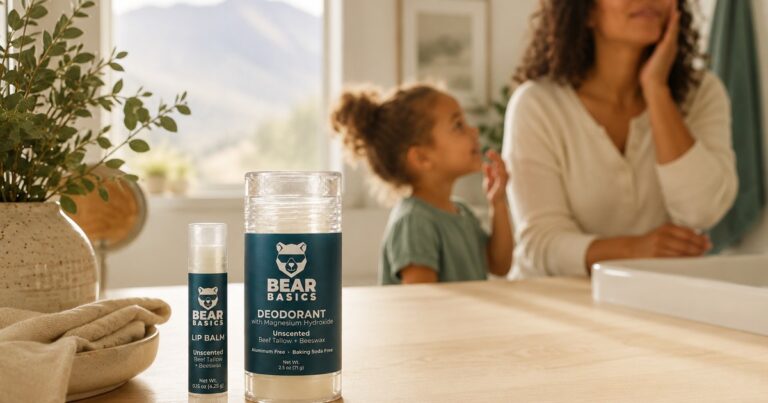
It's a preference-driven upgrade, not a panic — calm, affordable, and built to stick. Start whenever you like, with whatever's running low. Our simple, fragrance-free deodorant and balms make easy first swaps, and the 5 highest-impact swaps shows you exactly where to begin.
Ian founded Bear Basics on one idea: personal care built from a short list of food-grade ingredients we all recognize. Everything is small-batch and made in Colorado. Read the full story →