Quick answer
Beard balm is a fats-and-beeswax formula whose most important work happens where you can’t see it: the skin under the beard — the dry, itchy, flake-prone real estate most beard complaints actually come from. The fats moisturize that skin and condition the hair; the beeswax adds light hold and shape. Application is the whole skill: a small warmed amount worked to the skin first, against the grain, on a towel-damp beard after washing — then smoothed through the hair. Wash the beard itself only two to three times a week with something gentle (daily stripping is how most “beard problems” start), dose small and scale by length, and note that a simple unscented body balm is functionally a beard balm without the cologne — a real consideration for the one product that spends all day directly under your nose.
Answers at a glance6 quick questions
Main job?
The skin underneath — hair second.
vs oil & wax?
Balm = moisture + light hold, the middle path.
How to apply?
Warm it, skin first, damp beard.
Beardruff?
Usually dry skin — moisture to the source.
Wash how often?
2–3×/week — rinse between.
Body balm work?
Yes — same architecture, no perfume.
01 The short answer
The beard-care aisle has become one of grooming’s loudest neighborhoods — oils, balms, butters, waxes, washes, and serums, most of them scented like a lumberyard’s idea of the ocean, all marketed with the intensity of a truck commercial. Underneath the branding sits one of skincare’s simplest products, doing one of its most misunderstood jobs.
A beard balm is fats and beeswax — the same architecture as every balm this blog has ever profiled — and its most important customer isn’t the beard. It’s the skin under it: shaded, hard to reach, easy to over-wash, and responsible for nearly every itch, flake, and complaint that gets blamed on the hair. Care for that skin and the beard mostly takes care of itself.
This playbook covers the whole subject from that skin-first premise: what balm is and how it differs from oil and wax, the application method that actually reaches the skin, honest talk about beardruff, the under-washing counsel nobody profits from giving, and the case for the one spec the beard aisle almost never offers: unscented — in the product that lives directly beneath your nose all day.
02 What a beard balm actually is
Deconstruct a well-made beard balm and you find a familiar machine:
- The base fats — the moisture engine. Butters and oils (tallow and coconut oil serve beautifully here; the beard aisle favors shea and argan) that soften on skin contact and do the emollient-occlusive work: settling into the skin beneath, conditioning the hair shafts, sealing moisture where it lands — the three-job system with a beard on.
- The beeswax — structure and light hold. The same structural ingredient that makes a balm a solid gives beard balm its second function: a light, flexible set that tames flyaways and holds a brushed shape without stiffness. More wax means more hold and less skin-feel; balm-grade means the wax stays a minority partner.
- Optionally: vitamin E guarding the fats, exactly as in our four-ingredient roster.
- And in the commercial versions: fragrance — usually a lot of it, usually first thing you notice, and the subject of section 9’s whole argument. It does nothing for skin or hair; it does everything for shelf appeal.
Strip the scent and the branding, and a beard balm is a body balm with a marketing degree. That’s not a dismissal — the format genuinely suits beards — it’s a decoding that will save you money and open options by section 10.
03 Balm vs oil vs wax
The three beard-aisle formats, honestly distinguished — they’re points on a single dial marked wax content:
- Beard oil (no wax): pure liquid oils, dropper-applied. Maximum absorption and lightest feel, zero hold, fastest to vanish. Strong where skin access matters most — short beards and stubble — and beloved for the ritual. Weak on shaping, and the fastest format to over-apply into shine.
- Beard balm (minority wax): the middle path and the daily workhorse — the fats’ skin-and-hair care plus the wax’s light, flexible hold and longer-lasting layer. One product covering the whole routine job for the widest range of beards, which is why this article is about balm and not the other two.
- Beard/mustache wax (majority wax): a styling product wearing grooming’s clothes — strong hold for shaped mustaches and special-occasion sculpting, minimal skincare value, and stiff by design. A specialist’s tool, not a daily conditioner.
Choosing is straightforward: styling need sets your ceiling; skin need sets your floor; balm covers the territory where nearly everyone actually lives. Oil-then-balm layering exists for enthusiasts, but a single balm used well makes the two-product ritual optional — a theme this blog can’t seem to escape.
04 The real subject: the skin underneath
Now the section the beard industry under-serves, because hair sells better than skin: the actual subject of beard care is the face underneath.
- Beard skin lives in difficult conditions. It’s shaded from view (problems develop unseen), physically obstructed (moisturizer applied to the beard’s surface never reaches it), and subjected to whatever cleanser gravity delivers from every face- and hair-wash — a daily strip it never volunteered for, on skin that runs drier than the cheeks above it.
- The hair takes its share too. Beard hair is coarser than scalp hair and has no conditioner routine of its own — but hair is dead material that wants conditioning, while the skin is living tissue running the whole show: follicles, oil supply, and the barrier all live at skin level.
- Follow any complaint to its source: the itch is skin. The flakes are skin. The patchy discomfort that makes new beards quit in week three — skin. The hair gets the blame and the products; the skin has the problem.
- Hence the article’s one commandment: every application reaches the skin first. Product that stops at the hair’s surface is conditioning a hedge while the garden dries — the entire technique in section 6 is engineered around getting past the hedge.
Reframe your beard as a skincare zone with impressive landscaping and every decision downstream — product, dose, wash frequency, technique — starts making itself.
05 Beardruff, explained honestly
The complaint with its own portmanteau deserves its own section: beardruff — the flakes that appear in and drift from a beard. The honest taxonomy:
- Most of it is plain dry skin. Everything section 4 described — hard-to-reach, over-washed, shaded skin — drying until its surface flakes, with the beard acting as both cause and collection net. This is the kind daily skin-level moisture addresses: balm worked to the source per section 6, wash frequency dialed down per section 8, and the flaking that’s driven by dryness typically settles as the skin does.
- Some of it is a skin condition wearing the same costume. Persistent flaking that runs greasy or yellowish, comes with red or inflamed patches, or shrugs off weeks of consistent care has moved beyond dryness — seborrheic dermatitis famously favors exactly the bearded zone, it’s common, and it responds to actual treatment. That’s a professional’s call and a pharmacist-or-dermatologist conversation — a balm is comfort, not medicine, and our standing lane line holds with a beard on: moisturizers moisturize; they don’t treat.
- Telling them apart, practically: dryness-flaking is fine, white, and improves with the moisture-and-gentler-washing system inside a few weeks; the condition kind is stubborn, often greasier, often accompanied by visible irritation. When the picture is ambiguous or persistent — ask. The answer is quick and the treatments exist.
The empowering version: most beardruff is a maintenance problem you can solve this month — and knowing the exception’s signature means the minority case gets real help instead of another scented oil.
06 The application method
The method — where beard balm is won or lost, because the difference between conditioning a beard and conditioning the surface of a beard is entirely technique:
01
Start from a clean, towel-damp beard
The ideal moment is right after washing (face or beard wash alike): damp hair accepts product evenly, and damp skin underneath is primed for the seal — the same damp-skin doctrine that runs every balm technique we teach. Towel to damp, not dripping; water rolling off the beard just dilutes your work.
02
Take less than you think, and warm it
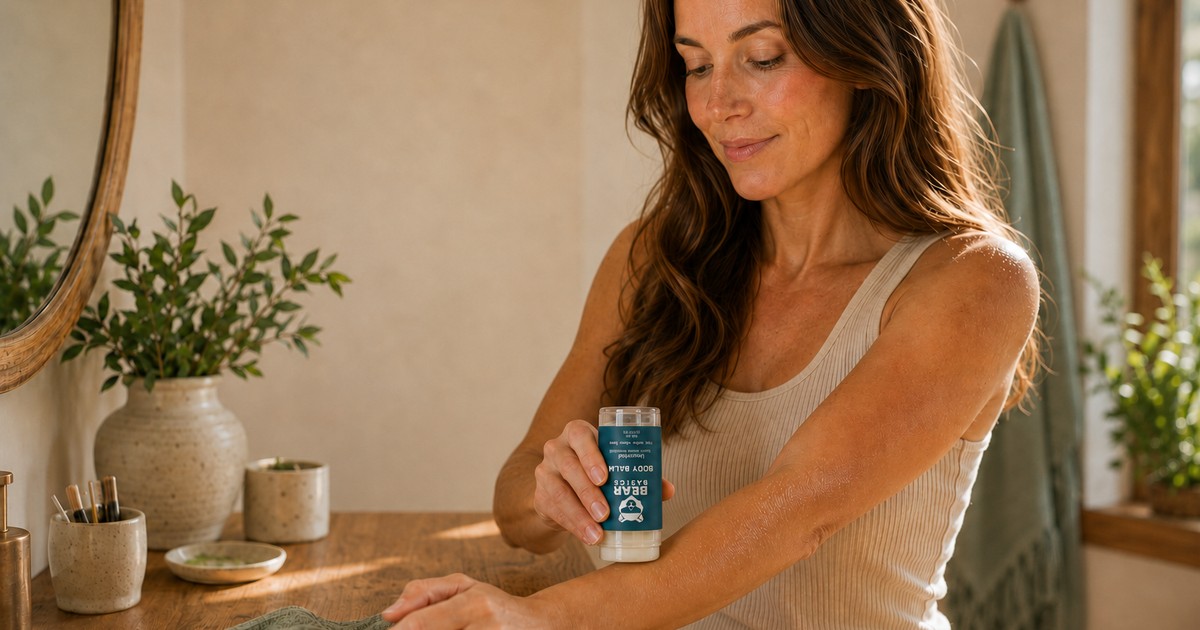
Scrape a small amount — section 7 calibrates by length — and rub it between fingertips or palms until it melts from solid to a thin oil sheen. Cold, solid balm applied directly clumps on hair and never reaches skin; warmed balm flows where you send it. Five seconds of friction is the whole trick.
03
Work to the skin first — against the grain
The commandment in action: fingertips into the beard against the growth direction, pads massaging the skin itself across the full bearded map — cheeks, jaw, chin, the under-jaw shadow everyone misses, mustache line. You should feel fingertip on face everywhere. This pass is the product’s real delivery; everything visible afterward is finish work.
04
Then smooth with the grain and set
Palms and fingers back down the growth direction, distributing what’s left through the hair and laying flyaways into place — a beard comb or brush finishes longer beards, spreading the light beeswax hold evenly and setting the day’s shape. Total elapsed time from scrape to done: about ninety seconds, which is why this survives as a daily habit.
07 Dose by beard length
Dose calibration, by beard stage — because the most common balm mistake is applying for the beard you plan to have:
- Stubble to short (weeks 1–6): a small fingertip scrape — barely more than you’d use on lips. The skin is the whole customer at this length; the “hold” function has nothing to hold yet, and surplus just shines. This stage is also where the balm earns its keep hardest, against the new-beard itch (section 12).
- Medium (the standard beard): roughly a dime’s worth, warmed fully — enough for the skin pass plus honest coverage of the hair. The reference dose for the reference beard.
- Long and full: scale up gradually — two dime-loads applied in sequence beat one heap (warm, work skin-first, then a second pass for the lengths). Long beards also shift the ratio of skin-work to hair-work toward the hair, which is when enthusiasts add an oil underneath — optional, per section 3.
- The universal error is over-dosing: greasy shine, weighed-down hair, and a beard that attracts lint are all surplus signatures — the same lesson as the deodorant dose doctrine: extra product doesn’t add function; it just waits around to cause trouble. When in doubt, halve it.
Right-dosed balm disappears — into skin, into hair, into a slightly better-behaved beard. If you can see the product at lunch, you used tomorrow’s dose too.
08 The wash routine (less is more)
The counsel no beard-wash brand runs ads about: the biggest upgrade for most beards is washing them less.
- Daily washing is the original sin of beard care. Every cleanser pass strips the skin beneath along with the hair — the identical soap-can’t-discriminate mechanism from yesterday’s hand-care system, applied to skin that’s already the driest on your face. The dry, itchy, flaky beard that launches a thousand product purchases is, remarkably often, a washing schedule wearing a disguise.
- The sustainable rhythm: a dedicated gentle wash two to three times a week, warm-not-hot; plain water rinses in the shower on the days between (rinsing clears the day’s dust without the strip); and the balm application riding each wash day’s damp aftermath per section 6. Sweat-heavy days — gym days — earn a rinse, not necessarily a wash.
- Gentle means gentle: a mild, simple cleanser — and the strong-degreaser shampoos formulated for scalp oil production are the wrong chemistry for face skin; if a product leaves the beard squeaky, it left the skin stripped.
- Recalibration takes about two weeks — a beard accustomed to daily stripping may run slightly oily as its skin’s production adjusts to not being emptied daily; hold the rhythm and it levels. The payoff compounds from there.
Wash less, rinse often, moisturize damp. Three clauses that outperform most of the beard aisle’s inventory.
09 The fragrance problem under your nose
And now the argument this brand was practically built to make, aimed at the most fragrance-saturated aisle in grooming: the beard product is the one that lives directly under your nose — all day — and the industry ships it drenched in scent.
- Proximity changes the math. A scented body product is an occasional encounter; a scented beard balm is an eight-hour continuous exposure at zero distance from your own airway — sandalwood-bourbon-oceanside from the first coffee to the last meeting, whether the 2 p.m. version of you still wants it or not.
- The skin math changes too. Fragrance is the aisle’s most common irritant, and beard balm gets massaged directly into facial skin daily — sensitive territory receiving a sensitizer with every application, in a product category where “fragrance-free” barely exists as an option.
- It crowds your actual choices: a scented beard argues with your cologne, your partner’s preferences, and every close-range conversation — the scent-stacking problem with a front-row seat.
- And it’s doing zero grooming work — the fats condition, the wax holds, the perfume sells. Under your nose, the honest question isn’t “which scent?” It’s the one the aisle never offers: or neither?
Unscented isn’t a compromise in beard care — it’s the premium spec the category forgot to make. Which sets up the practical conclusion this decoding has been building toward.
Want the free family bundle?Two Color & Grow coloring books, our Fam Jams family music, and a plain-English skincare guide — free. Grab the bundle — instant download. 10 One balm, beard included
Assemble the article’s pieces — beard balm is fats plus beeswax (section 2); the skin is the real customer (section 4); fragrance is the category’s liability (section 9) — and the conclusion writes itself: a simple, unscented, well-made body balm is a beard balm. Not “can substitute for” — is one, structurally:
- Same architecture, honest label: base fat, beeswax, castor oil, vitamin E — the four-ingredient roster is the beard-balm recipe with the perfume and the flannel branding removed. Tallow’s skin-compatible fatty-acid profile serves facial skin exactly as it serves everything else.
- One product, whole routine: the same stick or tin covering sink-side hands, the gym bag, lips in a pinch, and the beard — the multi-purpose economics this whole week of posts keeps arriving at, now with facial hair.
- The technique is identical — sections 6–8 apply verbatim; the balm neither knows nor cares what the hair over the skin is called.
- What you’d give up from the dedicated aisle: the scent (the point), the beard-specific branding, and at the margins some hold-tuning in heavily wax-weighted styling balms — if sculpted hold is your priority, section 3’s wax end of the dial still exists for you.
We’ll say it plainly rather than coyly: we don’t sell a “beard balm,” and if you own one of our balms, you already do. The beard aisle’s best-kept secret is that its core product was never beard-specific at all.
11 Stubble & short-beard care
A word for the under-served majority — stubble and short-beard wearers, whom the beard industry treats as pre-customers:
- Short beards are a skincare stage, period. At stubble-to-short length there’s no hair to style and every reason to moisturize: the skin is fully reachable, newly shaded, and hosting the sharpest hair tips it will ever host (section 12’s itch mechanics). The fingertip-scrape dose worked skin-first is the entire routine — under a minute, and the weeks-three-through-six abandonment window is mostly about whether it happens.
- The shave boundary counts too: the cheek lines and neckline you shave around are skin taking blade friction next to skin growing hair — a thin balm pass post-shave over the shaved zones keeps the whole territory on one comfort standard. (Simple fats on freshly shaved skin: exactly the gentle, unscented case again.)
- Patchy-growth phase: moisture doesn’t change what follicles do — no product honestly does — but comfortable, flake-free skin under a growing beard is the difference between riding out the awkward weeks and razoring the project in frustration. Care for the skin; let the beard make its own schedule.
You don’t graduate into beard care at some length threshold — the skin was the subject from the first day’s shadow. Start the habit with the stubble and the full beard inherits it.
12 Troubleshooting the common complaints
The troubleshooting table — the five complaints that fill beard forums, each with its honest mechanism and fix:
- “My new beard itches like crazy” — early-stage itch is mostly mechanical: freshly-cut sharp hair tips curling back against skin, plus newly shaded, often newly dry skin. It genuinely eases within a few weeks; daily skin-level moisture softens both sides of the equation meanwhile. Itch with rash, redness, or persistence past the early window: professional’s look.
- “My beard feels like a scouring pad” — coarse is partly genetics and partly chronic dryness; the wash-less-moisturize-damp system (sections 6–8) reclaims the dryness share within a couple of weeks. What remains is your beard’s actual texture — workable, not fixable, and softer daily than it was.
- “It looks greasy by noon” — over-dosing, nearly always: halve the amount, warm it fully, and confirm the skin-first pass (product parked on hair surfaces is what shines). Section 7’s rule: visible at lunch = tomorrow’s dose too.
- “Flakes” — section 5’s taxonomy: the dryness kind answers to the system; the greasy/inflamed/stubborn kind gets a professional. Two different problems, one costume.
- “My partner hates the smell of my beard products” — the aisle’s most solvable problem: section 9, unscented, done. Close-range opinions are data.
Notice the pattern across all five: dose, technique, wash frequency, and honest triage — not a single missing product. The beard aisle’s troubleshooting section is mostly a mirror.
13 The bottom line
Beard balm, fully decoded: fats and beeswax serving the skin under the beard first and the hair second — applied small, warm, and skin-deep on a damp beard; supported by a wash routine gentle and infrequent enough not to create the problems the balm then solves; and ideally unscented, because no product spends more hours closer to your own nose. Beardruff is usually dryness and answers to the system; the stubborn greasy kind gets a professional; and a simple unscented body balm was the beard balm all along.
The beard aisle sells complexity to a territory that wants the same thing every other patch of skin on this blog wants: gentle washing, honest fats, a damp-skin minute, and nothing along for the ride. Impressive landscaping; same garden.
"A beard is a skincare zone with impressive landscaping. Care for the garden and the hedge takes care of itself."— The honest verdict
The 6 things to remember
- Beard balm = fats (moisture) + beeswax (light hold); the skin underneath is the real customer.
- Technique is everything: small amount, warmed, worked to the skin against the grain, damp beard.
- Dose by length — fingertip scrape to a dime — and halve it if the beard shines by noon.
- Wash 2–3×/week, rinse between: daily stripping causes most “beard problems.”
- Beardruff is usually dry skin (fixable); greasy, inflamed, or stubborn flaking goes to a professional.
- Unscented is the beard’s premium spec — and a simple unscented body balm is a beard balm already.
Frequently asked
What does beard balm actually do?
Two jobs, in order of importance: it moisturizes the skin under the beard — the dry, itchy, flake-prone skin most beard trouble actually comes from — and it conditions and lightly shapes the hair itself, taming flyaways and adding a soft, groomed set. The fats do the moisturizing; the beeswax does the light hold.
What’s the difference between beard balm, beard oil, and beard wax?
They sit on a spectrum of wax content. Beard oil is pure liquid oils — maximum absorption, zero hold. Beard balm adds beeswax to the fats — moisture plus light shaping and a longer-lasting layer. Beard wax (or mustache wax) is mostly wax — strong hold, minimal skincare. For everyday care of beard and the skin beneath it, balm is the workhorse of the three.
Can I use a regular tallow or body balm on my beard?
Yes — a simple fats-and-beeswax body balm is functionally a beard balm without the fragrance and the dedicated label. The ingredient architecture is the same: base fat for moisture, beeswax for light hold. Warm a small amount between fingertips, work it to the skin first, then through the hair. One well-made multi-purpose balm covers face, hands, and beard.
What causes beard dandruff (beardruff)?
Most commonly, plain dry skin: the skin under a beard is hard to moisturize, easy to over-wash, and hidden from view, so it dries out and flakes into the hair. Daily moisture worked down to the skin — not just the hair — addresses the dryness-driven kind. Persistent, greasy, or inflamed flaking can be a skin condition like seborrheic dermatitis, which is a professional’s call, not a balm’s.
How do I apply beard balm?
Small amount, warmed first: scrape a fingertip’s worth, rub between fingers or palms until it melts to an oil, then work it against the grain down to the skin across the whole bearded area, massage a few seconds, and finish by smoothing through the hair with the grain (a comb helps on longer beards). Best moment: right after washing, on a towel-damp beard.
How much beard balm should I use?
Less than you think, scaled to length: a small fingertip scrape for stubble through short beards, roughly a dime’s worth for medium, and up from there only as length demands. Too much sits greasy on the hair; the right dose disappears into skin and hair within minutes. Start small — you can always add a second half-dose.
How often should I wash my beard?
Less often than you wash the rest of you: for most beards, a dedicated wash two to three times a week with a gentle cleanser, and just water rinses between. Daily washing with harsh cleansers strips the skin beneath and the hair itself, and is one of the most common causes of the dry, itchy, flaky beard people then buy products to fix.
Why does my new beard itch so much?
Early-stage itch is mostly mechanical and temporary: sharp, freshly-cut hair tips curling back against skin, plus skin that’s newly shaded and often newly dry. It typically eases within a few weeks. Daily moisture worked to the skin softens both sides of the equation. Itch with rash, redness, or that persists beyond the early weeks is worth a professional’s look.
Megan Smith
Co-Founder, Bear Basics
Megan co-founded Bear Basics and leads design. As a mom, she writes our gentlest, most practical guides — on ingredients, sourcing, and simple family skincare — with an emphasis on honest, well-sourced, and simple. Read the full story →
The unscented beard upgrade.Fats, beeswax, nothing under your nose all day — the balm was beard-ready from the start. Prefer Amazon? Find us there too.Shop balms