Spend $50, Get 10% Off

Three ways to moisturize your body — and one simple difference that explains all of them: water, or no water. Here’s how a solid bar, a soft balm, and a classic lotion really compare, and when to reach for each.

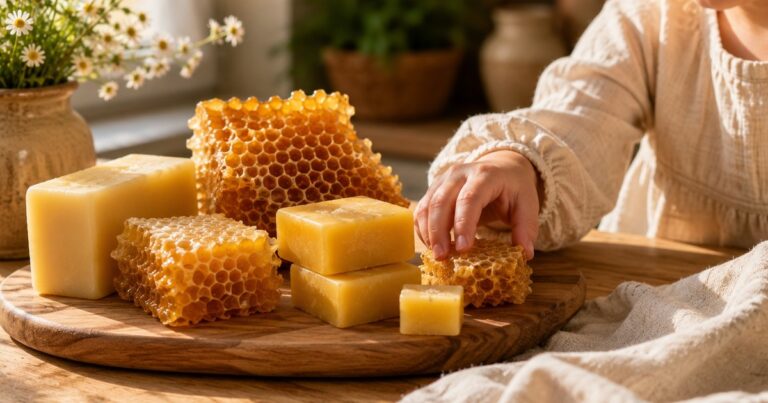
The core difference is water. Lotion is a water-based cream that hydrates and absorbs quickly but needs preservatives; body balms and body bars are anhydrous — water-free blends of oils, butters, and wax that seal moisture in and last longer. A body bar is solid and most concentrated, a body balm is softer and easier to spread, and lotion is the lightest of the three. For very dry skin, the sealing balms and bars usually win — and layering lotion (or applying balm to damp skin) gives you both hydration and a seal. One honest note: because they contain beeswax, our balms and bars aren’t vegan.
If you remember one thing, make it this: the whole comparison comes down to water. Lotion contains water; body balms and body bars don’t. Almost every practical difference — how they feel, how long they last, how many ingredients they need, and what they’re best at — flows from that single fact.
Water-based products hydrate: they deliver water to the skin, and they tend to feel light and absorb quickly. Water-free (anhydrous) products seal: they lay down a protective layer of oils and butters that slows moisture from escaping. Hydrating and sealing are two different jobs, and skin often benefits from both.
Think of hydration as pouring water into a glass, and sealing as putting a lid on it. Lotion pours; balms and bars are the lid. Neither replaces the other — they work best as a pair.
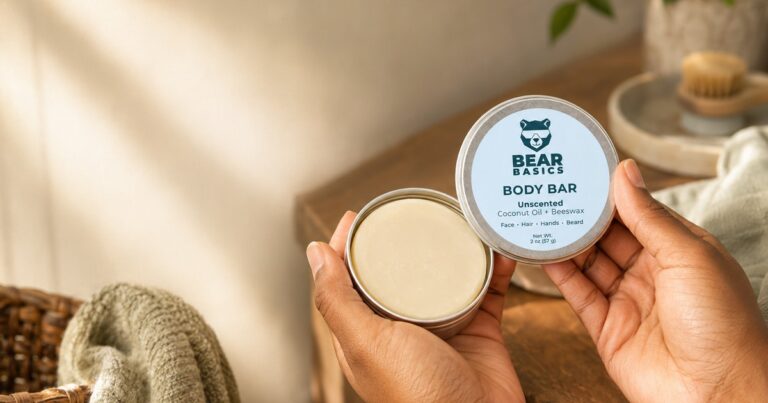
A body bar (sometimes called a lotion bar) is a solid, water-free block of oils, butters, and wax — think of a firm balm shaped like a small bar or held in a tin or twist-up. At room temperature it’s solid; against warm skin it softens and glides, leaving a thin, protective layer behind.
To use one, you simply rub the bar directly over the skin, or warm a little between your fingers first. Because it’s so concentrated, a light pass is plenty — over-applying just leaves things greasy. It’s the most travel-friendly of the three: nothing to spill, nothing to leak, and it sails through airport security.
The trade-off is that a bar takes a moment to warm up and apply, and its rich finish is more than some people want for light, everyday use. Where it shines is dry patches, elbows, heels, hands, and cold-weather protection.
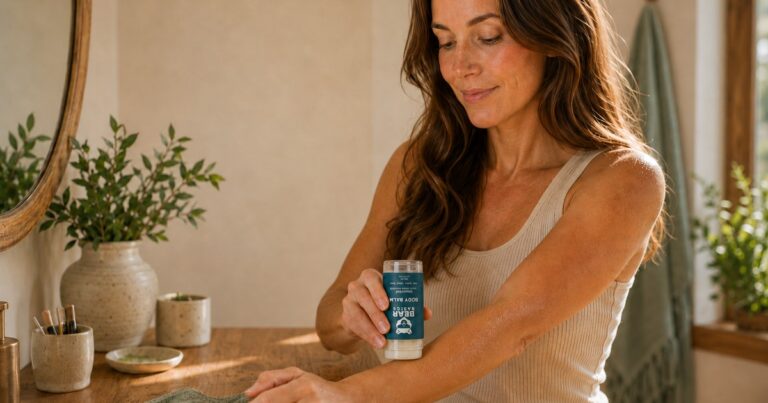
A body balm is the same anhydrous idea as a bar — oils, butters, and wax, no water — but formulated softer, so it’s scoopable or dispenses from a twist-up. It splits the difference between the solid concentration of a bar and the easy application of a cream.
That softness makes a balm the most versatile of the sealing options. It spreads readily over larger areas, works into rough spots without much effort, and still gives you that rich, protective, long-lasting layer. For most people, a balm is the easiest way to get the benefits of an anhydrous product day to day.
Lotion is the product most people picture when they think “moisturizer”: a smooth, pourable cream. Chemically, it’s an emulsion — water and oil blended together with the help of an emulsifier, so two things that normally separate stay mixed into a stable cream.
Because it’s mostly water, lotion feels light, absorbs quickly, and delivers a fast drink of hydration without a heavy or greasy finish. That’s exactly why so many people reach for it: it’s pleasant, quick, and easy to slather on after a shower.
The catch is that all that water comes with requirements. An emulsion needs an emulsifier to hold together and a preservative system to stay safe, which means a longer ingredient list than an anhydrous balm. And because lotion mostly hydrates rather than seals, its effect can fade faster on very dry skin. Our deeper dive on lotion bar vs. regular lotion unpacks this comparison further.
This is one of the most useful things to understand about all three products. Microbes — bacteria, mold, yeast — need water to grow. A water-based lotion is a hospitable environment for them, so it requires a preservative system to stay safe over its shelf life. That’s not a flaw; it’s a necessity, and modern preservatives are well studied.
Anhydrous balms and bars simply don’t offer that watery environment, so they generally don’t need preservatives at all. This is a large part of why they can have such short, recognizable ingredient lists — often just a handful of oils, butters, and wax.
If you’ve ever wondered why a balm’s label is three lines and a lotion’s is fifteen, this is why. No water means no emulsifier and no preservative — fewer moving parts by design.
The sensory experience of the three is genuinely different, and it’s often what decides which one you’ll actually reach for. Lotion is the lightest and quickest to disappear, leaving little residue. That fast, non-greasy finish is its biggest selling point.
Balms and bars sit differently. They leave a richer, more noticeable layer that takes a little longer to settle in and lingers on the skin — which is precisely the point, since that lingering layer is the protective seal. Some people love that cushioned feel; others find it too much for a hot day or under clothes.
This is the question everyone wants a single answer to, and the honest reply is: it depends on what “moisturizing” means for your skin. If your skin is thirsty for water, lotion’s hydration may feel most satisfying. If your skin loses moisture too fast — the usual problem with dry, chapped, or weather-beaten skin — then sealing it in with a balm or bar does more lasting good.
For most people with genuinely dry skin, the sealing products come out ahead, because dry skin’s core issue is a leaky barrier that lets water escape. A rich occlusive layer addresses that directly. But “most moisturizing” really means “best matched to your skin’s problem,” not “heaviest.”
A balm is for comfort and everyday dryness, not for treating a medical skin condition. If your skin is cracked, painful, inflamed, or simply not improving with good basic care, that’s a reason to see a dermatologist rather than to keep switching moisturizers.
Matching product to circumstance takes most of the guesswork out. Think about your skin type, the weather, and the specific area you’re treating.
Seasons matter more than people expect. The same person can happily use a light lotion in summer and switch to a balm-forward routine when the cold, dry months strip their skin. There’s no need to pick one product for life — rotate as your skin and environment change.
Practical details decide a lot of real-world use. A body bar is the clear winner for travel and tidiness: it’s solid, so there’s nothing to leak in a bag, no liquid limits at security, and no risk of a pump exploding in your luggage. It’s also the least wasteful, since you use only what melts onto the skin.
A balm in a twist-up or tin is nearly as travel-friendly and a bit easier to apply on the go. Lotion is the most familiar and effortless at home but the most prone to spills, and bottles are bulkier and heavier to pack.
Ounce for ounce, anhydrous products often stretch further than they look. Because a balm or bar has no water diluting it, nearly all of the product is active, working ingredient — so a small amount does the work of a larger scoop of lotion. A little goes a long way, and a compact bar or balm can last a surprisingly long time.
Lotion can be less expensive per bottle, but remember that a meaningful share of what you’re buying is water and the ingredients needed to keep water stable. That’s not wasted money — the light feel is real value for many people — but it does change the per-use math.
The takeaway isn’t that one is a better deal; it’s that they’re priced for different things. You pay for concentration and simplicity with a balm or bar, and for lightness and convenience with a lotion. A useful way to compare is cost per use rather than cost per bottle — measured that way, a concentrated bar or balm often looks better than its shelf price suggests, while a lotion’s low sticker price partly reflects the water inside.
Yes — and honestly, layering is where the magic happens. Since lotion hydrates and balms seal, using them in sequence covers both jobs at once. This is the same principle dermatologists describe for very dry skin: add water, then lock it in.
Apply lotion to slightly damp skin right after a shower, then follow with a thin layer of balm or a quick pass of a bar over the driest areas. The lotion (and the shower water) provides moisture; the balm seals it in so it doesn’t evaporate away.
You don’t need to layer everywhere every day — that would be overkill for most skin. Reserve the two-step approach for genuinely dry patches or harsh weather, and use a single product the rest of the time. It’s a tool to pull out when skin needs extra help, not a daily obligation.
With the differences laid out, choosing is straightforward. Start from your skin and your situation rather than from marketing.
And you don’t have to choose only one. Plenty of people keep a lotion for quick daily use and a balm or bar for dry patches, winter, and travel. If you value short ingredient lists and skin that stays comfortable through the seasons, the sealing products are worth having on hand. Our overview of tallow for skin covers one of the richest sealing options in depth.
Body bar, body balm, and lotion aren’t rivals so much as three tools for slightly different jobs, all sorted by one fact: water or no water. Lotion hydrates and feels light but needs more ingredients to stay stable. Balms and bars seal, last longer, and keep their ingredient lists short by skipping water entirely.
For everyday lightness, reach for lotion. For dry skin, rough spots, cold weather, and travel, reach for a balm or bar. And when skin really needs help, layer them — hydrate first, then seal. That’s the whole framework.
It’s the same philosophy we bring to everything we make: understand what a product is actually for, keep the ingredients few and recognizable, and let each one do its job well. If you want to keep your whole routine this simple, our guide to beeswax in skincare explains the ingredient at the heart of a good balm.
Megan co-founded Bear Basics and leads design. As a mom, she writes our gentlest, most practical guides — on ingredients, sourcing, and simple family skincare — with an emphasis on honest, well-sourced, and simple. Read the full story →