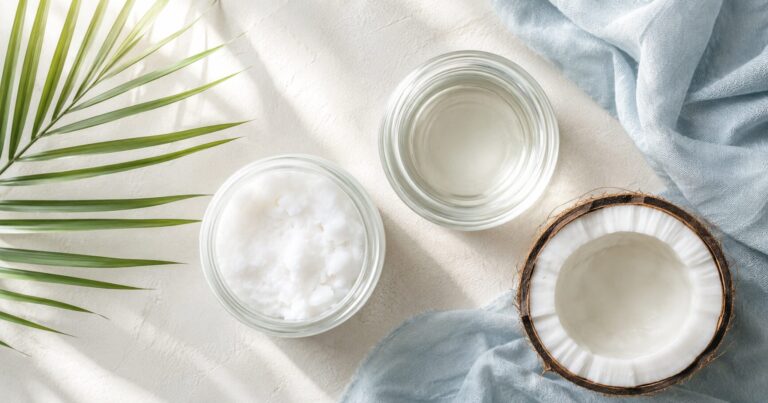
Safe for babies?
Generally gentle — patch-test & ask your pediatrician.

For most babies, it's a gentle, single-ingredient option — with two non-negotiables: patch-test first, and check with your pediatrician. Here's the honest guide to using it well, and when to reach for something else.

For most babies, plain virgin coconut oil is a gentle, single-ingredient moisturizer that parents commonly use on dry skin. Its simplicity is the appeal — one recognizable ingredient, no fragrance or fillers when it's pure. But "generally gentle" isn't the same as "right for every baby." Always patch-test a small area for 24 hours, and check with your pediatrician before using it — especially on a newborn, on the face, or on eczema-prone skin.
If you're standing over a dry-skinned baby with a jar of coconut oil in your hand, here's what you actually want to know. For most babies, plain coconut oil is one of the gentler things you can put on their skin — it's a single, recognizable ingredient with nothing added, which is exactly why so many parents reach for it.
But "gentle for most" is not the same as "guaranteed safe for yours." Baby skin is delicate and individual, and the responsible version of this answer comes with two conditions attached every single time: patch-test a small area first, and check with your pediatrician before you start — especially with a newborn, on the face, or on any skin that's already irritated or eczema-prone.
That's the honest headline. The rest of this guide is the practical detail: how to pick the right kind, how to patch-test properly, what it's genuinely good for, when to skip it, and how it stacks up against other options. Throughout, you'll notice the pediatrician refrain repeated — not as legal cover, but because it's the actual safety net for a question this individual.
As a mom, I'll add the reassurance I wish someone had handed me: you're not doing anything wrong by keeping it simple. There's enormous pressure to buy a specialized product for every square inch of a baby, and it's easy to feel like a plain jar of coconut oil is somehow not enough. Often, simple and gentle is exactly enough. The point of this guide isn't to talk you into anything — it's to help you use a simple thing thoughtfully, and to know the handful of moments when "ask the pediatrician first" really is the right move.
Coconut oil has become a nursery staple for a simple reason: it's simple. In a world of baby products with long, unpronounceable ingredient lists, a jar of pure coconut oil is refreshingly readable — one ingredient, no fragrance, no fillers, no dyes.
For parents trying to keep fewer unknowns on their baby's skin, that short list is the whole appeal. You know exactly what you're putting on, which makes the "is this okay?" conversation with your pediatrician far easier to have. It's also multipurpose — the same jar that softens dry cheeks can help with cradle cap or work as a massage oil — which means fewer separate products to buy and track in an already overwhelming season.
The best thing about pure coconut oil for babies isn't a special property — it's the absence of extras. One clean ingredient means fewer things that can irritate delicate skin, and a label you can actually understand.
Let's answer the title question directly and without hand-waving. For the majority of babies, plain coconut oil is well tolerated on the skin. It's gentle, moisturizing, and free of the additives that cause many reactions. That's the reassuring part, and it's true.
The honest caveats matter just as much. Every baby's skin is different, allergies and sensitivities exist, and newborn skin in particular is still developing its protective barrier. "Generally safe" is a statement about most babies; it can't be a promise about yours.
Not all coconut oil is equal, and for a baby you want the plainest, cleanest version you can find. Here's what to look for on the label:
Avoid anything with added fragrance, and don't assume a jar marketed "for baby" is automatically purer — read the actual ingredients. The gold standard is boringly simple: a single-ingredient, virgin, cold-pressed, food-grade coconut oil. If you want the deeper breakdown of grades, see virgin vs refined coconut oil.
Patch-testing sounds clinical, but it's a two-minute habit that protects your baby. Here's the simple version:
A patch-test turns "I hope this is okay" into "I checked." It's the single easiest way to catch a reaction on a small, low-stakes patch of skin instead of a large one.
This is coconut oil's most common nursery job, and where it shines. Baby skin can get dry and flaky — especially in winter, after baths, or in dry climates like ours in Colorado. A thin layer of coconut oil helps soften and comfort those dry patches.
The technique is easy: warm a very small amount between your clean hands and smooth it gently over damp skin right after a bath, which helps seal in the moisture that's already there. A little truly goes a long way — you're aiming for a thin, absorbed layer, not a greasy coat. If your baby's skin is persistently dry or cracking despite gentle moisturizing, that's a conversation for your pediatrician rather than more oil.
Timing helps more than people expect. The minutes right after a bath, while skin is still slightly damp, are the sweet spot — you're trapping water that's already in the skin rather than trying to add moisture to a dry surface. Pat (don't rub) your baby mostly dry, then apply your thin layer while there's still a little dampness. It's a small habit that makes a plain oil noticeably more effective, and it turns moisturizing into a calm, connected part of the bath-and-bedtime wind-down.
Cradle cap — those flaky, scaly patches on a baby's scalp — is common, harmless, and usually resolves on its own. Many parents use a little coconut oil to gently soften the flakes before lightly combing or brushing them away.
Coconut oil for cradle cap is about gently softening flakes — not treating a condition. Apply a little, let it sit briefly, gently loosen the flakes with a soft brush, and rinse. If the scalp looks red, inflamed, weepy, or spreads, skip the DIY route and check with your pediatrician.
Go gently and don't force anything — the goal is comfort, and cradle cap doesn't need aggressive removal. When in doubt, your pediatrician can tell you whether what you're seeing is ordinary cradle cap or something that needs a different approach.
A calm, gentle massage can be a lovely part of a bedtime routine, and a plain oil makes a nice, glide-y medium. Coconut oil works well here for many families — it's light, absorbs reasonably, and has no added fragrance to overwhelm a baby's senses.
Keep it simple and gentle: warm a small amount in your hands first, use slow, light strokes, and keep the oil away from the eyes, mouth, and hands (which end up in the mouth). As with everything else, patch-test first and check with your pediatrician if your baby has any skin concerns. If your baby seems to dislike it or their skin reacts, there's no need to push it — massage should be soothing for both of you.
Being honest means naming the situations where coconut oil isn't the automatic choice:
None of the right-hand items mean "never" — they mean "ask first." For those situations, your pediatrician's guidance should come before any jar of oil.
This one deserves its own section because it's where well-meaning advice can go wrong. Eczema is a genuine medical condition, not just dry skin — and while some families find a plain moisturizer soothing on eczema-prone skin, some babies react to coconut oil specifically.
The pattern here is the same as the rest of the guide, just with higher stakes: coconut oil can be gentle, but eczema is individual and medical. Lead with your pediatrician, not with the internet.
It's also worth knowing that eczema care is often about a whole routine — bathing habits, how quickly you moisturize afterward, fabrics, triggers — not a single hero product. A pediatrician or pediatric dermatologist can help you build that routine, and if coconut oil fits into it, great. If it doesn't, that's useful to know before you've spent weeks hoping a jar of oil will settle skin that needs a different kind of help. Trust the people who can actually see your baby's skin.
Coconut oil isn't the only simple, gentle option for baby skin. Here's an honest look at how it stacks up against a couple of common alternatives:
| Coconut Oil | Beef Tallow | Typical Baby Lotion | |
|---|---|---|---|
| Ingredients | 1 | 1 | Many |
| Added water | No | No | Usually |
| Fragrance (if pure) | None | None | Often |
| Feel | Light, fast | Rich, cushioning | Varies |
| Vegan | Yes | No | Varies |
Both coconut oil and tallow are single-ingredient options many families like for their simplicity; commercial lotions vary widely, so the label is what matters. For a fuller comparison of the two natural bases, see beef tallow vs coconut oil. Whichever you consider, the same rule applies — patch-test and check with your pediatrician.
Less than you think, and only as needed. A pea-sized amount, warmed between clean hands, covers a surprising area. You're aiming for a thin layer that absorbs — not a thick, greasy coat that just sits on top and transfers to clothes and bedding.
For dry skin, once or twice a day (often after a bath) is plenty for most babies. There's no need to reapply constantly; if skin stays dry despite gentle, regular moisturizing, that's a cue to check with your pediatrician rather than to keep adding more oil. As with everything in early parenthood, gentle and consistent beats aggressive and occasional.
An honest guide has to include the limits. Coconut oil is a simple moisturizer — it is not a medicine, and it's not a fix for skin conditions:
Kept in its lane — as a simple, gentle moisturizer used thoughtfully — coconut oil is genuinely useful. Asked to be a treatment, it isn't, and expecting it to be can delay care your baby actually needs.
Is coconut oil safe for babies' skin? For most babies, plain virgin coconut oil is a gentle, simple, single-ingredient moisturizer that parents use happily on dry skin, cradle cap, and gentle massage. Its short, readable label is its greatest strength — fewer unknowns on delicate skin.
But the honest version of "yes" always comes with the same two conditions: patch-test first, and check with your pediatrician — especially for newborns, faces, and eczema-prone skin. Lead with those, keep the amount small and the oil pure, and coconut oil earns its spot in the nursery. When you're ready, our coconut oil is exactly that kind of simple, food-grade jar — and our Cub Care guides cover the rest of the journey.
Megan co-founded Bear Basics and leads design and family-care content. She's a mom first, drawn to short ingredient lists you can actually pronounce. Read the full story →