Is it a diagnosis?
No — a description of behaviour.

For kids, the triggers live where they spend the day: school, camp, the pool and the field. What to watch at each age and in each season, and how to tell itchy from stinging.

“Sensitive skin” describes skin that reacts to ordinary things more readily than most, and for children the triggers usually live in daily settings: slime and clay at school, shared sunscreen at camp, sweaty sports gear, pool chlorine, and dry indoor heat. The pressure points move with age, from wet and friction in toddlers to borrowed products in tweens, and with the seasons. Learn whether your child means itchy or stinging, send your own products where you can, and check laundry and fabric before blaming a product.
“Sensitive skin” describes how a child’s skin behaves, and for kids the triggers are mostly found in the ordinary places they spend the day: school, the playground, camp, the pool and the sports field. The skin reacts to things most skin ignores, and it shows up as redness, itching, rough patches or stinging within minutes to a couple of days.
How to find the pattern behind a reaction is covered in what sensitive skin actually means, and why the words on the front of a package matter less than the list on the back is in fragrance-free vs unscented. This post is about what is specific to children.
That means the triggers that come with each age, the ones that arrive with a school schedule, a summer camp, a swim team or a new season, how to tell what a child means when she says something is itchy versus when she says it stings, what to pack for a sleepover, and the common cases where the product was never the problem.
The common triggers are boring, repetitive, and most of them are things you can change. Very little of what bothers a child’s skin is exotic, and the list looks much the same from one family to the next.
Fragrance deserves the top line because it is the most common trigger named in reactions to cosmetic products, and because it hides well. A scent can be listed as a single word on an ingredient panel while standing for many separate compounds, which means a child can react to a product and you have no way to identify what bothered her. That is the whole argument for leaving it out, and it is why our products have no added scent.
The second cluster is friction and moisture. Children spend their days wet, sweaty, sandy and rubbing against things, and a child’s skin spends more of the day being handled than an adult’s does. Many reactions that look like a product problem turn out to be a cuff, a strap or a damp sleeve in the same spot every day.
The sections below go age by age, then setting by setting, because the pressure points move as a child grows and the places she spends her time change.
Toddler skin is thinner than adult skin, has more surface area relative to body size, and spends a lot of the day wet. Drool, spilled water and a face wiped eight times a day keep the skin going from wet to dry over and over, which is harder on it than either state alone.
The familiar red ring around the mouth in winter belongs to this age too, and it is usually friction, wet and cold air rather than anything the child ate. Potty training brings a second pressure point: more wiping, more wipes, and the tight elastic of training pants at the waist and legs, so a plain damp cloth and a size up in pull-ups often clear red lines there. Bath time is another, since bubble bath and character-branded washes are usually fragranced and a toddler sits in that water for the whole bath. Plain water for the soak, with a mild bar used only where needed at the end, takes that variable away. The full routine for this age is in toddler skincare basics.
Daycare adds its own list. Shared wipes and changing-table products, a different hand soap, finger paint and play dough, and nap-time sheets washed in someone else’s detergent all touch your child for hours. Most daycares will use a labelled bag of your own wipes, balm and a crib sheet if you ask, which takes several variables off the table at once.
Home adjustments have a limit. If a rash is painful, spreading quickly, blistering, oozing, or still there after two weeks of simplifying, stop troubleshooting and get a professional to look at it.
At school age the biggest change is that you stop controlling everything that touches your child. Classroom soap, shared hand sanitizer, a friend’s scented lotion, playground sand, a borrowed hat. The triggers multiply and your visibility drops.
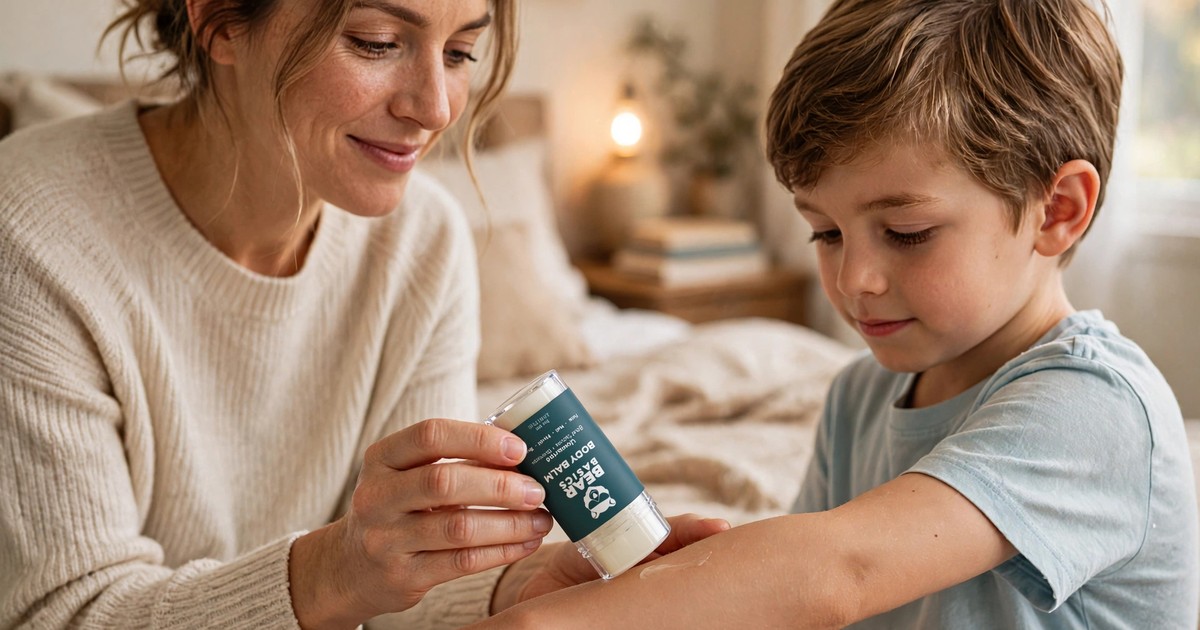
Hands take the worst of it, from washing and sanitizer many times a day, and hand care for frequent washers covers the routine. For a child, the practical piece is a small balm in the backpack and a habit of using it after lunch, taught to the child rather than left for you to remember at pickup.
This is also the age to start explaining instead of just managing. A seven-year-old can understand that a product made her itch, that you took it away, and that she should tell you if the new one does the same thing. That turns her into a reporter instead of a patient, and it makes the itchy-versus-stings conversation later in this post much easier.
A reasonable weekday at this age needs very little: wash hands and face, wash the parts that smell, put balm on anything rough, and leave the rest alone.
Tween skin changes faster than anything that came before it, and the routine has to change with it. Oil production rises, sweat arrives with a smell it did not have before, and a child who needed almost nothing suddenly needs a washcloth and a plan.
Two things collide here. The skin is getting oilier in some places and is still dry in others, and the products marketed to this age group are mostly heavily scented. A tween with reactive skin can end up using a fragranced body spray on a problem an unscented stick would handle without the reaction.
Odor is the common first request, and a deodorant controls odor. It is not an antiperspirant and does not change how much a child sweats, which is correct, because sweating is how a body cools itself. The specifics are in natural deodorant for kids and tweens.
The other shift is autonomy and peer products. Tweens borrow each other’s body sprays, lip glosses and face products at school and at sleepovers, and a reaction can come from something you have never seen. A twelve-year-old should be choosing and applying her own products, which means she needs to know which ones suit her and why, and that is a skill worth teaching deliberately.
A classroom puts your child’s hands into soap, sanitizer, paint, glue, clay and slime several times a day, and hands are where most school-related reactions show up first. A few of these are worth knowing by name.
Homemade slime is often made with borax or contact-lens solution mixed into glue, and a child kneading it for half an hour can come home with red, rough or stinging hands. If slime days line up with sore hands, that is the pattern.
Most classroom supplies are designed to wash off, but they are still left on skin for hours. Scented markers are fragranced products, and a child who chews or sniffs them gets them on her lips and around her nose.
Salt dough and some modelling clays pull moisture from skin as they dry, and the hands that handled them feel tight and rough afterward.
You do not choose what is in the pump. A small labelled bottle of an unscented wash can usually go in a backpack, and many teachers will let a child use it.
The simplest fix for art is a quick rinse with plain water as soon as the activity ends, before the residue dries on the skin, and a thin layer of balm on the backs of the hands afterward. A short note to the teacher explaining that your child’s hands react, and asking that she rinse after messy projects, usually gets a kind response. Teachers deal with this all the time, and a specific request is easier for them to follow than a general worry.
At summer camp someone else applies your child’s sunscreen, often from a shared bottle, several times a day, which makes it one of the most common sources of a mystery summer rash. Sending your own is the single best step.
Choose a fragrance-free sunscreen your child has already worn at home for a week or two without trouble, label it, and send it in the bag with a note asking that it be used instead of the camp supply. Mineral sunscreens built on zinc oxide or titanium dioxide suit many reactive kids, though some children find them drying, so the week at home is what tells you. Spray sunscreens drift onto the face and into the eyes when someone else applies them in a hurry, so a lotion or stick is easier for counselors to use well.
Show your child how to put it on herself. A child who knows how much to use and where it goes, including the tops of her ears, her neck and the backs of her knees, is less dependent on whoever is holding the bottle.
The playground brings its own list: sand that rubs under waistbands and socks, wood chips and grass on bare legs, and metal slides and rails that get hot in the sun. Learning to recognize poison ivy and its relatives is worth doing with an older child, since a reaction to those plants looks like a product problem when nobody saw the contact. Long, light pants for woods and fields and a rinse after a sandy afternoon handle most of the rest.
Sports gear holds sweat against the same patch of skin for hours, and a pool soaks skin in chlorinated water, so active kids often react in very predictable spots. The spot usually tells you the cause.
| Activity | Where it shows up | What helps |
|---|---|---|
| Soccer | Shins, under shin guards | Sleeves under guards, wash guards weekly |
| Helmet sports | Chin and jaw under straps | Clean straps, wipe skin after |
| Hockey, football | Under pads, along edges | Air pads out, wash liners often |
| Dance, gymnastics | Waist and leg elastic | Change out of damp leotards quickly |
| Swimming | All over, worst on shins and hands | Rinse immediately, balm after |
Gear that never gets washed is the common thread. Shin guards, helmet pads and knee pads go in a bag damp and come out damp the next day, and the skin under them sits in that all practice. Washing what can be washed and airing what cannot, every time, often settles a patch that looked like a product reaction.
For swimmers, the routine after the pool matters more than anything before it. A quick rinse in the pool shower, then a proper rinse at home, removes the chlorine before it keeps drying the skin on the drive home. A thin layer of balm on shins, hands and anywhere rough after that rinse is the step most swimming families skip. On daily swim-team schedules, a rash guard cuts down on contact and rubbing too.
Change out of sweaty clothes soon after practice rather than sitting in them for the drive home and dinner, and pack a dry shirt for that purpose.
A child’s skin threshold moves with the seasons, so the same child can be easy in July and difficult in January without anything new in the cupboard. Knowing what each season brings lets you adjust before the complaints start.
| Season | What changes | Worth adjusting |
|---|---|---|
| Back to school | New soap, sanitizer, art supplies | Backpack balm, own wash |
| Late fall | Heating comes on, air dries out | Bedroom humidity, shorter baths |
| Winter | Cold wind, wool hats, layers | Cotton base, cheek and lip balm |
| Spring | Outdoor sports, grass, mud | Rinse after practice, wash gear |
| Summer | Sunscreen, pools, camp, sweat | Own sunscreen, rinse after swimming |
Fall is the season most families notice first, because two changes land in the same few weeks: school starts and the furnace comes on. A child who was fine all summer comes home with rough hands and chapped lips by October, and the cause is usually the classroom plus the heating rather than a new product.
Winter brings wool hats that rub the forehead and ears, scarves that catch drool or a runny nose against the chin, and indoor recess in dry, warm classrooms. Summer flips it: sweat, sunscreen, pool water and long sandy days. Spring is often the easiest season for reactive skin, and it is a good time to try a new product if you have been waiting, since there are fewer other changes to confuse the result.
Keeping a few notes across a full year shows you your own child’s calendar, which is more useful than any general list.
When a child says “itchy” she usually means an urge to scratch that builds slowly, and when she says “it stings” she usually means a burning feeling that starts the moment something touches her skin. The two point in different directions, so it is worth learning which one she means.
Itch tends to come with dryness, friction, heat and sweat, and it often builds over hours or overnight. A child who scratches her shins at bedtime in January is usually describing dry skin, and why dry skin itches explains that part. Stinging tends to come right after something goes on: a product meeting chapped or cracked skin, sunscreen on a scraped knee, pool water on raw hands. It usually fades within a few minutes, and it tells you the skin was already broken or very dry when the product arrived.
Younger children use the words loosely, so ask questions that do not need vocabulary. “Does it make you want to scratch, or does it feel hot like touching something warm?” works well for five-year-olds. “Did it start right when the cream went on, or later?” sorts out timing. Some children find it easier to point to the spot on a simple body drawing than to describe it.
“Prickly” or “tickly” often means heat and sweat under clothing. “Hurts” on a patch of dry skin often means a crack. “Scratchy” usually means a fabric or a tag.
Take a stinging report seriously, but not as proof the product is wrong. Fix the chapped skin first, then try the product again on skin that is intact.
A sleepover puts your child in someone else’s bath, towels, sheets and products for a night, and a small kit of her own covers most of the ways that can go wrong. The goal is fewer unfamiliar things touching her skin, not a long list of rules for the host family.
A travel-size bottle or a small bar in a tin, so she is not using a fragranced body wash from the host’s shower.
One tin or stick for dry patches and hands, and a lip balm, both unscented. A body bar tin or a balm stick fits in any overnight bag.
A pillowcase washed in your detergent puts something familiar against her face all night, which matters if scented laundry is one of her triggers.
Soft, familiar fabric with no new tags or seams for a night when she will not be telling anyone her collar itches.
One sentence is enough: her skin reacts to scented products, so she has brought her own.
For tweens, add a quiet conversation before she goes about borrowed products. Trying a friend’s face mask or body spray at midnight is part of the fun, and knowing which ones tend to bother her lets her decide for herself.
Plenty of what gets blamed on skincare is actually laundry, fabric, weather, bathing habits or friction. Working through those first saves a lot of money and a lot of frustration.
Laundry detergent and fabric softener sit against the entire body for most of the day, far more contact than any lotion gets. Scented softener and dryer sheets are the usual suspects. Switching the household to an unscented detergent and dropping softener covers every garment in one change.
Fabric itself matters more than people expect. Wool, stiff seams, elastic at the waist, and a tag at the back of the neck produce a localised patch that looks exactly like a product reaction and is purely mechanical.
Bathing habits are the next suspect, and how often kids actually need a bath covers frequency, water temperature and how much soap a child needs.
Weather and indoor heat run the whole winter. Furnace air is dry air, and a house well below comfortable humidity dries out every person in it regardless of what you put on them. A humidifier in the bedroom often does more for a child’s cheeks than a new cream. For children whose skin runs dry and reactive all year, a gentle daily rhythm for eczema-prone kids puts the whole sequence in order.
Before buying anything, spend two weeks on unscented laundry, washed sports gear, and a rinse after pools and art projects. Those changes cost almost nothing and cover the most common causes.
Sensitive skin in a child is a pattern to identify, and for kids the pattern usually lives in the places they spend their day: the classroom, the playground, camp, the pool and the field. The work is mostly subtraction and a little planning ahead.
The age staging matters because the pressure points move. Toddlers deal with wet and friction, school-age kids deal with everything you no longer control, and tweens deal with a body changing under them and a lot of borrowed products. The seasons move the threshold too, with fall and winter the hardest stretch for most families.
Send your own sunscreen to camp, rinse after slime and swimming, wash the gear, learn whether “itchy” or “stings” is the word your child means, and pack a small kit for nights away. Keep the list of things touching your child short enough that you could name them all, and check laundry and fabric before blaming a product.
Megan co-founded Bear Basics and leads design. As a mom, she writes our gentlest, most practical guides — on ingredients, sourcing, and simple family skincare — with an emphasis on honest, well-sourced, and simple. Read the full story →