Melts first?
Shea, at roughly 88–100°F.

Most body butters are shea, cocoa or mango butter, and each behaves differently from tallow. Fat makeup, melting points, smell, graininess, and how each feels on hands and legs.

A tallow balm is water-free rendered beef fat, while most body butters are built on shea, cocoa or mango butter. Tallow has the broadest mix of fatty acids and fully melts around 108 to 113 degrees Fahrenheit, so it holds its shape and stays put on hands. Shea and mango melt near skin temperature and spread easily over large areas, raw cocoa and raw shea carry strong natural smells, and shea goes grainy after temperature swings. Shea is the one nut in the group, and reactions to the butter are rarely reported.
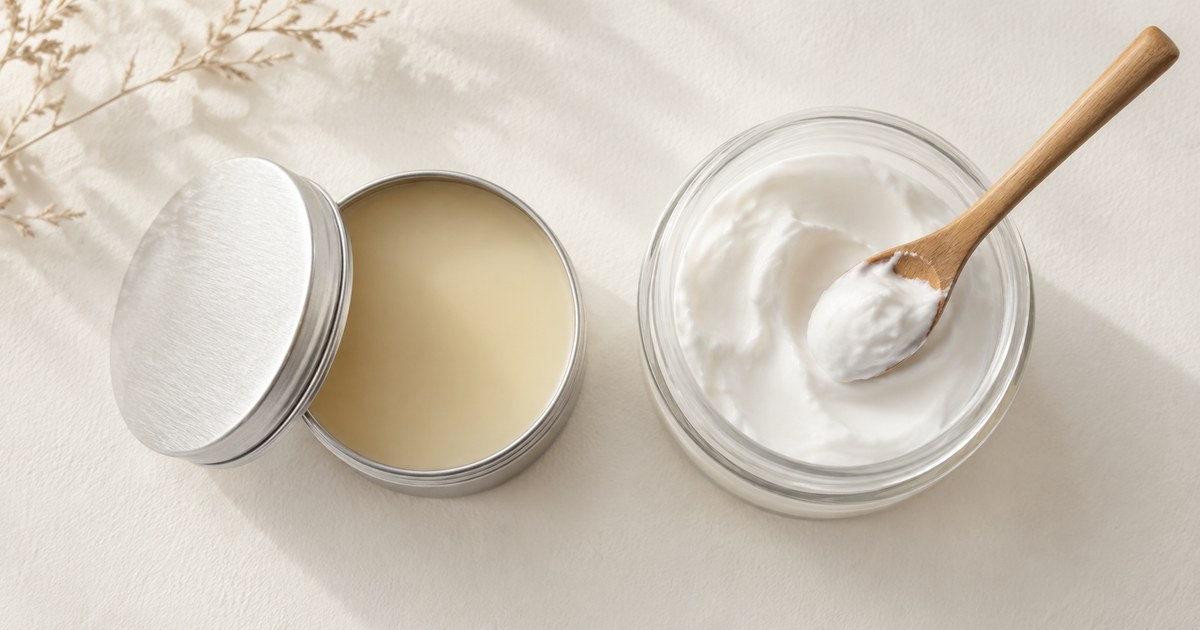
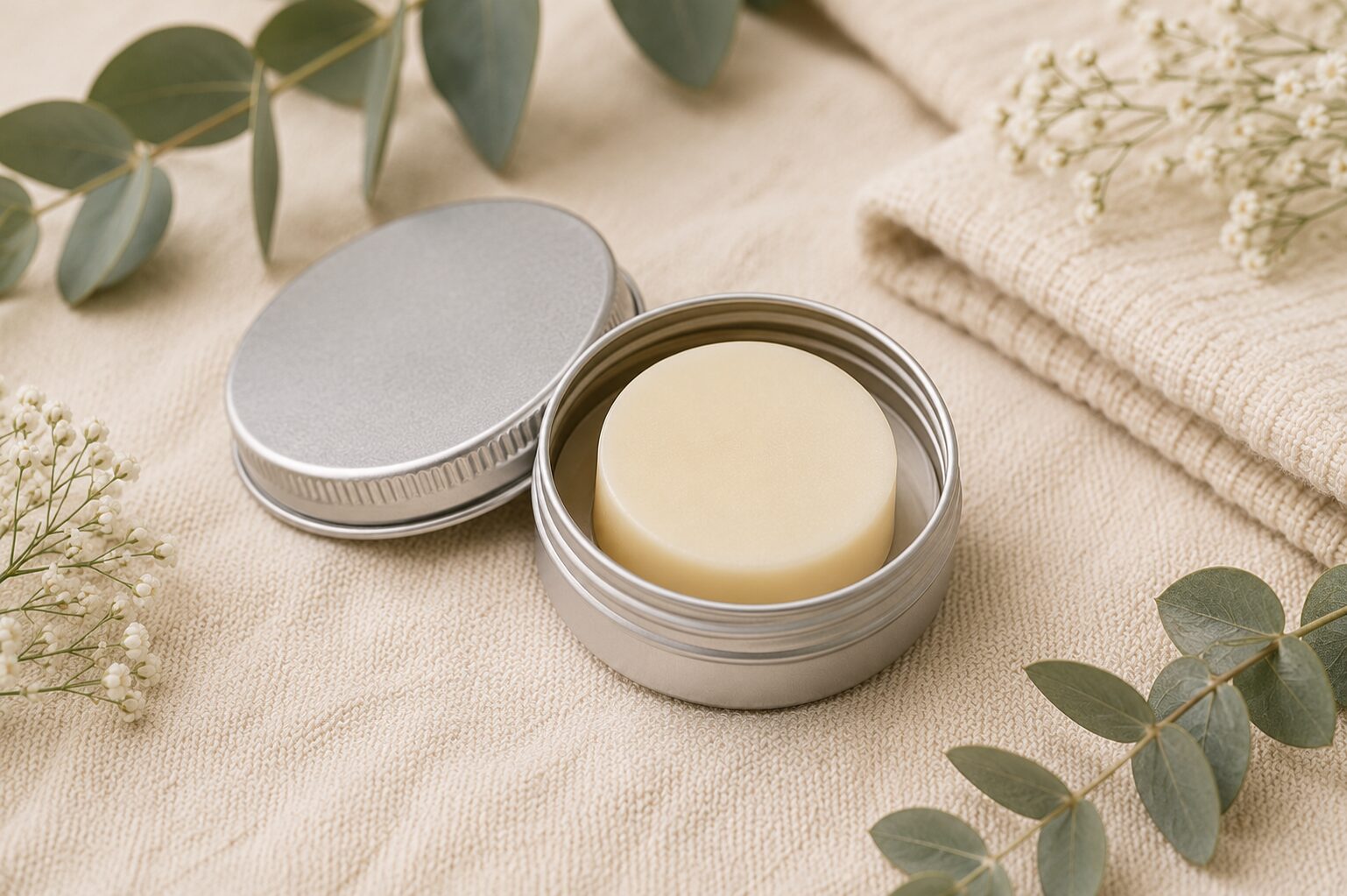
A tallow balm is water-free rendered beef fat set with a little wax, and a body butter is usually shea, cocoa or mango butter, either whipped on its own or blended into a cream. If the butter you are looking at lists water or aqua, the real comparison is a balm against a cream, and balm versus cream covers that ground in full.
This page is about the other comparison, the one between the fats themselves. Tallow, shea, cocoa and mango butter are all solid at room temperature and all slow water loss from skin, but they are built from different fatty acids, they melt at different temperatures, they smell very different in their raw state, and shea in particular has a habit of going grainy. Those differences decide which one feels right on your hands in January and which one you would rather spread over your legs after a shower in July.
None of these four fats is a bad choice. They suit different jobs, different noses and different values, and where the honest answer is that it depends on you, we say that rather than pretend tallow wins every row simply because it is the fat we happen to sell.
Turn the jar over before anything else, because the word on the front settles nothing. “Body butter” is not a defined term, so it covers both a jar of pure whipped shea and a water-based cream with twenty ingredients.
If water is on the list, you are holding an emulsion, with the emulsifiers and preservatives that water requires, a lighter feel and faster absorption. If water is absent, the product is anhydrous and behaves like a balm whatever it is called. Our body balm is the second kind: tallow or coconut oil, beeswax, vitamin E and castor oil, and nothing else. The balm-versus-cream post linked above works through texture, ingredient lists and cost per use for that split, so we will not repeat it.
| Tallow balm | Whipped plant butter | Cream-style butter | |
|---|---|---|---|
| Water | None | None | Yes |
| Preservative needed | No | No | Yes |
| In the jar | Solid, warm to spread | Airy, scoopable | Soft, lotion-like |
| Amount per use | Small | Larger, part air | Larger, part water |
The rest of this page assumes the water-free kind on both sides, so it compares tallow with shea, cocoa and mango butter as fats rather than as formats. That is the comparison the jar labels hide and the one that explains how each product actually behaves once it is on your skin.
All four fats are mixtures of the same handful of fatty acids in different proportions, and the proportions explain most of how each one behaves. Saturated fatty acids such as palmitic and stearic are straight molecules that pack tightly and stay solid. Oleic acid, the main fat in olive oil, has a kink in it that keeps it soft.
| Fat | Main saturated fats | Oleic (the soft one) | Worth noting |
|---|---|---|---|
| Beef tallow | Palmitic ~25%, stearic ~19% | ~36% | Broadest mix, small amounts of several others |
| Shea butter | Stearic ~43% | ~47% | Up to ~8% non-fat plant compounds |
| Cocoa butter | Palmitic ~26%, stearic ~35% | ~35% | Roughly even three-way split |
| Mango kernel butter | Stearic ~45% | ~41% | Very little palmitic |
These are typical figures, and every natural fat varies with its source. Shea and mango are dominated by two fatty acids, stearic and oleic. Cocoa butter adds a large share of palmitic, which gives it a roughly even three-way split. Tallow has the broadest mix of the four, including small amounts of fats such as palmitoleic and myristic acid that the plant butters barely contain.
Shea also carries an unusually large unsaponifiable fraction, the portion that is not fat at all, made up of plant compounds that are part of what makes raw shea distinctive. None of this makes one fat better than another. It is the background to the melting points, smells and textures in the sections that follow.
The four fats melt within about twenty-five degrees Fahrenheit of each other, and that small spread changes how each behaves in a warm bathroom and on skin.
| Fat | Melts around | What that means day to day |
|---|---|---|
| Shea butter | 88–100°F (31–38°C) | Softens in a warm room, melts readily on skin |
| Mango butter | About 96°F (36°C) | Similar to shea, a touch more solid |
| Cocoa butter | 93–100°F (34–38°C) | Hard in the jar, turns glossy quickly on skin |
| Beef tallow | Softens near 100°F, fully melts 108–113°F (42–45°C) | Holds its shape longest, needs warming in the fingers |
Skin on the hands and legs usually sits in the low nineties Fahrenheit, a little below core body temperature. That means shea, mango and cocoa start melting almost on contact, while tallow needs a few seconds of rubbing between the fingers before it turns glossy and spreads.
Cocoa butter is the odd one of the group. It is hard and almost brittle at room temperature, then melts over a narrow range close to body heat, which is the same property that makes a good bar of chocolate snap and then melt in your mouth. On skin it goes from solid to slick very quickly.
In a hot car all four will soften, and tallow will be the last to go. Shea is usually the first, and a jar of it left near a sunny window in summer is often half liquid by the afternoon.
The fats differ most sharply in smell, and unrefined cocoa butter is the strongest of the four by a distance. If you want an unscented body product, this section matters more than any other.
Unrefined cocoa butter smells unmistakably of chocolate. Some people love that in a body product and some find it cloying by mid-afternoon, and it does not fade quickly from skin. Deodorized cocoa butter exists for exactly that reason, and it smells of very little.
Raw shea has a smoky, nutty smell that some people describe as earthy or slightly sour, and it varies a good deal from one batch and region to the next. Refined shea is close to neutral. The trade-offs between refined and unrefined shea are covered in our tallow and shea comparison, so we will leave them there.
Mango butter sold for skincare is usually refined and nearly odorless, which makes it the quietest of the plant butters. Well-rendered tallow has a faint character that a minority of people notice with the jar under their nose and most never detect once it is on skin.
The practical rule for anyone choosing an unscented product is simple. A plant butter labeled unrefined or raw will carry its own smell, and while that smell is not added fragrance, it is not nothing either. Smell the open jar before you commit to a large one, and smell it again on your skin after ten minutes, because a scent that seems mild in the jar can build once it warms.
Shea butter is well known for turning grainy, and the cause is its fats melting and then resetting at different rates. It is not spoilage and it does not change how the butter works, but small hard beads in a jar that used to be smooth are an unpleasant surprise.
When shea warms enough to partly melt, in a delivery truck or a sunny window, and then cools slowly, the higher-melting fats crystallize first and grow into small beads while the softer fats stay soft around them. The result is a butter with tiny gritty specks that melt the moment they touch skin.
Cocoa butter can do something similar. It has six different crystal forms, and chocolate makers temper it precisely so that it sets in the one form that gives a glossy snap instead of a dull, crumbly one. Mango butter is also prone to graininess, though shea is usually the worst of the three.
Melt the butter completely, hold it warm for a while so every crystal is gone, then cool it quickly, ideally in the fridge, so the fats set together instead of in stages. One supplier suggests holding shea at about 175°F for twenty minutes before a fast chill.
Tallow balms can develop a grainy surface after a full melt too, and the melt recovery steps cover that case. In our experience it happens less often with tallow than with shea, and the grain disappears against warm skin either way.
On hands, the difference between these fats is mostly about how long they stay where you put them. Hands get washed many times a day, so a moisturizer there either has to hold on between washes or be quick and easy to reapply.
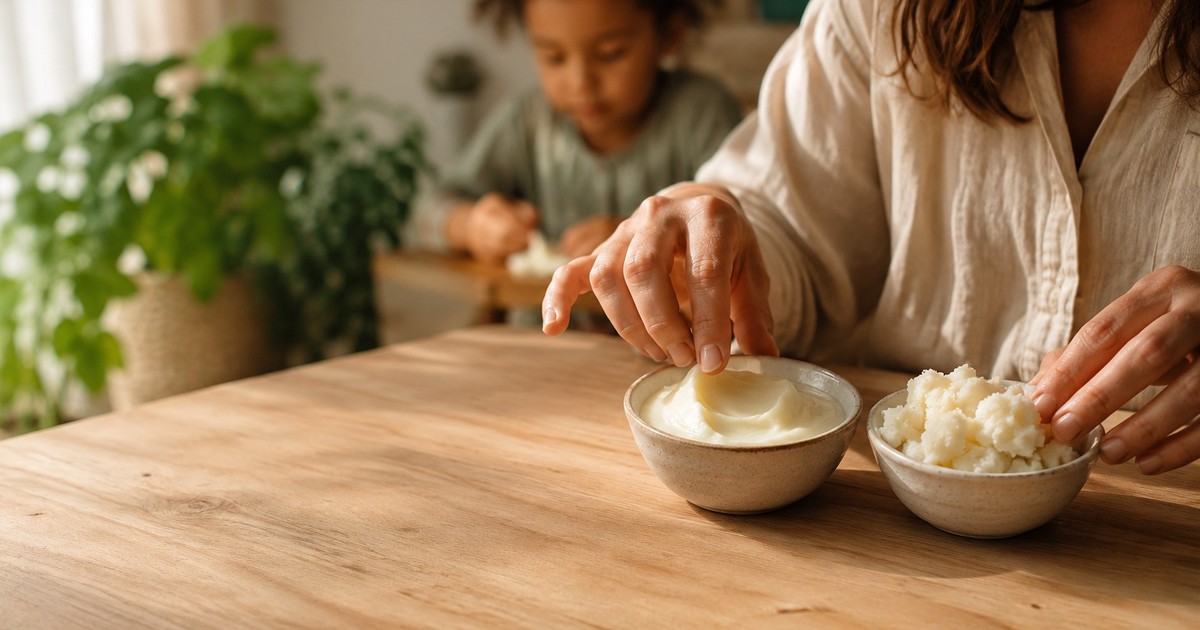
Tallow, warmed between the fingers first, goes on thin and leaves a soft finish that holds up through typing and steering once it settles, which takes a few minutes. People who like it on their hands usually like it for exactly that staying power.
Shea melts faster and feels richer on contact. Unrefined shea leaves a slightly waxy film that some people like on rough hands and others find leaves fingerprints on a phone screen. Cocoa butter is the most noticeable of the four on hands, a slick, glossy layer that takes the longest to stop feeling present, plus the chocolate smell if it is unrefined. Mango is usually described as the lightest and least greasy of the plant butters, which makes it the easiest to use in the middle of a workday.
For hands that are washed constantly, a fat that survives one or two washes saves a lot of reapplying, and that favors tallow or a cocoa-heavy blend. Care for hands that are washed often covers the rest of that routine, from the soap to the timing.
For hands that mostly need a quick touch of moisture before a meeting, mango or a whipped shea is the more practical choice.
Over a large area like the legs, ease of spreading matters more than staying power, and the plant butters have a real advantage there.
Shea and mango start melting on contact with skin, so a scoop spreads down a whole shin without any warming step. Whipped shea in particular covers a lot of skin quickly, which is why it became the classic after-shower body butter.
Tallow covers legs well, but it asks for technique. Warm a fingertip amount in your palms until it turns glossy, then press and sweep instead of dragging it straight from the jar. Done that way it goes surprisingly far, because none of what is in the jar is air or water, and a little covers more skin than people expect.
Cocoa butter is the hardest of the four to spread over a big area. In a cool bathroom it skates across the skin before it melts, which is a large part of why so many body butters blend cocoa with shea or a liquid oil rather than using it alone.
Residue on clothes follows the same pattern. A thin layer of any of them settles within a few minutes, and heavy applications of shea or cocoa leave more on leggings and sheets than most people expect. If you only want to own one product, a reasonable split is to use tallow where skin is roughest and to use less of it on the legs, warmed well.
Shea gets most of the attention among plant butters, but cocoa and mango each have a distinct role worth knowing about.
Cocoa butter is pressed from cacao beans and is the same fat that gives chocolate its snap. It is the hardest of the four at room temperature and one of the more stable natural fats, with a storage life commonly given as two to five years, helped by antioxidants it carries naturally. Formulators often use it to give a balm or bar structure in the way beeswax does.
Mango butter comes from the kernel inside the mango stone. It is mostly stearic and oleic acid, much like shea, but it is usually sold refined, so it brings very little smell, and it is described as lighter and less greasy than shea, which is why it turns up in products meant to absorb quickly.
Both are less common as a single-ingredient product than shea, and both show up most often as part of a blend. If a body butter lists cocoa or mango first, the descriptions above are a fair guide to how it will behave. Cocoa’s long shelf life also makes it a common choice for lotion bars meant to sit in a drawer for months.
For anyone who avoids animal products, tallow is simply off the table, and that is a fair and common reason to choose a plant butter instead. We sell tallow, and we would rather say that plainly than try to talk anyone out of their values.
If what you liked about tallow was the density and staying power, cocoa butter, or a balm built on cocoa and shea together, is the closest all-plant match for that feel. If what you liked was the short label, a jar of single-ingredient shea or mango butter is as short as a label gets.
Read the back carefully, though. Many plant butter balms are set with beeswax, which comes from bees, so a balm can be free of tallow and still not suit someone avoiding all animal products. Why beeswax is not vegan explains the reasoning, and plant waxes such as candelilla do the same structural job for makers who want to avoid it.
Our own balms use beeswax by choice, so none of them is vegan, including the coconut oil version. If that rules us out for you, a plant butter set with a plant wax is the right product, and it is a good one. The fat comparison on this page still applies to it: shea will melt soonest, cocoa will smell the most, and mango will feel the lightest.
Shea butter comes from a nut, and that is worth stating accurately rather than either alarming people or brushing it aside. The shea tree produces a nut whose kernel is crushed, roasted or boiled to release the butter.
Shea used to be included in the list of tree nuts used for food allergen labeling in the United States, and it was dropped from that list in January 2025, along with several other nuts that lacked strong evidence of causing allergic reactions. Food labeling rules do not cover skincare in any case, so that list was never a guide to body products.
Allergic reactions to shea butter on skin are rarely, if ever, reported, and a 2011 laboratory study found no proteins in shea butter that bound to the antibodies involved in nut allergies. Butter is almost entirely fat, and it is the protein in a nut that triggers an allergy, which goes a long way toward explaining why.
Rare is not the same as impossible. A household managing a severe nut allergy may reasonably decide to skip shea anyway, and that is a sensible call rather than an overreaction. Cocoa and mango butter sidestep the question, since cocoa butter comes from cacao beans, which are seeds, and mango butter from the seed inside the fruit’s stone. Tallow sidesteps it completely.
Most of the choice comes down to the job, the smell you can live with, and whether animal products are in or out. Here is how we would match them.
Tallow for staying power between washes, or a cocoa-heavy balm for an all-plant option.
Whipped shea or mango, for speed over a large area.
Tallow, or a cocoa and shea blend, under a pair of cotton socks.
Tallow or refined mango. Skip raw cocoa and raw shea.
Tallow holds its shape longest, and shea softens first.
A plant butter set with a plant wax, never with beeswax.
Whipped tallow sits between the two families, water-free like a balm and airy like a whipped butter. Whipped versus hard tallow sets out the trade-offs between the two.
Blends are often the best answer of all. A balm built mostly on tallow with a little shea, or a butter made from cocoa and mango together, can borrow the strengths of each fat, and a list with two fats on it is still a short ingredient list you can read in a few seconds.
Once the water question is settled, tallow and the plant butters differ in four practical ways: what they are made of, where they melt, how they smell and how they feel. Tallow has the broadest mix of fatty acids and the highest melting point, so it holds its shape longest and stays put on hands. Shea and mango melt on contact and spread easily over large areas. Cocoa is the hardest in the jar and the strongest smelling when raw.
Shea goes grainy after temperature swings, which is harmless and fixable. Shea is also the one nut in the group, and reactions to the butter are rarely if ever reported, though a household with a severe nut allergy can reasonably skip it. Anyone avoiding animal products should choose a plant butter set with a plant wax, and should check for beeswax on the label.
If you want a dense, quiet, unscented balm that holds up in heat, tallow is a good answer. If you want speed over a lot of skin, or you would rather avoid animal products, a plant butter is the better fit, and choosing it is not settling for less. Read the back, smell the open jar, and pick the fat that suits the job in front of you.
Megan co-founded Bear Basics and leads design. As a mom, she writes our gentlest, most practical guides — on ingredients, sourcing, and simple family skincare — with an emphasis on honest, well-sourced, and simple. Read the full story →