Quick answer
Real peer pressure almost never announces itself. It looks like copying, going along, laughing at something that wasn’t funny, or quietly dropping a game because someone called it babyish — which is why children rarely recognize it as pressure at all. The wish to belong that drives it is healthy and worth respecting rather than shaming. What helps: starting the conversation years before it feels necessary, giving kids short rehearsed words instead of speeches, handing them an exit that doesn’t cost social status (including permission to blame you), and — most of all — being the kind of parent who reacts calmly to small news, because that’s what buys you the big news later. Bullying, anxiety about school, or noticeable changes in mood or sleep are a different matter, and belong with teachers, counselors, and your pediatrician.
Answers at a glance6 quick questions
Start when?
Preschool — small moments.
What it looks like?
Quiet copying, not dares.
Best tool?
Short scripts, practiced aloud.
The exit?
Let them blame you.
Always bad?
No — it works both ways.
Get help when?
Bullying, anxiety, mood changes.
01 The short answer
Most of us learned about peer pressure from a school assembly: a circle of kids, somebody holding something they shouldn’t, and the line “come on, everybody’s doing it.” It made for a memorable poster and it prepared almost nobody, because that is not how it happens.
Real peer pressure is quiet. It’s a seven-year-old who stops bringing the lunchbox she loves because somebody raised an eyebrow at it. It’s a nine-year-old laughing along at a joke about a classmate because everyone else did and the pause before laughing felt dangerous. Nobody issued a dare. Nobody would recognize themselves as the pressuring party. That’s exactly what makes it hard to teach.
So this guide skips the assembly version. What it actually looks like at each age, why the pull toward belonging deserves respect rather than a lecture, the short words that work better than speeches, the exit strategy that costs a child nothing socially, and how to stay the person your kid brings things to — which turns out to matter more than any single conversation.
02 What peer pressure actually looks like
If you only take one thing from this article, take the picture — because parents who are watching for the assembly version miss the real thing entirely:
- Copying. A child does something because everyone around them is doing it. No decision was consciously made. This is the overwhelming majority of it.
- Going quiet. Not joining in, but not objecting either — standing in the group while something unkind happens. The pressure here is to not act, which is far more common than pressure to act.
- Dropping things they liked. The stuffed animal, the show, the game, the way they wore their hair — abandoned because somebody signaled it was babyish or weird. Often the earliest sign, and easy to miss as a change of taste.
- Laughing along. At a joke that landed on someone. Kids describe this one with real discomfort later, which tells you they knew at the time.
- Joining an exclusion. Not inviting someone, not sitting with someone — participation by omission, and the version children feel worst about.
Notice what’s missing: nobody said anything. The pressure is atmospheric — a read of the room, not a demand — which is why “just say no” misses. There’s frequently nothing to say no to.
03 Why wanting to belong isn’t a flaw
Before any strategy, a reframe that changes how these conversations go: the drive underneath peer pressure is a healthy one.
- Belonging is a real need, not a weakness. Children are wired to attend closely to their group — to read it, match it, and stay inside it. That instinct is doing something useful; it’s how they learn to cooperate, share norms, and function socially.
- Which means shaming it backfires. “Why do you care what they think?” asks a child to feel bad about something completely normal — and, worse, teaches them that this topic earns disapproval, so they stop raising it. You’ve traded one conversation for all the future ones.
- The goal isn’t immunity. A child who genuinely didn’t care what anyone thought would have a much harder time than one who cares and can still choose. We’re not raising kids who feel no pull — we’re raising kids who notice the pull and can act anyway.
- Say that part out loud. “Of course you wanted to fit in — everyone does. That’s not the problem.” Naming the pull as normal is what makes it discussable, and discussable is the whole ballgame.
The sentence that opens the door
“That sounds like it was hard to do differently.” It grants that the pressure was real before getting anywhere near what your child should have done. Kids who feel understood keep talking; kids who feel judged summarize.
04 The loud kind and the quiet kind
Two kinds, and they need different responses:
- Direct pressure — someone actually asks, dares, or pushes. It’s rarer than the assembly suggests, but it does happen, and it’s where rehearsed words earn their keep (section 7). The good news: because it’s explicit, kids can recognize it in the moment.
- Indirect pressure — the atmosphere. Everyone’s doing it, nobody said anything, and the cost of being the odd one out is entirely implied. This is the majority of it, and it’s much harder to resist precisely because there’s no moment to push back against.
- Different skills for each. Direct pressure needs an exit line. Indirect pressure needs noticing — the ability to catch yourself mid-drift and ask whether this is something you actually want to be doing.
- Teach the noticing question: “Would I be doing this if I were on my own?” It’s a simple internal check, it works at almost any age, and it targets the version of pressure that most needs it.
05 Age by age
What it looks like, and what actually helps, as they grow:
01
Ages 3–5: copying and noticing
Almost pure imitation — if everyone runs to the fence, your child runs to the fence. The skill to build here is simply noticing choices exist: “Everyone was doing that. Did you want to?” Not a lesson, just a question that plants the idea of a self that has preferences separate from the group’s.
02
Ages 6–8: the babyish years
Group identity sharpens and things start getting labeled babyish or weird. Kids drop interests to stay safe. Useful here: naming it out loud (“Sometimes people say something’s babyish just to see who agrees”) and defending their right to like what they like at home, loudly and without irony.
03
Ages 9–11: loyalty and exclusion
Friendship groups tighten and the pressure shifts toward exclusion, secrets, and loyalty tests. This is where laughing along and not-inviting live. Kids this age can handle real conversations about what kind of friend they want to be — and they’re old enough for the exit strategies in sections 7 and 8.
04
Ages 12+: stakes and independence
The pressure gets more consequential and your direct visibility drops sharply. What carries now is everything built earlier — the scripts, the no-questions-asked pickup, and above all whether telling you things has historically gone well. This is when the account you’ve been paying into gets drawn on.
Want the free family bundle?Two Color & Grow coloring books, our Fam Jams family music, and a plain-English skincare guide — free. Grab the bundle — instant download. 06 Start long before it matters
The single most useful timing decision: have these conversations while the stakes are trivially low.
- Because you cannot start them at the hard moment. A first conversation about standing apart from the group, held at thirteen, in a crisis, is a conversation with a stranger. Held at five about a playground game, it’s just how your family talks.
- Small material is the right material. Everyone at the table wanted the same color cup. Everyone in the class decided a song was terrible. These are complete peer-pressure lessons at toddler scale, and they cost nothing emotionally to discuss.
- Use other people’s stories. Characters in books and shows are wonderfully low-stakes — “Why do you think she went along with it?” is a question a child will answer honestly, because it isn’t about them. Stories let children rehearse hard situations from a safe distance, which is precisely why we build them into our Color & Grow books rather than writing lectures for parents to deliver.
- Tell your own. The time you went along with something and wished you hadn’t. Kids find adult fallibility fascinating and reassuring, and it quietly establishes that this happens to everyone rather than being a personal defect.
- Keep it short. Two minutes in the car beats twenty minutes at the table. The goal is many small deposits, not one grand withdrawal.
07 Words they’ll actually use
When there is a moment to respond to, kids need words — and the words most adults suggest are far too long:
- Short beats principled. “Nah, I’m good.” “No thanks.” “I don’t want to.” A child who has to deliver a paragraph about their values will say nothing at all. Brevity is what makes a refusal survivable.
- Low drama is the goal. The aim isn’t to win the exchange or teach anyone a lesson — it’s to decline and move on without becoming the story. Escalating draws exactly the attention a child is trying to avoid.
- Deflection counts. Changing the subject, making a joke, suddenly being needed elsewhere — these are legitimate and often more usable than a flat refusal. Social skill, not cowardice.
- Leaving is a strategy. “You can just go” is genuinely liberating information for a child who assumes they have to stay and manage it.
- Let them pick their own words. A script in your phrasing will sound wrong in their mouth and they won’t use it. Ask what they’d actually say, then help them tighten it.
Rehearsed words come out automatically; unrehearsed values come out as silence. That’s not a knock on children — it’s true of adults in awkward moments too.
08 The “blame me” exit
The most practical tool here, and the one kids adopt most readily: give them permission to make you the bad guy.
- The move: “My mom would absolutely lose it.” “My dad checks.” Your child gets to decline while attributing the refusal to your unreasonable rules — keeping their social standing intact.
- Why it works: the real barrier to saying no is almost never conviction. It’s the cost — looking uptight, being teased, being outside. Blaming a parent transfers that cost onto someone who can absorb it easily. You have no reputation to protect in a middle-school group; they have nothing else.
- Say it explicitly, in advance: “If you ever need to get out of something, blame me. Tell them I’m strict, tell them I’d ground you. I will back you up every time.” Children rarely assume this is allowed unless told.
- Add a signal for older kids. A prearranged text — a single emoji, a code word — meaning come get me now, no questions. And then genuinely no questions in the car; the debrief can happen tomorrow. One interrogation after a rescue and the signal is dead forever.
- Honor it absolutely. The whole thing runs on your reliability. If you use a rescue as a lecture opening even once, you’ve taught them the tool is a trap.
09 Practicing where it’s safe
Words work when they’re automatic, and automatic requires practice — ideally the low-stakes kind:
- Role play, briefly and lightly. “I’ll be the kid asking, you say your line.” Thirty seconds, silly voices encouraged. Kids who’ve heard themselves say the words once are dramatically more likely to say them again for real.
- Let them be both parts. Playing the pressuring kid is revealing for them and informative for you — and it builds the empathy that keeps them from becoming that kid.
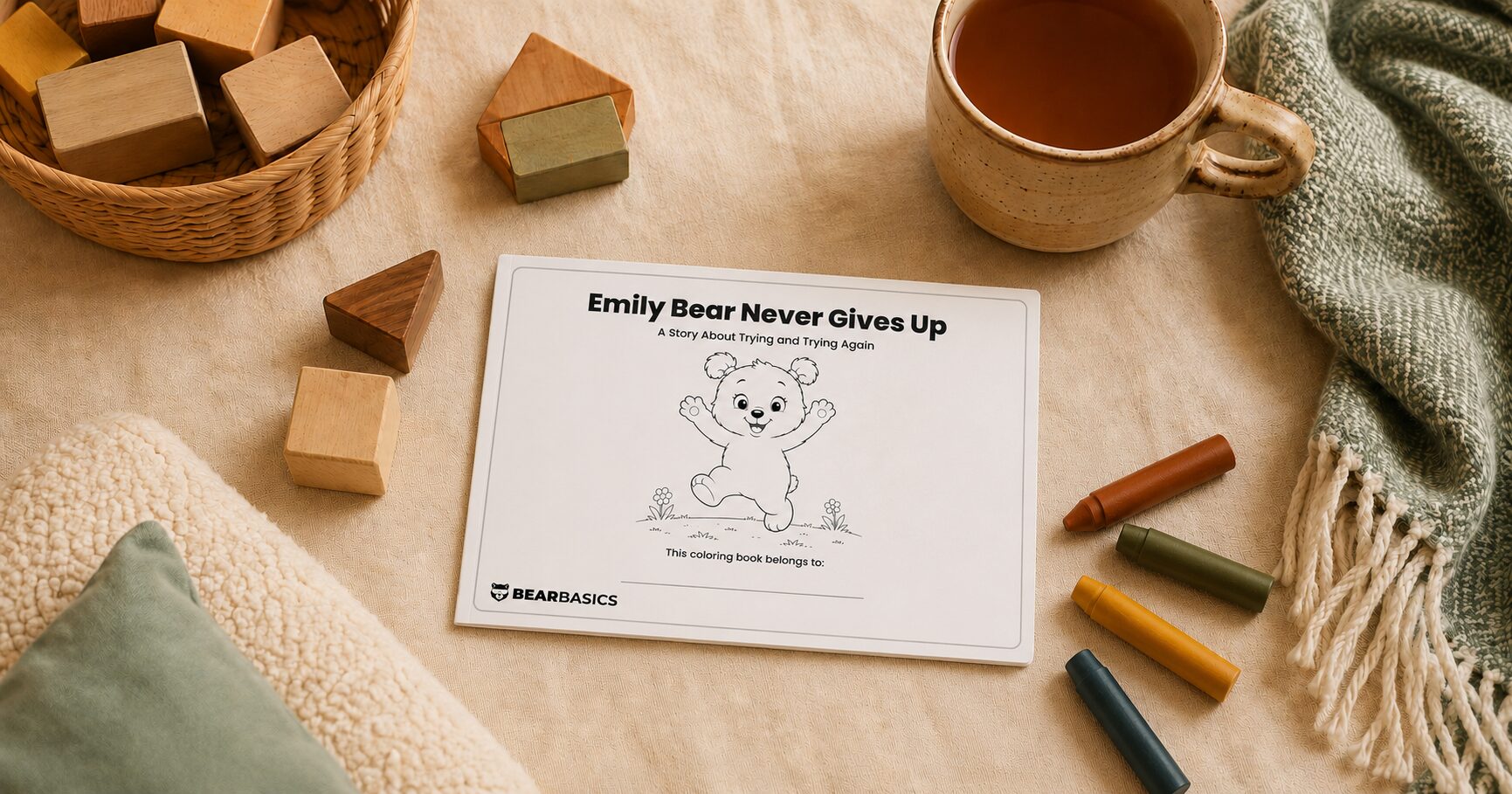
- Use stories as the rehearsal ground. Reading about a character who faces the choice lets a child work through it without any personal exposure — then ask what they’d have done. Our Color & Grow books are built on exactly this: a bear cub, an ordinary hard moment, and a child with total freedom to think about it because it isn’t about them.
- Debrief real events without a verdict. When something happens, lead with curiosity: what happened, what did you do, how did it feel afterward. “How did it feel afterward” does more moral teaching than any judgment you could deliver.
- Praise the attempt, not the outcome. A child who tried to say something and fumbled it deserves more credit than one who happened not to be tested. Reward the effort or they’ll only report successes.
Simple enough for the whole family.Unscented, short-ingredient deodorant and balms — useful when tweens start running their own routines. Shop the line. 10 Staying the person they tell
Everything above depends on one thing: whether your child brings you the situation at all. That’s built long before it’s needed, in unremarkable moments:
- Your reaction to small news sets the price of big news. Children run a constant, mostly unconscious calculation about what’s safe to tell you, based entirely on what happened last time. Overreact to a minor confession and you’ve quietly repriced every future one.
- Listen longer than feels natural. The instinct to fix, correct, or contextualize arrives fast. Kids stop mid-story when it does. “What happened then?” keeps more coming than any advice you could offer at that moment.
- Ask specific questions. “How was school?” produces “fine.” “Who did you sit with?” or “What was the funniest thing that happened?” produces actual information.
- Take side-by-side over face-to-face. Car rides, dish-washing, walks, bedtime. Hard things surface far more easily when nobody has to maintain eye contact — which is why so much real parenting happens in a car.
- Separate the report from the trouble. If telling you something reliably produces consequences for them, the telling stops. Make it explicit: “You will never be in more trouble for telling me than for hiding it.” Then honor it, particularly the time it’s hardest.
- Don’t mine every conversation for a lesson. Sometimes a child just wants to report the day. A parent who converts every story into a teaching moment gets fewer stories.
11 The upside nobody mentions
Worth saying, because the topic gets framed entirely as a threat: peer influence pushes both directions, and often the good one.
- The same force does the work. Kids join teams, take up instruments, study harder, and try things because their friends do. That’s peer influence — identical mechanism, better outcome.
- Groups enforce kindness too. A friendship circle where casual meanness is uncool exerts real pressure toward decency. Children are far more responsive to peer norms than to adult instruction on this point.
- Which makes who they’re around a serious variable. Supporting good friendships — having those kids over, making your house easy to be at, knowing their names — is arguably higher-leverage than any conversation about resisting pressure. You’re shaping the ambient norms rather than fighting them.
- And your child is somebody else’s peer. The kid who says “that’s not funny” changes the room for everyone in it. Framing it that way — “you might be the one who makes it okay for someone else” — gives children agency instead of just defenses, which is a far more appealing thing to be.
That framing is why the stories we write have cubs who choose something, rather than cubs who merely survive being pressured. “Stand tall” is a better instruction than “don’t give in” — one describes a person, the other only a refusal.
12 When it’s more than peer pressure
When to bring in other adults
Peer pressure is ordinary development. Bullying is not, and the two need different responses. Repeated targeting, exclusion campaigns, threats, physical harm, or anything happening online that your child can’t escape by walking away all warrant involving teachers, school counselors, and other parents — promptly rather than after a period of watching. And if your child seems anxious about going to school, or their mood, sleep, appetite, or interest in things they loved changes noticeably, that’s a conversation for your pediatrician. It is always reasonable to ask early; nobody will think you overreacted.
- Ordinary pressure tends to be occasional, mutual, and something a child can describe without much distress.
- Bullying is repeated, targeted, and involves a power imbalance the child can’t resolve on their own — and no set of exit scripts fixes it, which is the key distinction. Handing a bullied child better refusal words puts the responsibility in the wrong place.
- Trust the change in your child more than the details of any single incident. Parents usually notice the shift before they understand the cause, and that instinct is worth acting on.
- You’re allowed to ask for help early — the same standard we apply everywhere on this blog, whether the subject is a child’s skin or a child’s week.
13 The bottom line
Peer pressure, in plain terms: mostly quiet rather than loud, driven by a wish to belong that deserves respect rather than shaming, and best prepared for years before it matters, in conversations small enough to feel like nothing. Give kids short words they picked themselves, an exit that costs them nothing socially — including full permission to blame you — and a rescue signal you honor without interrogation. Then protect, above everything, the thing that makes all of it work: being the person they tell.
And keep the upside in view. The goal was never a child who feels no pull. It’s a child who feels it, notices it, and can still stand tall — and who occasionally makes it easier for the kid standing next to them to do the same.
"‘Stand tall’ is a better instruction than ‘don’t give in.’ One describes a person; the other only a refusal."— The honest verdict
The 6 things to remember
- Real peer pressure is quiet — copying, going along, dropping things they liked.
- The wish to belong is healthy; shaming it just ends the conversation.
- Start in preschool with tiny, low-stakes moments — and other people’s stories.
- Short rehearsed words beat principled speeches; let them choose their own.
- Give them permission to blame you, plus a rescue signal you honor with no questions.
- Bullying is different from peer pressure and needs adults, not better scripts.
Frequently asked
At what age should I start talking to my kids about peer pressure?
Earlier than most parents expect — the groundwork starts in preschool, long before anything dramatic is on the table. At four, it looks like noticing that everyone is doing something and asking whether your child wanted to. The conversations that matter later are built on years of small ones, not on a single serious talk at twelve.
What does peer pressure actually look like in young kids?
Almost never like the movie version. It looks like copying, going along, laughing at something that wasn’t funny, joining an exclusion because everyone else did, or abandoning a game they liked because someone said it was babyish. Nobody says “do this or you’re out” — the pressure is in the atmosphere, which is exactly why kids don’t recognize it as pressure.
How do I teach my child to say no to friends?
Give them words that are short, low-drama, and rehearsed. “No thanks, I’m good,” “Nah, I don’t want to,” or a change of subject work better than a speech. Practice out loud at home so the words are automatic, and make sure they have an exit that doesn’t cost them social status — including permission to blame you.
Should I tell my child to just avoid kids who pressure them?
Usually that’s not realistic and it isn’t the most useful lesson. Children can’t choose their classmates, and the pressure often comes from friends they genuinely like rather than from villains. Teaching them to handle the moment — and to notice how a friendship makes them feel over time — travels further than avoidance.
What is the 'blame me' strategy?
It’s giving your child explicit permission to make you the reason they’re saying no: “My mom would lose it,” or a prearranged text that means come get me, no questions asked. It works because it lets a child exit without losing face with their peers. You absorb the social cost instead of them, which is a genuinely good trade.
How do I get my kid to tell me things?
Mostly by how you respond to the small stuff. Children calibrate what’s safe to share based on what happened last time, so reacting calmly to minor news is what buys you the major news later. Ask specific rather than general questions, listen more than you correct, and separate curiosity from interrogation.
Is peer pressure always bad?
No — the same social pull that gets kids into trouble also gets them onto teams, into study habits, and out of unkindness because their friends found it uncool. Peer influence is a force, not a villain. That’s partly why who your child spends time with matters more than any single conversation about resisting pressure.
When should peer pressure concerns involve a professional?
When there’s repeated targeting or bullying, when your child seems anxious about going to school, when their mood, sleep, eating, or interest in things they loved changes noticeably, or when safety is involved. Those go to teachers, school counselors, and your pediatrician — and it’s always reasonable to ask sooner rather than wait and see.
Megan Smith
Co-Founder, Bear Basics
Megan co-founded Bear Basics and leads design. As a mom, she writes our gentlest, most practical guides — on ingredients, sourcing, and simple family skincare — with an emphasis on honest, well-sourced, and simple. Read the full story →
Stories that do the teaching for you.Our Color & Grow coloring books put hard moments in a cub’s paws, where kids can think them through safely. Prefer Amazon? Find us there too.Get the free bundle