Main cause?
Wet-dry cycles in dry winter air.

Wet-and-dry cycles plus winter air are what split nails and crack cuticles. Seven small habits cover nearly all of it, and none of them involves cutting anything.

Winter nails split and cuticles crack because hands go through constant wet-and-dry cycles in air that holds little moisture. Keep the cuticle instead of cutting it, push it back only when soft, balm the nail folds every night, and wear gloves for dishes and cold. File in one direction and keep a balm handy so you pick less. A balm conditions the nail and cuticle you have; it does not change how a nail grows.
Cuticles crack and nails split in winter because the hands go through dozens of wet-and-dry cycles a day while the air around them holds almost no moisture. Every time a nail soaks up water it swells slightly, and every time it dries it shrinks again. Over a few cold months that repeated flexing loosens the layers of the nail and leaves the thin skin at its base rough, ridged, and ready to tear.
The habits that help are small and boring: keep the cuticle instead of cutting it, push it back only when it is soft, put a dab of balm into the nail folds every night, wear gloves for dishes and for the cold, file in one direction, and give the hands something to do besides picking. None of these takes more than a minute, and together they cover nearly everything that goes wrong.
One limit is worth stating at the start. A balm conditions the cuticle and the surface of the nail you already have, so it looks smoother and peels less. It does not change how a nail grows, which is decided underneath the skin at the base of the nail, and any product promising stronger nails from the outside is promising more than it can deliver.
A fingernail is a stack of thin, hardened keratin layers, and those layers are held together partly by the water inside them. When a nail is full of water, it is flexible. When it dries out, it turns brittle, and brittle layers separate along the edges the way old plywood does.
The cuticle has the opposite problem. It is a strip of dead skin that grows out from the fold at the base of the nail, and it has no oil glands of its own. The rest of your hand gets at least a little help from its own skin oils, while the cuticle depends almost entirely on what you put there.
The nail swells when it is wet and shrinks as it dries. Washing hands ten or fifteen times a day means ten or fifteen of those cycles, and winter air pulls the water out faster each time.
That is why the same person can have perfectly smooth nails in July and ragged ones by January without changing a single habit. Heated indoor air, wind, cold mornings, and more hand washing during cold and flu season all arrive in the same few months, and the nail folds feel it first. Families in dry mountain climates get an extra push, which our guide to high-altitude winter dry skin covers for the whole body.
Here is the whole routine in seven cards. The sections after this one go deeper on the habits that people most often get wrong, but you can start tonight from this list alone.
Leave the cuticle in place rather than cutting it. It is the seal between the nail and the skin fold, and trimming it opens a gap that tends to grow back rougher and more ragged than before.
After a shower or a warm-water soak, nudge the cuticle back with a soft towel or a wooden stick. Never push dry cuticles, which tear instead of sliding.
A rice-grain amount of balm massaged into the base and sides of each nail, plus across the nail plate and under the free edge, before bed.
Rubber gloves with a cotton liner for dishes and cleaning. Hot, soapy water is the single biggest stressor most nails see in a day.
Warm gloves outside, even for a short walk to the car. Cold wind dries the nail folds faster than almost anything indoors.
A fine-grit file moved from the side toward the center, not sawed back and forth, so the layers at the edge stay sealed.
Clip hangnails cleanly, keep a balm nearby, and find a replacement for biting and picking so small tears do not turn into big ones.
If you only adopt two of these, make them the nightly balm and the dish gloves. Those two account for most of the improvement people notice in the first couple of weeks.
The cuticle is not extra skin that needs removing; it is a seal that keeps water, soap, and dirt from getting under the skin fold at the base of the nail. Cutting it may look tidy for a day, but it leaves a raw edge in exactly the place your hands are least able to protect.
Most people who cut their cuticles notice the same pattern. The edge looks clean afterward, then grows back thicker, more uneven, and more likely to split into hangnails. That leads to more trimming, which leads to more ragged regrowth, and the cycle can run for years without anyone connecting the two.
The difference matters most in winter, when the skin around the nails is already dry and slow to close over a cut. A cuticle that is left in place, kept soft, and pushed back gently will usually look neater within a few weeks than one that is trimmed every weekend.
Push the cuticle back only when it has been softened by warm water, and use something soft enough that it cannot dig in. The end of a shower is the easiest time, because your hands have just spent several minutes in warm water and the skin is pliable.
A washcloth wrapped around a fingertip works well, and so does an orangewood stick with its tip rounded. Hold it at a shallow angle and nudge the cuticle toward the base of the nail with light pressure. You are tidying the edge, not scraping the nail plate, so if you feel resistance, stop rather than pushing harder.
Metal cuticle pushers make it easy to press too hard, and dry winter cuticles tear rather than slide. A soft cloth does the job with almost no risk.
Once a week is plenty. Pushing back every day keeps the skin slightly irritated and does not make it look any better. Follow each session with a little balm worked into the fold, because freshly handled skin dries out quickly once you step out of a steamy bathroom and into heated air.
For kids who want their nails to look like a grown-up’s, this is a nice job to share at bath time. A soft towel and a small dab of balm is all a child needs, and it is gentle enough that you do not have to supervise every stroke.
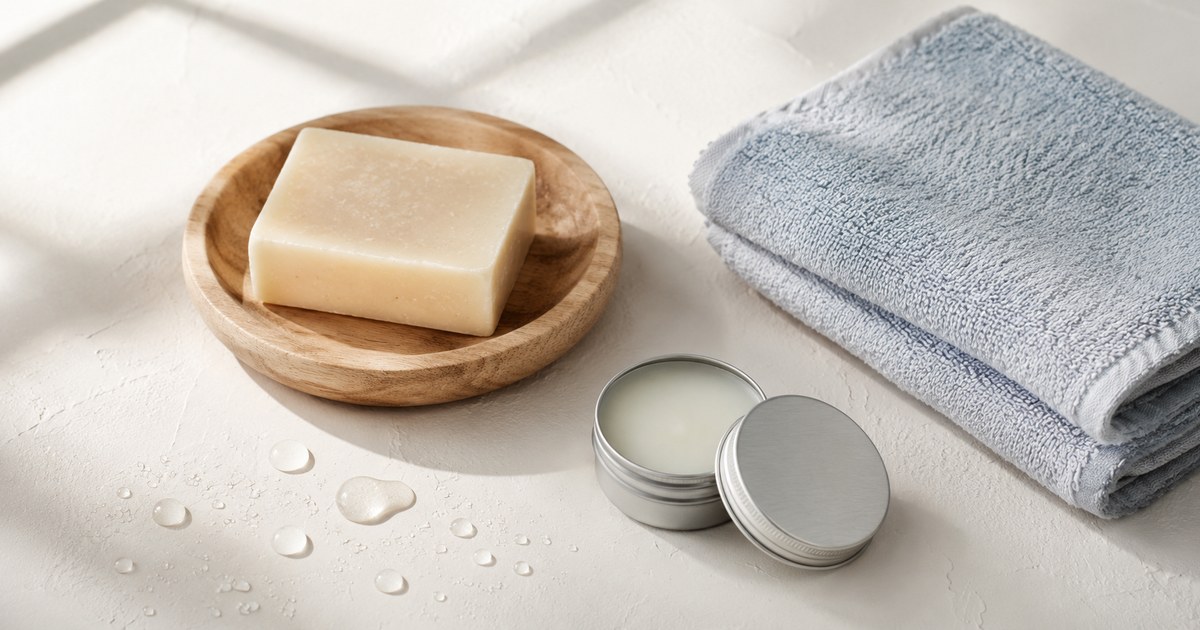
The routine is one minute long: a small amount of balm, worked into the nail folds, across each nail, and under the tip, right before bed. Bedtime is the best window because your hands are about to spend hours away from soap and water.
Take a rice-grain amount and warm it between your thumb and finger until it softens. Press it into the fold at the base of the nail, then along the sides, then rub what is left across the nail plate and into the underside of the free edge, where peeling usually starts. Move to the next finger. Ten fingers take well under a minute once you have done it a few times.
A water-free balm is the right tool here because it stays put. Lotions are mostly water, and much of that water evaporates off a nail within minutes. A balm of fat and wax sits on the surface and slows water loss through the night, which is what a dry nail needs. The difference between ingredients that hold water in and ones that add slip is explained in our post on occlusives, humectants, and emollients.
If your whole hands need help, our hand care guide for frequent washers has an overnight routine with cotton gloves that covers the nails at the same time.
Rubber gloves for dishes and warm gloves for the cold will do more for winter nails than any product you can buy. Both work the same way, by keeping the nail out of the conditions that dry it out in the first place.
Dish water is the hardest thing most nails face. It is hot, it is full of detergent designed to strip grease, and you keep your hands in it for ten or twenty minutes at a time. A pair of rubber gloves takes that whole session off the ledger. If your hands sweat inside them, a thin cotton liner keeps them dry, and you can wash the liners with the kitchen towels.
The same goes for scrubbing the bathroom, washing the car, bathing the dog, and anything else that involves soaking your hands. Keep a pair under the kitchen sink and a second pair wherever you clean most.
Cold wind pulls moisture from the nail folds quickly, and short trips add up. Keep a cheap pair of gloves in the car and by the front door so the five-minute walks are covered too.
Hand sanitizer deserves a mention here as well. It is useful when there is no sink, but the alcohol dries the cuticles noticeably. On days you use a lot of it, put a little balm on the nail folds when you get home rather than waiting for bedtime.
File in one direction, from the outer edge toward the center, with a fine-grit file, because sawing back and forth roughs up the layers at the tip and gives them a place to start peeling. A nail that splits in winter is usually splitting from an edge that was left frayed.
Glass or crystal files tend to leave a smoother edge than coarse emery boards, though a fine emery board works well too if you keep the strokes light and one-directional. Avoid files labelled for acrylic nails, which are far too coarse for natural nails.
Shape matters a little. A gently rounded or squared-off shape with soft corners is less likely to catch on sweaters and pockets than a sharp point. Keeping nails a bit shorter in winter also helps, because a long free edge levers back and forth every time it taps a keyboard or catches on a zipper.
File nails when they are dry. A soaked nail is soft and bends under the file, which makes it easy to tear the layers instead of smoothing them. If you have just showered, give it twenty minutes before filing, and use that time to push back your cuticles instead.
A hangnail is a small strip of dry skin that has lifted away at the side of the nail, and pulling it almost always tears a bigger strip of live skin along with it. Clipping it close with clean nippers ends the problem in a second.
Picking and biting are harder, because they are usually habits rather than decisions. Dry, ragged cuticles make the urge stronger, since rough edges catch the fingertips and draw attention, which is one more reason to keep them soft with a balm. People who keep a small tin within reach often find that reaching for it replaces the pick.
A few other things help. Keeping nails short gives teeth less to grab. Keeping hands busy during the moments you usually pick, such as reading, driving, or watching a show, breaks the pattern. For children, a gentle reminder and a balm of their own work better than scolding, which tends to push the habit somewhere you cannot see it.
Dry skin around the nails also tends to itch and tingle, and that sensation is a large part of what pulls fingers toward it. Our post on why dry skin itches explains where that feeling comes from, and it is one more reason a soft, conditioned cuticle gets picked less than a rough one.
A balm conditions the nail you can see and the skin around it, and it does not change the nail that has not grown yet. That distinction matters because a lot of nail products are sold on promises about strength and growth that a surface product cannot keep.
The new nail is made in the matrix, a pocket of tissue hidden under the skin at the base of the nail. By the time a nail is visible, it is finished keratin, and nothing rubbed on top of it reaches back into the matrix to make it thicker or faster growing. What a balm can do is keep the existing layers more flexible so they peel and split less, and keep the cuticle soft enough that it does not crack.
| A nightly balm | Not something a balm does | |
|---|---|---|
| Cuticles | Softer, fewer cracks and hangnails | — |
| Nail surface | Less peeling at the tip, smoother look | Changing thickness |
| Growth | — | Faster or stronger new nail |
| Timeline | Feel within days, look within weeks | Overnight transformation |
Fingernails grow slowly, around three and a half millimeters a month in a study of healthy young adults, so a nail that split in December will still be growing out in February. Judge the routine by the cuticles and the new growth near the base rather than by the old damage at the tip.
Any simple, water-free balm without added fragrance will do this job, and the choice between bases mostly comes down to texture. Fragrance is worth avoiding here because you are applying it to skin that is often cracked and that sits right next to your face when you sleep.
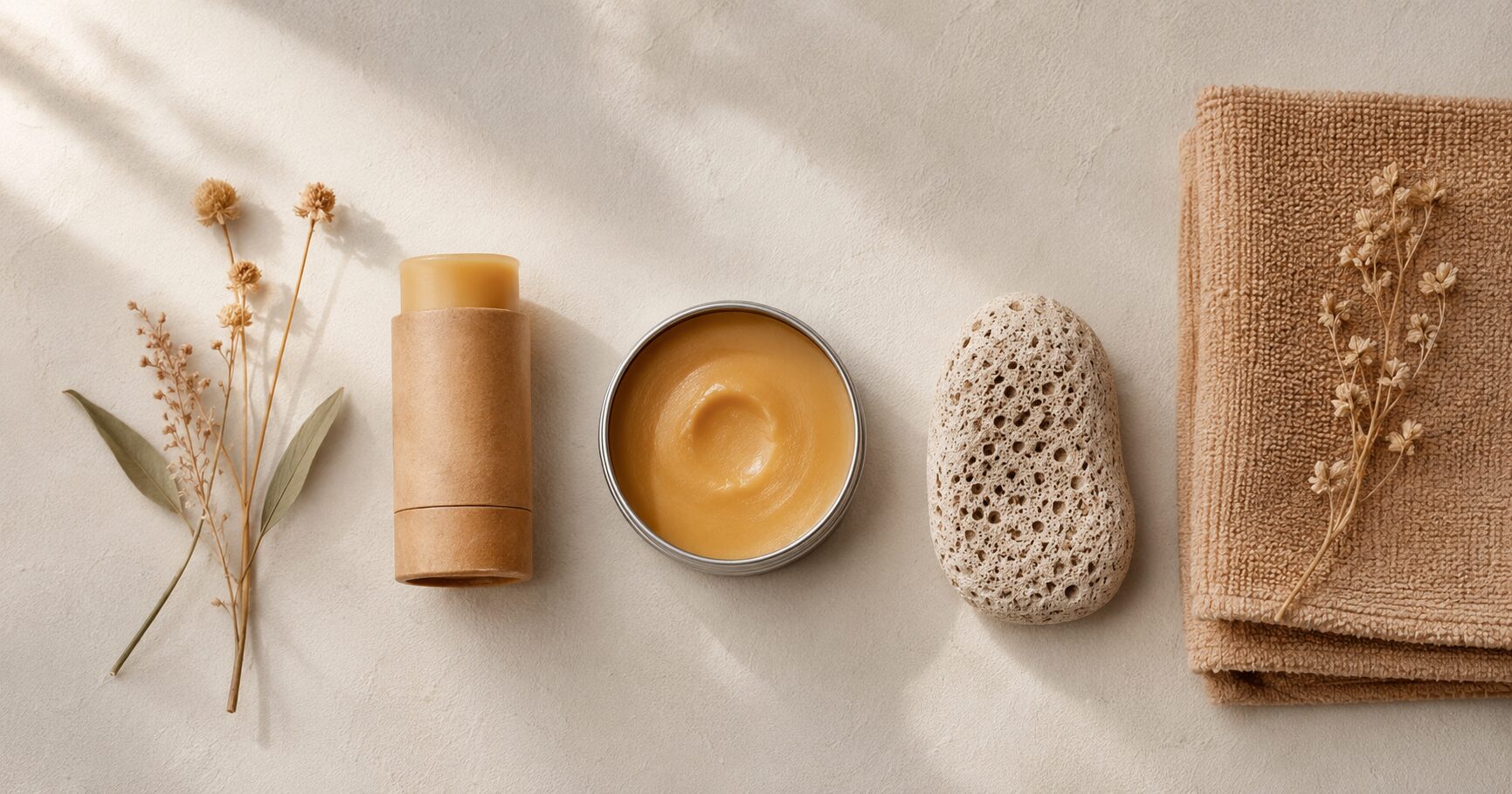
Our beef tallow body balm is the richer of our two and stays on the nail folds a little longer, which suits people whose cuticles are already split. The coconut oil body balm melts faster and feels lighter, which some people prefer for a quick pass during the day. Coconut used to be grouped with tree nuts on allergen lists and no longer is, and anyone with a known coconut allergy should choose the tallow version; here is the full story.
Both are made with beeswax, which is what lets them hold their shape in a tin and stay on the skin. That also means neither is vegan, which we say up front rather than leave for the label. Our post on what beeswax does in skincare explains why we use it.
A lip balm tube works in a pinch, too. It fits in a coat pocket, and running it along the nail folds at a red light is an easy way to add a daytime pass without opening a tin.
Most winter nail trouble is dryness and wear, and it improves within a few weeks of gloves and a nightly balm. A few signs point to something that a balm is not meant to handle.
Nails that change color, lift away from the skin underneath, develop pits or deep ridges across the whole nail, or change shape are worth noting, especially if only one or two nails are affected. So is splitting that continues all year round regardless of season, since that points away from winter air as the cause.
A nail fold that is swollen, hot, throbbing, or collecting pus needs to be looked at by someone who can examine it in person, not covered with more balm.
Short of that, keep going with the routine for a full month before deciding whether it is working. Cuticles usually respond within a week or two. The nail itself takes longer, because the improvement shows up first in the new growth at the base and has to work its way out to the tip.
It helps to take a quick photo of your hands on the first night and another after four weeks. Day-to-day changes are too small to notice, and a side-by-side comparison under the same light is the most honest way to see whether the cuticles have smoothed out and the peeling at the tips has slowed.
Winter nails split and cuticles crack because the hands go wet and dry all day in air that holds no moisture, and the fix is to keep water off them when you can and put a little fat back on them every night.
Leave your cuticles in place, push them back only when they are soft, wear gloves for dishes and for the cold, file in one direction, and keep a balm within reach so you are less tempted to pick. Expect the cuticles to look better within a couple of weeks and the nails to follow as new growth comes in.
A balm will not make a nail grow stronger, and we would rather tell you that than sell you a promise. What it will do is keep the nail and cuticle you already have from drying out, which is most of what winter takes from them.
Start with the two habits that matter most, the nightly balm and the dish gloves, and add the rest as they become automatic. By the time the weather turns warm again, the routine will feel like part of brushing your teeth, and next winter will start from a much better place.
Megan co-founded Bear Basics and leads design. As a mom, she writes our gentlest, most practical guides — on ingredients, sourcing, and simple family skincare — with an emphasis on honest, well-sourced, and simple. Read the full story →