What is each?
A mineral and an acid.

A mineral powder and an exfoliating acid are not the same kind of decision. What each one is, what daily exfoliation asks of underarm skin, and who should pick which.

Magnesium hydroxide is a mineral compound and mandelic acid is an alpha hydroxy acid, which means one sits on your skin and the other exfoliates it. Both are used to control odor. The underarm is thin, folded, occluded, and usually shaved, so putting a daily exfoliant there is a meaningfully bigger ask than putting a powder there. Neither ingredient reduces how much you sweat, because neither is an antiperspirant.
Magnesium hydroxide is a mineral powder and mandelic acid is an exfoliating acid, and that difference — not strength — is what should decide which one you put under your arms every day. Both are being used to control odor in natural deodorant right now. They are not the same kind of ingredient, and they do not ask the same thing of your skin.
Mandelic acid belongs to the alpha hydroxy acid family, the same group as glycolic and lactic acid. An AHA loosens the bonds between dead cells at the surface so they shed faster. That is a real, useful effect, and it is also an active process happening on skin that is thin, folded, warm, and usually shaved.
Magnesium hydroxide is a mineral compound. It controls odor. It is not an acid, it is not an exfoliant, and it is not doing anything to the surface of your skin beyond sitting there.
Daily exfoliation of an underarm is a larger ask than the same habit on a face, and that is the part of this comparison most product pages skip.
Mandelic acid has been in skincare for decades, almost entirely on the face. It is named for Mandel, the German word for almond, because it was first obtained from bitter almonds. Most of what is sold today is produced synthetically, which is worth knowing if you assumed the name meant the bottle contained something almond-derived.
Its reputation in facial skincare is as the mildest member of the AHA family. The usual explanation is molecular size: a mandelic acid molecule is larger than a glycolic acid molecule, so it moves into the skin more slowly and works less aggressively. People with skin that cannot handle glycolic acid often get along with mandelic.
An alpha hydroxy acid loosens the connections holding dead cells to the surface of your skin so they come away sooner than they otherwise would. That is exfoliation. It is an active change to the top layer, repeated every time you apply it.
The move into deodorant is recent. The logic is that odor involves the surface of the skin, so an ingredient that turns over the surface faster should have an effect on odor. That reasoning is not unreasonable. It is also very new, and the long-term data that exists for mandelic acid comes from faces, not underarms, which are a different environment entirely.
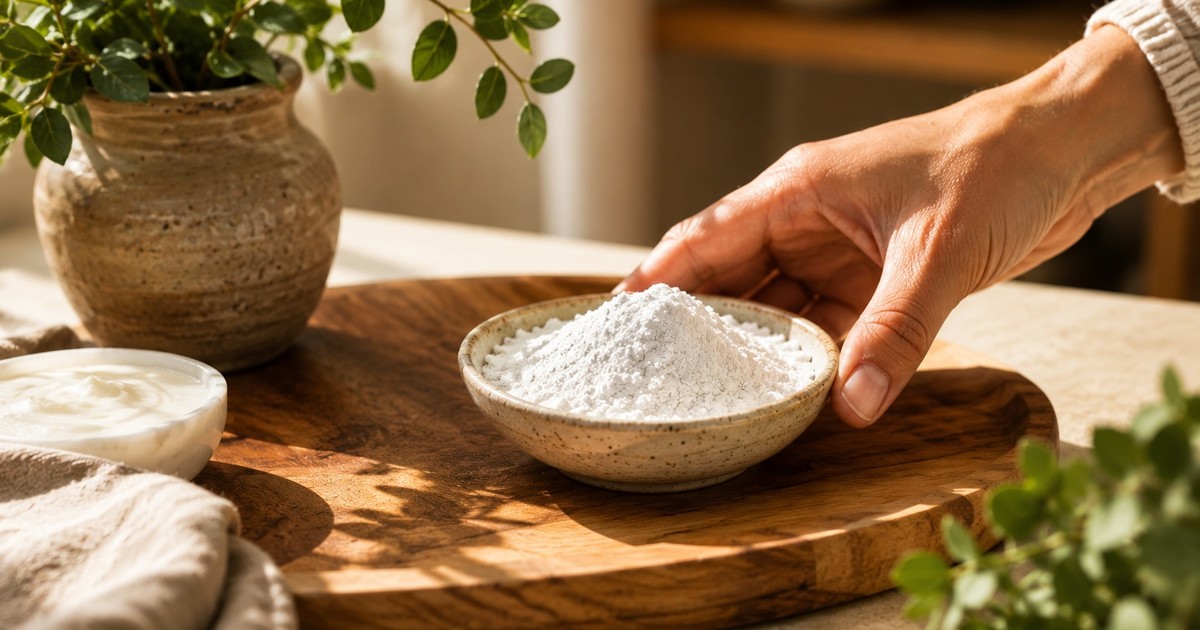
Magnesium hydroxide is a mineral compound, and you have almost certainly met it. It is the active ingredient in milk of magnesia, which has been sold over the counter in the United States for well over a century.
That length of record is the main thing it has going for it. This is not a compound that appeared four years ago looking for a product category. It is old, well characterized, and extremely boring in the way you want an ingredient you apply daily to be boring. We wrote a longer piece on what magnesium hydroxide does in a deodorant if you want the detail.
In a stick it has one job, which is controlling odor. We are deliberately not going to dress that up. A lot of pages about this ingredient reach for dramatic descriptions of what happens the moment it touches you. Our version is shorter: here is what it is, here is confirmation it is in there, and the result on your own skin settles the rest.
It is also inert in the ways that matter for a daily product. It is odorless, it does not add scent, and it does not change the texture of the skin it sits on. Nothing is being turned over, loosened, or shed. The powder is suspended in the base and it stays on the surface.
The comparison without any marketing on top of it.
| Magnesium hydroxide | Mandelic acid | |
|---|---|---|
| Category | Mineral compound | Alpha hydroxy acid |
| Acts on skin? | No | Yes — exfoliates |
| Controls odor | Yes | Yes |
| Track record on skin | Over a century | Decades on faces, recent on underarms |
| Interacts with shaving | Minimal | Yes — shaving also exfoliates |
| Adds scent | No | No |
| Sun sensitivity to consider | No | AHAs can increase sun sensitivity |
| Stops you sweating | No | No |
The row most people skim is the one about acting on skin. An exfoliating acid is doing something to you, every day, by design. A mineral powder is not. Whether that is a drawback depends entirely on whose underarms we are talking about, which is the subject of the next few sections.
The bottom row applies to both. Neither ingredient reduces how much you sweat, because neither one is an antiperspirant.
The underarm is one of the least forgiving pieces of skin on the body, and an exfoliating acid asks more of it than a powder does. Facial skin gets rinsed, dried, and left alone for hours. The underarm does not get that courtesy.
It stays warm. It stays damp. It is folded against itself, so product sits in a crease instead of drying down flat. It rubs against the opposite surface and against fabric all day long. Occlusion like that intensifies whatever you put there, which is why ingredients that are unremarkable on an arm can be a problem in an armpit.
Most people also shave it. Shaving is already a mechanical exfoliation — a blade dragged across the surface removes the top layer of cells along with the hair. Adding a chemical exfoliant on top of that means the surface is being turned over twice by two different methods, often within the same hour.
Very few people set out to exfoliate their underarms twice a day. It happens because shaving does not feel like exfoliation and an acid in a deodorant does not look like a treatment. Two mild things can add up to one immoderate thing.
None of this makes mandelic acid a bad ingredient. It makes it an ingredient with a context, and the context under your arm is harsher than the context on your cheek.
Mandelic acid earns the description. Among acids it is the slow, mild one, and people who cannot tolerate stronger exfoliants often do fine with it. That is a genuine advantage and we are not interested in talking anyone out of it.
Gentlest within a category is not the same as gentle in absolute terms. The mildest exfoliating acid is still an exfoliating acid. Comparing it to glycolic acid tells you where it sits among acids. It does not tell you how it compares to an ingredient that is not doing any exfoliating at all.
There is a second thing worth flagging. AHAs are associated with increased sun sensitivity, which is the reason facial AHA products carry sun-exposure guidance. Most people are not sunbathing their underarms, so the practical risk is low, but if you spend summer in a swimsuit it belongs on your list of considerations.
And a third. Because exfoliation produces a visible, feelable change — smoother surface, sometimes a mild tingle — it can read as the product working harder. A sensation is not a measure of effectiveness. Plenty of ingredients do their job without announcing themselves, and a stick that feels like nothing can still be the one controlling odor better for you.
There is no test that settles this in advance. What there is, is a set of situations that tilt the odds, and most people can locate themselves on this list in about ten seconds.
The household column is worth expanding. When one stick gets used by several people with different skin, an active ingredient multiplies the number of ways the experiment can go sideways. An inert mineral powder is the easier thing to hand a thirteen-year-old. We covered the age question separately in natural deodorant for kids and tweens.
If you are honestly on the fence, the deciding question is whether you want your deodorant to be doing something to your skin or simply sitting on it. Both are defensible answers. They are just different answers.
If you shave your underarms and you want to try an exfoliating deodorant, the timing between the two is the whole game.
Freshly shaved skin has just lost its top layer. Applying an acid to it immediately is the version of this that goes badly, and it is also the most natural order of operations — shave in the shower, dry off, apply deodorant, leave the house. The sequence that causes the problem is the sequence almost everyone already uses.
The fix is unglamorous and it works. Shave at night, apply deodorant in the morning. That puts six or eight hours between the two, which is enough for most people. If you would rather not reorganise your routine around a deodorant, that preference is itself an argument for the non-acid option.
Stinging on application, redness that lasts past the first hour, or skin that feels raw by the end of the day are reasons to stop, not reasons to persevere. An exfoliant that is overdoing it does not settle down with more use.
Magnesium hydroxide has far less interaction with shaving, which is not the same as none. Applying anything to skin you shaved four minutes ago is asking a lot of it. The gap still helps. It just matters less.
Both ingredients sit in deodorants, not antiperspirants, so neither changes how much you sweat, and natural deodorant vs antiperspirant covers that split in full. What differs is how each one feels going on and how each one is sold.
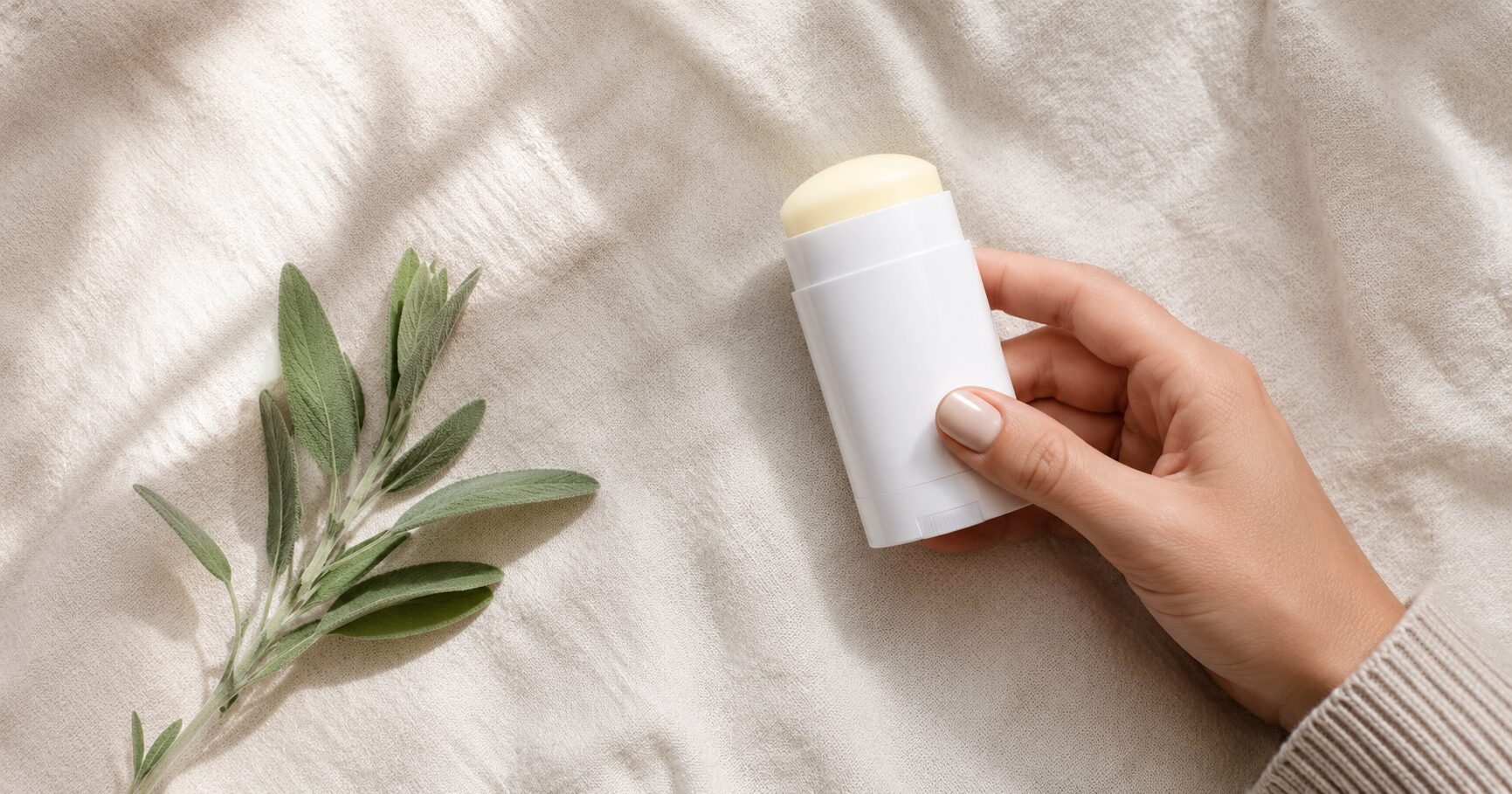
A mineral stick feels like a balm with a faint powdery finish. There is no sensation on application, on shaved skin or unshaved, and the main thing people notice in the first week is the glide of the base rather than anything the active is doing. Mandelic acid more often comes in a cream, gel, roll-on or spray, and some people feel a light tingle as it goes on, especially on skin shaved that day. A tingle that fades in a minute is common with acids; one that turns into a sting is the skin telling you something.
The front of the box uses different language for each. Acid products tend to lead with words like smoothing, exfoliating, renewing or brightening, or with the letters AHA, because the surface change is the selling point. Mineral products tend to lead with what is absent, such as baking-soda-free or aluminum-free, and the word magnesium on the front can mean more than one magnesium compound, so the panel on the back is where you confirm which one you are buying.
The people who stick with an acid long term are usually the ones who wanted the texture change as much as the odor control. The people who stick with a mineral are usually the ones who wanted their deodorant to go unnoticed.
We use magnesium hydroxide. Our deodorant has five ingredients total — not five headline ingredients with a supporting cast underneath, five in the whole stick.
The base carries everything else and determines how the stick glides.
Structure. Beeswax comes from bees, which means these products are not vegan, and we would rather state that plainly than let somebody find out after they have paid for it.
Odor control. One ingredient, one job, and no acid in the formula.
Keeps the oils from going off, which is what lets us skip a separate preservative system in a product with no water in it.
Texture. It is a seed oil and we are open about that — why we still use castor oil is the long answer.
No added scent, in either base. There is nothing to cover and nothing extra for reactive skin to negotiate with, and no acid doing anything to the surface of the skin while it sits there.
You do not have to take anyone's word for what is in a deodorant, ours included. The ingredient panel settles it in about ten seconds once you know what you are looking at.
Ingredients are listed in descending order of how much is present. Magnesium hydroxide appears under its own name. Mandelic acid also appears under its own name, though some panels list it as alpha-hydroxyphenylacetic acid, which is the same compound wearing a longer coat.
Check how far down the panel the active sits. Entries run from most to least, so an acid near the bottom is present in a small amount and an acid near the top is not. That position tells you more about what you are buying than the front of the box does.
Look for the acid even when the marketing leads with something else. A product can be sold on its scent story or its packaging and still contain an active exfoliant partway down the panel. That is not deception, but it is easy to miss. Our guide to reading a skincare ingredient label walks through the conventions.
Whichever you try, run it as a real trial and not a vibe. Four habits make the result legible.
Change one thing. Starting a new deodorant the same week you switch detergent, start a new razor, or begin a new workout schedule means you will not know what caused what. Give the deodorant a clean two weeks of its own.
Use less than you think. A thin pass is enough for either ingredient. A heavy layer gives skin more to deal with, takes longer to absorb, and is the most common cause of marks on dark fabric.
Write down day three, day seven, day fourteen. Irritation from a daily product often arrives in week two rather than on day one, which is exactly when memory gets unreliable. Three timestamps beat a general impression.
Judge odor in the evening, not the morning. Everything works at nine in the morning. The useful data point is how you are doing at six in the evening, and whether that is better or worse than what you used before. If the answer is worse, a few specific fixes are worth trying before you write off the category.
Mandelic acid and magnesium hydroxide both control odor, and the honest difference is that one of them exfoliates your underarm every day and the other does not. Pick based on whether you want that.
If you already use acids happily, do not shave often, and like the idea of smoother skin there, mandelic acid is a reasonable thing to try. If your skin is reactive, you shave most mornings, or you are buying one stick for several people, a mineral powder is the lower-variance choice and it is what we make.
Neither one reduces how much you sweat. That is your body cooling itself, it was never the product's to take away, and any page that implies otherwise is selling you something a deodorant cannot do.
Megan co-founded Bear Basics and leads design. As a mom, she writes our gentlest, most practical guides — on ingredients, sourcing, and simple family skincare — with an emphasis on honest, well-sourced, and simple. Read the full story →