Quick answer
Slugging is sealing damp skin under a thin occlusive layer overnight so moisture can’t evaporate while you sleep — and a natural tallow or coconut balm does the job beautifully. The method: gentle wash, leave skin slightly damp, warm a small amount of balm between fingers, press a thin, even layer over the dry zones, use an old pillowcase, rinse in the morning. It suits dry, tight, flaky, weather-stressed skin one to three nights a week; it does not suit active breakouts, congestion-prone zones, or broken skin, where sealing things in works against you. Thin layer, damp skin, modest frequency — that’s the whole art.
Answers at a glance6 quick questions
What is it?
Overnight occlusion — seal damp skin, sleep.
Need petroleum?
No — a fat-and-wax balm works.
Best for?
Dry, tight, flaky skin & harsh weather.
Avoid if?
Breakouts, congestion, broken skin.
How often?
1–3 nights/week, seasonally.
The secret?
Damp skin + thin layer.
01 The short answer
Every few years, skincare’s oldest tricks get rediscovered with better branding, and slugging is the reigning champion of the genre: coat your face in an occlusive layer at bedtime, wake up with plump, comfortable skin, tell the internet. The name — borrowed from the dewy sheen of a garden slug — did more for overnight occlusion than fifty years of dermatology pamphlets.
Here’s what the trend cycle rarely mentions: the technique doesn’t care what your occlusive is. It’s usually demonstrated with petroleum jelly because that’s the occlusion benchmark — we gave it full, honest credit in yesterday’s petrolatum profile — but a well-made tallow or coconut balm runs the same play with a few advantages of its own: skin-kindred fatty acids in the layer, a more breathable finish, and an ingredient list with a farm behind it.
This is the complete natural-balm slugging playbook: the mechanism, the honest suitability test (this trend is genuinely not for everyone), the exact steps, and the mistakes that turn a good trick into a congested morning.
02 What slugging is (and isn’t)
Strip the trend packaging and slugging is one move: make the last step of your night routine a sealing layer, applied over damp or moisturized skin, left on while you sleep.
What it is: overnight occlusion — the same “close the door on moisture” job from the three-job taxonomy, held in place for seven uninterrupted hours. Sleep is the ideal window for it: no wind, no washing, no sunscreen conflicts, nobody to see the sheen.
What it isn’t:
- Not a treatment. Slugging comforts dry skin and supports the barrier’s own overnight rebuilding; it doesn’t treat any condition, and persistent redness, rashes, or broken skin need a dermatologist, not a thicker layer.
- Not a moisturizer replacement. It’s a seal over moisture, not a source of it — the water underneath is the payload.
- Not a nightly obligation. The internet slugs daily for content; your skin almost certainly wants it occasionally, seasonally (section 10).
03 Why it works: the overnight seal
Why does such a simple move produce such noticeable mornings? Because it targets the exact mechanism behind most dry-skin misery: transepidermal water loss — the constant evaporation of your skin’s water into the air — which runs fastest precisely when skin is dry, the air is dry, and the hours are long. That’s a winter night, described perfectly.
- Overnight is peak leak. Indoor heating drops humidity, and seven-plus hours is the longest unmoisturized stretch your skin faces.
- A seal flips the window. Slow the evaporation and those same hours become the barrier’s best shift: skin rebuilds its lipid mortar on its own schedule, and slugging simply stops the water from leaving while it works. (The full mechanics live in the skin barrier explainer.)
- Damp skin is the payload. Occlusives seal in whatever’s present at application — water if skin is damp, dryness if it isn’t. This single fact separates transformative slugging from pointless slugging.
That’s the whole physics. No ingredient magic, no penetration claims — just a door, closed at the right moment, for the right number of hours.
04 Petroleum slugging vs balm slugging
The honest matchup, since the trend defaults to petroleum and we obviously don’t:
- Seal strength: petrolatum wins narrowly — it’s the benchmark, as we said plainly in its profile. A tallow-and-beeswax balm seals within hailing distance; on damp skin, the practical difference by morning is small.
- What’s in the layer: the balm wins outright. Petrolatum is inert — a pure film. Tallow’s fatty acids overlap with the barrier’s own lipids, so the sealing layer doubles as compatible material sitting right where skin is restocking. Inertness has its place; contribution is nicer.
- Sleep feel: balm, for most people — it sets to a soft, non-migrating finish rather than an all-night slick. Pillowcases agree.
- Sourcing: pasture versus refinery — the preference we’ve stated plainly and won’t re-litigate here.
Fair bottom line: petroleum slugging is legitimate; balm slugging trades a sliver of seal for contribution, comfort, and traceability. We think that’s the better trade every night of the week — but it is a trade, and now you know its terms.
05 Who slugging genuinely suits
Slugging earns its hype for a specific roster of skin situations. You’re a strong candidate if any of these sound like your mirror:
- Winter face — tight, flaky, wind-chapped cheeks that no daytime product seems to fix. Overnight occlusion is usually the missing piece, and it pairs perfectly with the high-altitude winter protocol.
- Skin that’s dry by morning regardless of what you apply at night — the classic sign your moisture is evaporating overnight rather than absorbing.
- Post-weather stress — a windburned ski day, a sunburn’s dry aftermath (once any actual burn has settled — broken or blistered skin is doctor territory, not slug territory).
- Over-washed hands — parents, nurses, cooks, dishwashers: hand-slugging under cotton is the oldest trick in this article.
- Chronically rough zones — heels, elbows, knuckles, where the heel protocol is essentially slugging with socks.
The common thread: dryness driven by water loss. If that’s your skin’s complaint, slugging addresses the cause, not the symptom.
06 Who should sit this trend out
Now the section trend coverage always mumbles through. Slugging has real contraindications, and respecting them matters more than the technique itself:
- Active breakouts. A strong seal traps oil, debris, and bacteria against skin — precisely what a breakout doesn’t need. Acne-prone readers: our honest take on tallow and breakout-prone skin is in its own article, and persistent acne deserves a dermatologist’s plan, not a trend’s.
- Congestion-prone zones. If your T-zone congests when you look at it wrong, don’t slug it — zone-slug the dry cheeks and leave the forehead and nose alone. (Comedogenic ratings are a rough map here, with the caveats we covered in do comedogenic ratings matter?)
- Broken, inflamed, weeping, or infected skin. Sealing over damage is a medical decision, full stop. Doctor first.
- Skin mid-reaction. If something already irritated your face today, tonight is not slug night — the seal intensifies whatever sits beneath it, actives and irritants included.
- Very oily skin generally — you already own a natural occlusive supply; adding more rarely helps.
None of this makes slugging risky for its actual audience — it makes it a tool with a job description. Dry skin, intact skin, clean skin: green light.
07 The step-by-step playbook
The playbook itself. Five steps, ten minutes before bed:
01
Wash gently, finish lukewarm
A clean canvas is non-negotiable — the seal locks in whatever’s present, so give it moisture and nothing else. Use your gentle cleanser, rinse lukewarm (hot water strips the very lipids you’re about to protect), and skip anything harsh tonight: no scrubs, no strong actives underneath a seal.
02
Leave skin slightly damp
Pat — don’t towel-polish — until skin is dewy rather than dripping. This dampness is the entire payload: the water you’re about to trap is the moisture you’ll wake up with. If you use a simple nighttime moisturizer, apply it now, to damp skin, as your middle layer.
03
Warm a small amount of balm
Scrape out less than you think — a fingertip’s worth covers a whole face — and warm it between clean fingertips until it turns to a glossy film. Warmed balm spreads in a whisper-thin, even layer; cold balm drags and clumps. Full warming technique in how to use a tallow balm.
04
Press — don’t rub — a thin, even layer
Press the film onto the zones that need it: cheeks, around the mouth, anywhere tight or flaky. Zone-slug freely — dry cheeks yes, congestion-prone T-zone no. You want a soft sheen, not frosting; if your face looks like a glazed donut, you’ve used triple the dose.
05
Old pillowcase, lights out, rinse at dawn
Swap to a pillowcase you don’t treasure — some transfer is normal — and sleep. In the morning, a gentle rinse or wash clears what’s left, then run your usual routine. That’s the whole play.
08 Dosage: how much balm is right
Dose is where most first-time sluggers go wrong, and always in the same direction: way too much. Social media rewards a visibly frosted face; your skin rewards the opposite.
- A full face needs a fingertip’s worth of balm — roughly a pea, warmed thin. Occlusion is about coverage continuity, not thickness: a complete whisper-thin film seals essentially as well as a heavy smear, minus the pillowcase carnage and the morning grease.
- Hands and feet can take more — they’re tougher terrain and usually go under cotton anyway.
- Lips take the least — one pass of a lip balm is a complete lip slug.
A useful calibration: if you can see the layer clearly from across the room, halve it. If your pillowcase looks untouched by morning and skin still feels sealed, you’ve found your dose. Thin also means the balm lasts — a single tin covers a whole winter of weekly slugging with room to spare.
09 The first morning: what to expect
Set expectations honestly, because the first morning is where slugging either earns a believer or gets abandoned for the wrong reasons:
- The good morning (most dry-skinned people): skin feels notably soft, comfortable, and “plump” — less tightness, flakes visibly settled. This is trapped moisture doing exactly its job, and it’s why the trend has legs.
- The neutral morning: pleasant but unremarkable — common if your skin wasn’t very dry to begin with, or the layer went on skin that wasn’t damp. Fix the dampness step before concluding anything.
- The bad morning: a new bump or two in a congestion-prone zone — the clear signal to zone-slug drier areas only, thin the layer, or accept that your skin votes no. One trial isn’t a verdict, but three identical results are.
Judge slugging on dry zones after a properly damp application — that’s the technique actually working as designed. And judge it across a week, not a night: barrier comfort compounds, which is the entire theme of the everyday dry-skin routine this trick plugs into.
10 Frequency: the supplement, not the diet
How often? The trend says nightly; your skin almost certainly disagrees. Slugging is a supplement, not the diet:
- Dry seasons: one to three nights a week covers most faces — a winter-Wednesday-and-Sunday rhythm is plenty.
- Harsh stretches: cold snaps, ski trips, illness-and-tissues weeks — dial up as needed, then back down.
- Humid months: most skin needs little to none; the air is doing the occlusive’s job.
- Hands and heels: these can genuinely run nightly through winter — tougher skin, clearer need, sock-assisted.
Why not nightly on the face? Because skin adapts its own signals around constant conditions, and because a rescue technique used daily becomes a baseline you can’t rescue from. Keep slugging as the tool you reach for, and your regular damp-skin balm habit — the nightly backbone from the simple nighttime routine — as the thing you actually do every day. Backbone daily, slug occasionally: that division of labor is the whole strategy.
Want the free family bundle?Two Color & Grow coloring books, our Fam Jams family music, and a plain-English skincare guide — free. Grab the bundle — instant download. 11 Slugging beyond the face
The face gets the headlines, but slugging’s best work often happens elsewhere:
- Lips — the original slug zone: almost no oil glands, constant weather exposure, and a bad habit of being licked. A generous bedtime pass of balm breaks the lick-and-reapply cycle better than any daytime habit.
- Hands — balm plus thin cotton gloves (or clean socks, we don’t judge) transforms dish-hands in two or three nights. The classic parent-and-nurse move.
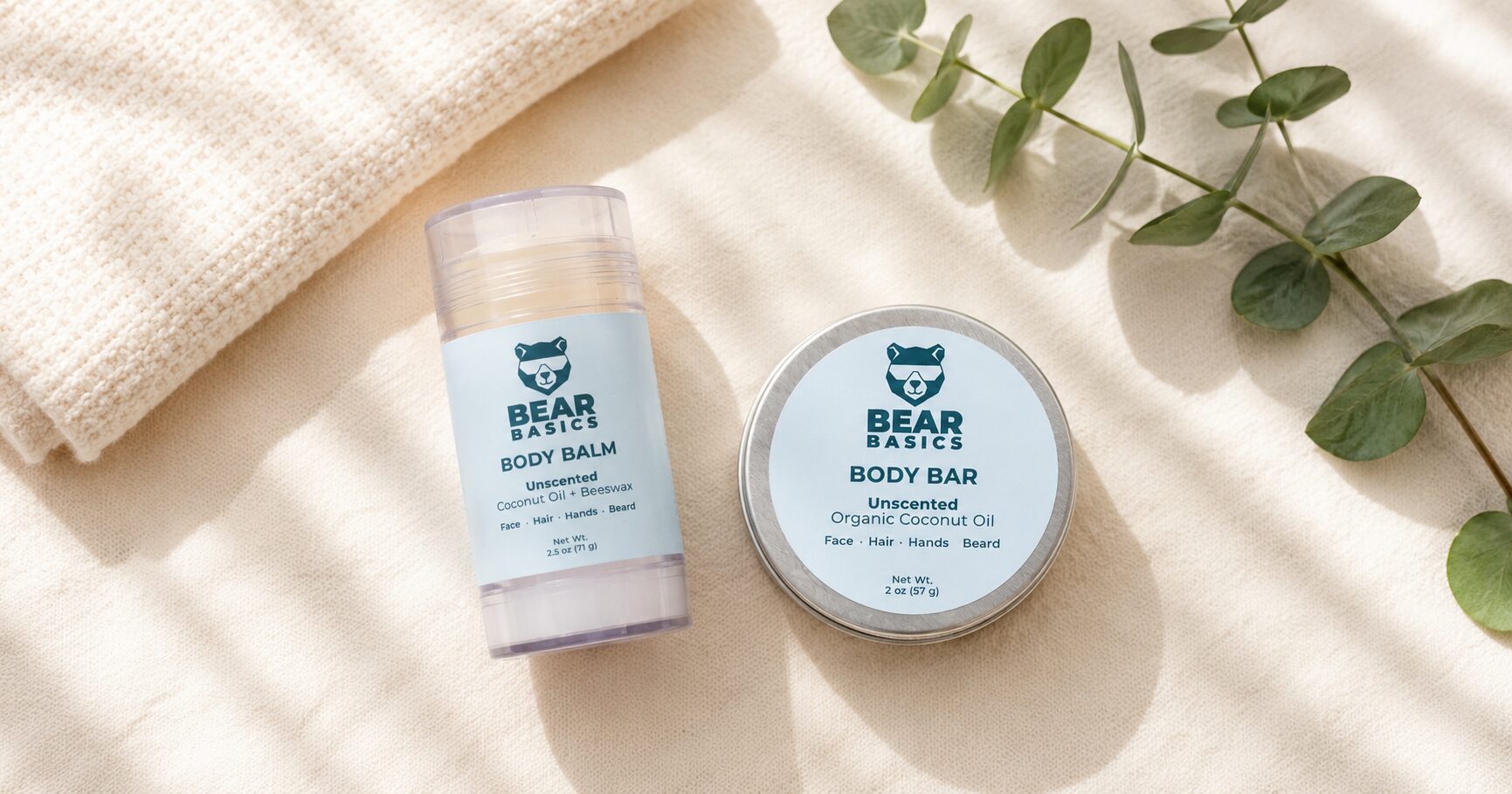
- Feet and heels — the heaviest-duty zone: balm generously, socks on, repeat nightly; the complete protocol is the cracked-heels fix. A solid body bar shines here — swipe it straight on like a crayon.
- Elbows and knuckles — small zones, big payoff, zero pillowcase risk.
- Cuticles — a dab each, massaged in; the cheapest manicure insurance there is.
Body slugging is also the forgiving training ground: if you’re trend-curious but face-cautious, run a week of hand or heel slugs first. Same physics, zero stakes.
12 The mistakes that ruin it
The five errors behind nearly every “slugging didn’t work for me” story:
- Slugging dry skin. The seal traps what’s there — on dry skin, that’s nothing. Damp skin isn’t a nicety; it’s the mechanism.
- Frosting instead of filming. Triple doses don’t triple the seal; they just ruin linens and read as “greasy trend” by morning.
- Slugging the wrong skin. Breakouts, congestion zones, broken skin — the contraindications aren’t fine print; they’re the difference between a technique and a mistake.
- Sealing over strong actives. Occlusion intensifies whatever’s underneath. If a product tingles on its own, it shouts under a seal — keep slug nights simple-layered.
- Nightly by default. The rescue-turned-baseline trap from section 10. Occasional is the design.
Notice all five are technique, not ingredient — the balm was never the problem. Get the damp skin, the thin film, the right zones, and the modest rhythm, and this trick is as reliable as skincare gets.
13 The bottom line
Slugging is overnight occlusion wearing a great trend name: seal damp skin under a thin layer, let sleep’s seven hours run with the door closed, rinse at dawn. A natural tallow or coconut balm runs the play at full strength — trading a sliver of petroleum’s benchmark seal for fatty acids the barrier can actually use, a finish you can sleep in, and a label with a farm behind it.
Keep the guardrails and it’s hard to get wrong: dry and intact skin only, damp before you seal, film not frosting, one to three nights a week in the dry months. And keep perspective — the trend is the garnish; the daily damp-skin balm habit is the meal. Master the boring nightly version first, and save the slug for the nights that earn it.
"The seal traps whatever’s there when you close the door. Make sure it’s water."— The honest verdict
The 6 things to remember
- Slugging = a thin occlusive layer over damp skin, overnight. That’s the whole trick.
- A tallow or coconut balm slugs beautifully — near-benchmark seal plus skin-kindred fats.
- Damp skin is the payload; slugging dry skin seals in nothing.
- Skip it on breakouts, congestion zones, and broken skin — seals intensify what’s beneath.
- A fingertip of balm films a whole face; frosting is a dosing error.
- 1–3 nights a week in dry seasons; hands and heels can go nightly under cotton.
Frequently asked
What is slugging?
Slugging is coating your face (or another dry area) with a thin-to-moderate layer of an occlusive product as the last step of your nighttime routine, so it seals moisture into skin while you sleep. The name comes from the dewy, slightly slick look it leaves — like a garden slug’s sheen. It’s simply overnight occlusion with a memorable name.
Can you slug with tallow balm instead of petroleum jelly?
Yes — slugging just requires an occlusive layer, and a tallow-and-beeswax balm is a strong natural occlusive. The trade: petrolatum seals slightly harder and is fully inert; a tallow balm seals nearly as well while also contributing skin-kindred fatty acids and a more breathable feel. Many people find balm slugging more comfortable to sleep in.
Who should try slugging?
Slugging suits dry, tight, flaky, or weather-stressed skin best — winter faces, post-sun dryness, over-washed hands, chronically rough patches. It’s also popular for lips and feet. If your skin runs dry by morning no matter what you apply, overnight occlusion is exactly the missing step.
Who should not slug?
Skip slugging on active breakouts, oily or congestion-prone areas, and any broken, inflamed, or infected skin — a heavy seal locks in whatever’s underneath, which is the last thing a breakout or rash needs. Acne-prone skin that still wants to try should keep it occasional, patch test, and talk to a dermatologist about persistent breakouts rather than experimenting over them.
How often should you slug?
Treat it as a supplement, not a nightly default: one to three nights a week during dry seasons is plenty for most people, dialed up during harsh weather and down (or off) in humid months. Skin that genuinely benefits nightly will tell you — but most faces do best with slugging as an as-needed rescue.
Do you wash slugging off in the morning?
Yes — a gentle morning rinse or wash removes what’s left of the layer, and most of it has usually absorbed or worn into your pillowcase note by then anyway. Follow with your normal morning routine. Speaking of pillowcases: use an older one on slugging nights.
Should you slug over other products?
Slugging is a sealing layer, so it goes last — over damp skin at minimum, or over your usual nighttime moisturizer if you use one. Whatever sits under the seal is what gets locked in, so keep the layers underneath simple and gentle. Never slug over actives your skin barely tolerates; the seal intensifies everything beneath it.
Does slugging clog pores?
It can on congestion-prone skin — any strong occlusive can trap oil and debris if skin wasn’t clean or tends to congest. Slug on clean, damp skin, keep layers thin, keep frequency modest, and confine it to the dry zones that need it (you can slug cheeks and skip the T-zone). If congestion follows anyway, slugging isn’t your tool — and that’s fine.
Megan Smith
Co-Founder, Bear Basics
Megan co-founded Bear Basics and leads design. As a mom, she writes our gentlest, most practical guides — on ingredients, sourcing, and simple family skincare — with an emphasis on honest, well-sourced, and simple. Read the full story →
Close the door on dry mornings.Tallow and coconut balms made for the damp-skin seal — slug night or any night. Prefer Amazon? Find us there too.Shop body care