Winter sleepwear?
Sleep sack over a light layer.

Winter adds dry air, cold wind on the face, heavier sleepwear, dry floors at crawling height and car heaters. What each one does to a baby’s skin, and the small, specific fix for each.

A winter skin routine for a baby targets what cold weather adds: a sleep sack over a light layer instead of loose blankets, a thin unscented balm on the cheeks and around the mouth before every outing, soft leggings and a play mat away from the vents for crawling knees, balm on the backs of the hands at bedtime, and thin layers under the car-seat harness. Baby skin dries faster than yours after a bath, so stage everything and aim to have your baby dressed within a couple of minutes. The year-round bath and product basics stay the same.
The baby who needed almost nothing in August has rough shins, pink wind-burned cheeks and red knees by the first week of December. Nothing about the baby has changed. The furnace came on, the stroller walks got colder, the floors got drier, and teething drool now meets winter air every time you step outside.
A winter routine for a baby is mostly about the things winter adds: dry heated air, cold wind on the face, heavier clothes and sleepwear, crawling on dry floors, car rides with the heater running, and trips to houses that are not set up like yours. The year-round basics of bathing and choosing products stay the same, and we point to those posts rather than repeat them here.
This post covers what is specific to a baby in cold months: how to dress for sleep without overheating, how to get a balm on cheeks before going out, what carpets and heater vents do to crawling knees and hands, how to handle car seats and snow glare, and what to pack for a stay with the grandparents.
Winter changes a baby’s skin through a handful of specific things, and each one has its own small fix. Treating them as one general problem called dry skin is why so many families buy more products and see little change.
The first is indoor air. Cold outdoor air carries little water, and warming it with a furnace leaves it drier still, so a baby spends most of a winter day in air that pulls moisture from the skin. If the nursery feels dry, one cool-mist humidifier is plenty: set it well out of reach with the cord tucked away, clean it often so water never sits in it for days, and aim for air that feels comfortable rather than damp. Our high-altitude winter dry skin guide covers humidifiers in general.
The rest is wind on the only exposed skin, more layers rubbing for more hours, carpets and floor vents at crawling height, and the blast from a car heater. The sections below take those one at a time.
Several things do not change with the season. Bath water should feel warm, not hot, and baths stay short, as laid out in our gentle guide to baby bathtime. What to look for on a label is covered in the best natural products for a baby with sensitive skin, and whether coconut oil suits a baby’s skin helps you choose between our two bases. Anyone with a known coconut allergy in the family should use tallow.
A baby’s skin gives up water faster than an adult’s, and in a cool winter bathroom the window between the tub and a balm is shorter than you expect. The moisturize-on-damp-skin habit is the same one you already know; what changes in winter is how little time you get to do it.
Three things combine. Infant skin is thinner and takes up and loses water more quickly than adult skin. A baby has far more skin surface relative to body size, so more area is evaporating at once. And a winter bathroom is often several degrees cooler than the rest of the house, especially one with an outside wall, so water leaves the skin faster the moment the baby is lifted out.
Run the bath with the door closed so the room holds some steam and heat. A space heater left running in a bathroom is not a good idea, but five minutes of a warm closed room helps.
Towel, balm with the lid already off, diaper and pajamas laid out in order. The step fails when you have to walk away to find something.
Cover the head and torso straight away, pat the legs, and apply to the driest areas first, usually shins and ankles.
Before the thermostat drops for the night, not after, so the room and the baby both start warmer.
The goal is to be dressed within a couple of minutes of leaving the water. That is a logistics problem far more than a product problem, and it is the one most families can fix the same night.
On winter nights a baby is better off in a wearable sleep sack over a light layer than under loose blankets, because the sack stays put and keeps the crib bare. A fitted sheet and the baby is all a crib needs, whatever the weather is doing outside.
Sleep sacks are labelled with a TOG rating, which is simply a measure of how warm the fabric is. Lower numbers are lighter and suit a warm room, higher numbers are padded and suit a cool one, and most makers print a small chart pairing room temperatures with what to wear underneath. Use that chart as a starting point and then check your own baby, since some babies run warm and some run cool.
Underneath, a cotton bodysuit or a light footed sleeper is usually enough with a winter-weight sack. Adding a fleece sleeper, a hat and a heavy sack on top of each other is the common mistake, and it leads to a sweaty baby by two in the morning. Hats come off for sleep indoors.
Check the back of the neck or the chest when you go to bed. Warm and dry is right, while damp and hot means one layer should go. Sweat trapped in the neck folds and behind the knees overnight leaves little red bumps that parents often mistake for winter dryness, and dropping a layer clears it far faster than any balm.
A thin layer of unscented balm on the cheeks, chin and the skin around the mouth before a cold walk does more than anything you apply afterward. The face is the only part of a bundled baby exposed to wind, so it takes all of it.
Apply it indoors a few minutes before you leave, not at the door, so it has time to settle into a thin film instead of sitting wet on the surface. Use less than you think: a rice-grain amount warmed on your fingertip covers both cheeks. Skip the eyelids and the inside of the lips.
Teething drool keeps the chin wet just as cold air dries it, so pat it dry with a soft cloth rather than wiping and swap bibs before they soak through. The same thin layer on the chin before naps and outings gives drool something to sit on other than skin.
Physical cover does the rest. A stroller with a weather shield, a hat that comes down over the ears, and walking with the wind behind the stroller all make a noticeable difference. Skip scarves on babies; loose fabric near a baby’s face is a safety risk, and a hat plus a stroller cover does the same job.
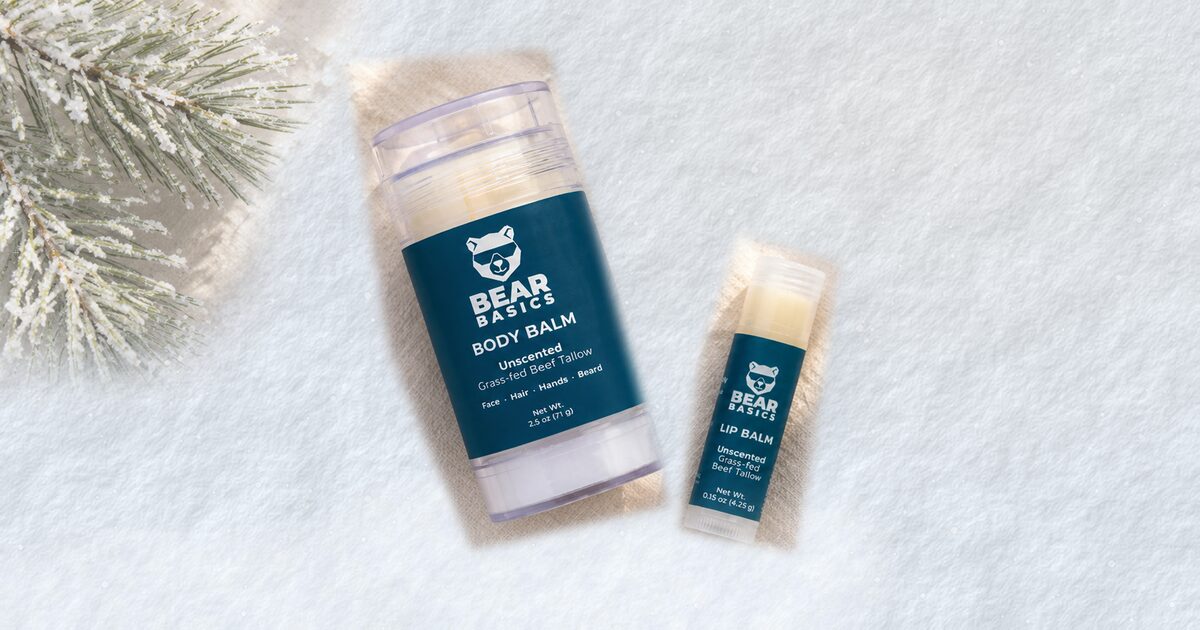
Red cheeks right after coming inside usually fade within the hour as the skin rewarms. For this job a dense balm such as our tallow body balm holds up in wind better than a thin lotion, which can feel cold going on.
In winter a baby wears more fabric for more hours, so what sits directly against the skin matters more than in any other season. The rule of thumb is soft and breathable next to the skin, warmth on top.
A cotton or fine merino base layer is the comfortable choice next to skin. Coarser wool is warm and can be scratchy enough to leave red marks on some babies, so it works better as a middle or outer layer over cotton. Synthetic fleece holds heat well and can leave a baby sweaty under a snowsuit, and sweat trapped against the skin under layers brings its own irritation.
Look at where clothing presses. Tags, thick seams, elastic cuffs and waistbands rub harder under several layers than they do under one, and the red lines they leave are often mistaken for dryness. Inside-out base layers, tagless clothing and slightly looser cuffs solve most of it.
Overheating is the other winter mistake. A common rough guide is one more layer than an adult would wear in the same conditions, adjusted for whether the baby is moving or sitting still. The same neck-and-chest check from the sleep section works during the day, since cold hands and a cool forehead are normal on a warm baby.
Laundry is part of the same picture. Fragranced detergent and fabric softener leave residue that sits against the skin all day in every layer, so an unscented detergent and an extra rinse are a cheap change worth making for winter clothes.
A crawling baby spends the winter at floor level, which is where carpet friction, cold tile and the hottest, driest air from the vents all meet. Red, rough knees in January are more often rug burn than dry skin.
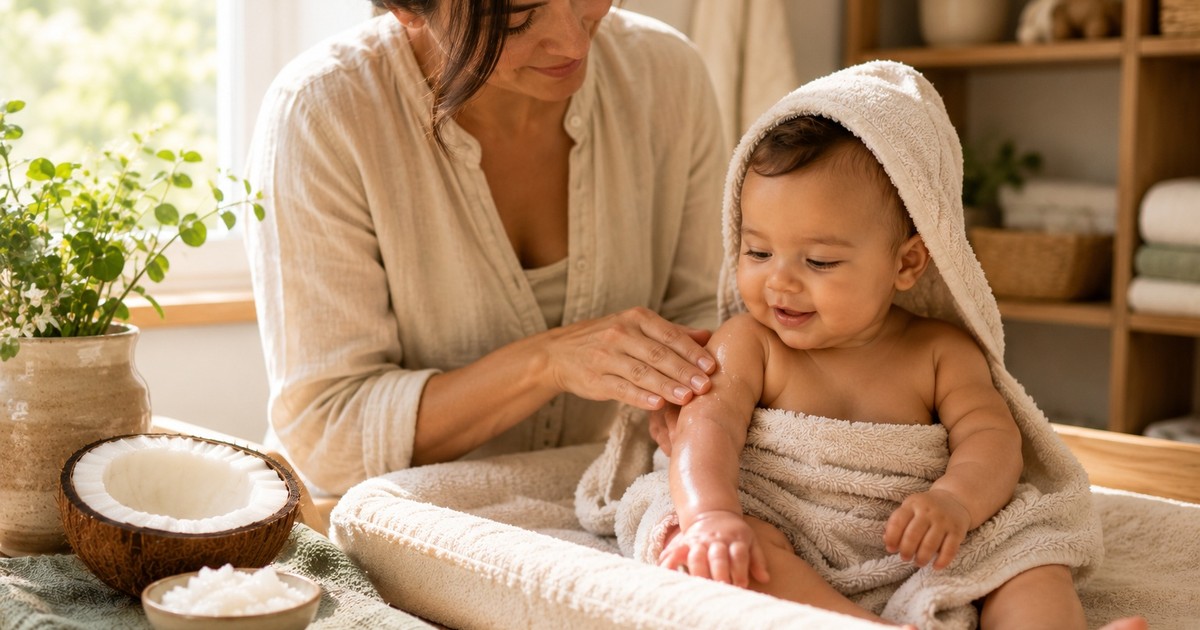
Carpet fibres are dry and slightly abrasive in a heated house, and a baby dragging bare knees, the tops of the feet and the elbows across them hundreds of times a day wears the skin there. Soft leggings or footed pants during floor play cover the knees and feet, and a large cotton play mat or a washable rug gives a crawler a softer patch to work on. A thin layer of balm on the knees at bedtime helps them look normal again within a few days.
Floor vents and baseboard heaters push warm air out right at a crawler’s face height. A play mat parked beside a vent puts the baby in a steady stream of the driest air in the house, so move play areas a few feet away or fit a simple deflector that sends the air up the wall instead.
Radiators, baseboard units and the glass fronts of gas fireplaces get hot enough to burn a hand that reaches out. Block them with a gate or cover, and keep portable space heaters out of any room where a baby plays on the floor.
Cold hard floors bring the opposite problem. Tile and wood in a winter kitchen chill bare hands and knees quickly. Socks with grip soles and a rug across the coldest stretch of floor take care of most of it.
A crawling baby’s hands do the work of feet, then go straight into the mouth, and in winter that cycle of floor, drool and dry air shows up as rough palms and red knuckles. The fix is mostly about timing rather than more product.
Every trip across a floor dries the palms a little, and every trip to the mouth wets them. The skin between the fingers and across the knuckles takes the most of that, and you will often see it first as small cracks or chapping on the backs of the hands rather than the palms.
Mittens are the other winter variable. Babies pull them off, and bare hands in cold air for ten minutes on a walk dry out quickly. Mittens with a long cuff that tucks under the coat sleeve, or a snowsuit with fold-over hand covers, stay on better than loose ones. Wet mittens are worse than none, because cold wet wool against the skin chaps it fast, so swap them as soon as they soak through.
A thin layer on the backs of the hands at nap time and bedtime has hours to settle, while daytime applications end up on the floor or in the mouth within minutes.
The backs and knuckles chap first, and a slick palm makes crawling and gripping harder for the baby.
Food and drool left on the hands keep them wet, so a quick pat dry after eating breaks the cycle.
Keep fingernails short through the winter, too. Dry skin itches, and a baby with sharp nails will scratch a rough patch into a raw one overnight.
Bulky snowsuits and puffy coats do not belong under a car-seat harness, so winter car rides need a different approach to warmth and to skin. Thick padding compresses in a crash and leaves the straps too loose to hold the baby properly.
Dress the baby in thin, warm layers for the car, buckle the harness snugly against those, and add a blanket or a coat on top of the buckled harness. Car-seat covers that go over the seat without adding anything between baby and straps do the same job. That approach also keeps the baby from overheating once the car warms up, which is when sweat and heat rash appear under winter layers.
The car heater is the driest air your baby meets all day. Point the rear vents toward the floor or the ceiling rather than at the car seat, and do not run the heat on high for a long drive once the car is warm. A quick pass of balm on cheeks and lips before a long drive keeps the face from drying in the blast.
For outdoor wind on longer outings, the stroller cover is your best tool. Moving between a heated car, cold air and a heated store several times in an afternoon is hard on exposed skin, and a weather shield cuts most of the wind while letting you open it indoors. Plan walks for the warmer middle of the day when you can, and keep winter outings short on days with strong wind.
Winter sun is lower and weaker than summer sun, but fresh snow reflects a large share of it back up, so a baby on a bright snowy day gets light from above and below at once. The skin under the chin, the nose and the cheeks catches the reflected part, and so do the eyes.
Altitude adds to it. Sunlight is stronger the higher you go, so a sunny afternoon in the mountains, or a family that already lives at elevation, deals with more of it than a grey day at sea level. A baby who comes in from a bright snow walk with pink cheeks may be showing sun as much as wind, and the two look the same at first.
Shade and cover are the main tools for a baby. Keep the stroller canopy down on bright days, choose a hat with a brim over a plain knit cap when the sun is out, and plan snow outings for shorter stretches rather than a long midday walk. Some families use strapped baby sunglasses, which also cut the squinting that bright snow causes.
Our body balm and lip balm keep wind off the skin and leave a protective layer of fat on the surface, but they carry no SPF and are not sunscreen. If you use a sunscreen on an older baby, choose one made for that job, and see what zinc oxide is in baby products for what the mineral ones contain.
Overcast days still bring some of this, since cloud thins sunlight without blocking it, but a bright day with fresh snow is the one worth planning around, especially a long afternoon outdoors with a baby in a carrier.
A holiday stay at someone else’s house changes the air, the laundry and the water your baby meets all at once, and those changes show up on the skin within a day or two. A little packing heads off most of it.
House climates vary more than people expect. Grandparents often keep the thermostat higher than young families do, a wood stove dries a room quickly, and an older house can be drafty and cool in one room and stuffy in the next. Check the room your baby will sleep in on the first night and adjust the sleep layers to that room, not to what you would use at home.
Laundry is the change most families miss. Sheets, towels and the spare blankets in a guest room are usually washed in whatever detergent the house uses, often with fabric softener or dryer sheets, and that residue sits against a baby’s skin all night. Bring your own crib sheet and sleep sack from home, pack a couple of your towels, and if you are staying a while, ask to run the baby’s things through with a small bottle of your unscented detergent.
Keep the routine itself the same: the same bath timing, the same balm before going out, the same sleep sack. Familiar steps in an unfamiliar house are easier on the baby, and they make it simpler to tell what changed if a rough patch does appear.
Most of this routine gets simpler as a baby becomes a toddler, because the walking, the end of heavy teething and a bigger body all take some of the winter pressure off. A few new things take their place.
Once a child walks, knees and palms stop doing the work of feet, and the rug-burned knees of the crawling months usually disappear on their own. Drool tapers off as the big teeth come through, so the chin needs less attention. In their place comes snow play: wet mittens, snow packed into the gap between sleeve and glove, and cold wet wrists after twenty minutes of digging. Mittens with long cuffs and a dry spare pair by the door handle most of it.
Toddlers also start licking their lips when they feel tight, which makes chapping worse rather than better. How to fix chapped lips for good covers that habit, and a tube of our coconut lip balm they can hold themselves helps a two-year-old take part.
Many toddlers resist being held still for balm. Letting them rub it in, or doing it at the same moment every night, turns it into part of the routine rather than a fight. Toddler skincare basics from one to four picks up the year-round picture from here.
A patch that turns weepy, crusts over yellow, cracks and bleeds, or keeps spreading despite a week of consistent care is past the point of adjusting routines, and a professional should look at it.
Winter skin trouble in a baby comes from a few specific things: dry heated air, wind and sun on the face, heavy sleepwear and layers, dry floors at crawling height, and car heaters. Each one has a small fix, and none of them involve buying a shelf of new products.
A sleep sack over a light layer keeps a baby warm without loose blankets or overheating. A thin balm on cheeks and around the mouth before every outing keeps wind off the most exposed skin. Soft leggings and a play mat away from the vents protect crawling knees, balm on the backs of the hands at bedtime handles the knuckles, and thin layers under the car-seat harness keep straps snug.
The year-round basics stay where they were: warm short baths, unscented products with a short list, and less product than the aisle suggests. For babies whose skin reacts easily in every season, a gentle daily rhythm for eczema-prone kids is the more useful starting point.
Megan co-founded Bear Basics and leads design. As a mom, she writes our gentlest, most practical guides — on ingredients, sourcing, and simple family skincare — with an emphasis on honest, well-sourced, and simple. Read the full story →