Which controls odor better?
Neither — same active.

Four of the five ingredients are identical, so this is a decision about one thing. How the base glides, how it wears through workdays, workouts and hikes, and what it leaves on your shirt.

Both versions use the same magnesium hydroxide for odor control and the same beeswax, vitamin E and castor oil, so the choice is about the base alone. Tallow is denser, leaves more behind, and holds its shape to around 100 degrees Fahrenheit. Coconut is lighter, absorbs faster, moves through underarm hair more easily, and softens around 76. Neither has added scent, and neither reduces sweating.
Four of the five ingredients are identical. The two numbers that separate the sticks are 76°F and 100°F.
Seventy-six is where coconut oil softens. A hundred is where tallow does. Everything else people argue about on this page — texture, finish, how long you notice it is there — follows from the fact that one of those fats is liquid at a temperature the other is still solid at.
Neither stick has any added scent, and the faint character of well-rendered tallow is something most people never detect on skin — the beef smell question has a full answer of its own.
This page stays on the practical side: how each base glides on a cold morning and a hot afternoon, how each holds up through a desk day, a gym session or a long hike, what each leaves on dark and light shirts, how body hair changes things, and which one to hand a teenager trying deodorant for the first time.
Odor control is not on that list because it does not differ. The same magnesium hydroxide sits in both sticks in the same amount, so neither base is better or worse at the one job a deodorant is bought for.
Both are single-ingredient fats, which is unusual in a category where bases are often blends of four or five things. Knowing what you are putting on matters more than the marketing language around either one, and both are solid in a cool room, which is what lets each hold a stick shape with only a little beeswax.
Grass-fed beef tallow is rendered beef fat. Suet is trimmed from cattle, gently heated until the pure fat separates from the tissue, then strained and cooled into a dense cream-colored block. It is one of the oldest skin ingredients there is, in continuous use for thousands of years before cheaper industrial alternatives displaced it in the twentieth century. The rendering process is worth understanding because quality varies considerably between producers.
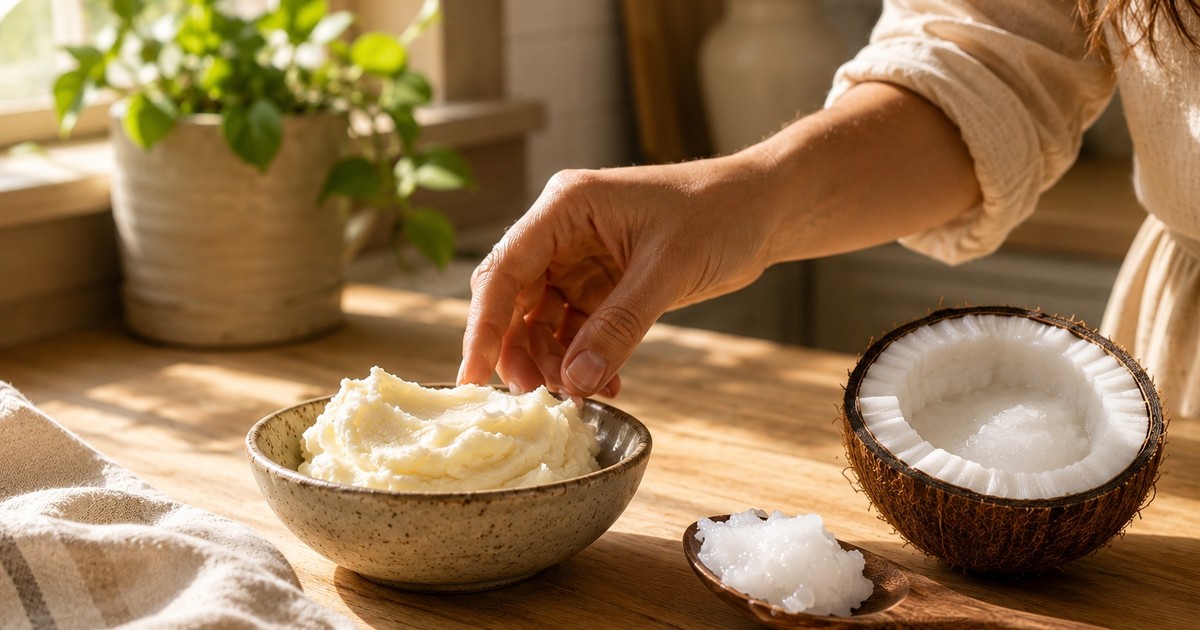
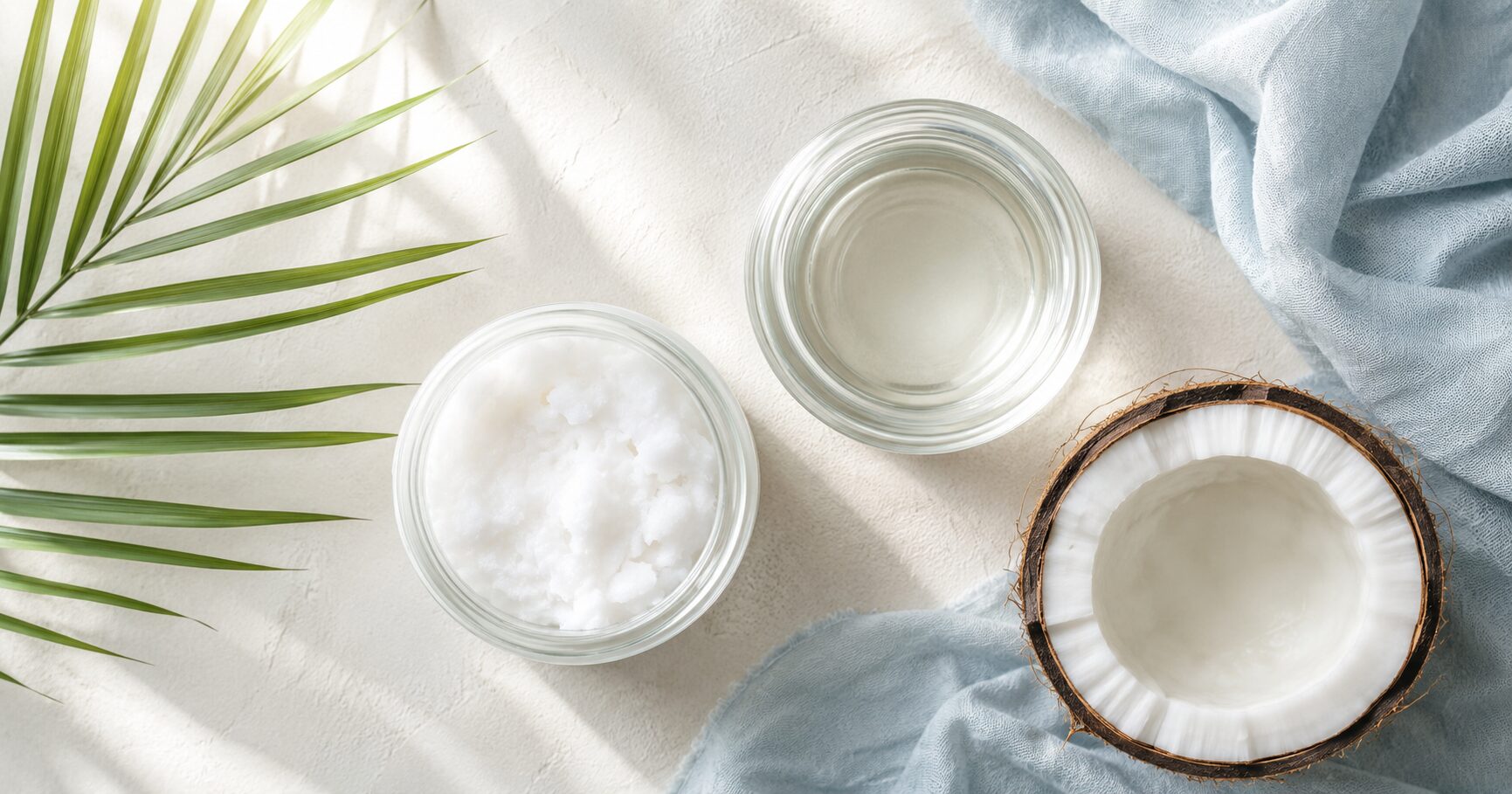
Coconut oil is pressed from the dried flesh of a coconut. The version worth using is virgin and unrefined, which means mechanical pressing with no bleaching or deodorizing. Refined coconut oil goes through high heat and sometimes solvents, which strips the character out of it. The difference between virgin and refined is larger than most labels let on.
Neither contains water, which is why neither formula needs a preservative system and why both stay stable on a shelf for a long time with just vitamin E in them.
Tallow is dense and coconut is light, and that single difference drives most people’s preference. Texture is subjective enough that the best we can do is describe it accurately and let you match it to what you already like.
A tallow stick feels substantial going on. There is a little resistance as it crosses the skin, it leaves a noticeable layer that takes a minute or two to settle, and the finish is more like a balm than a lotion. People who like it tend to describe it as feeling like something is actually there, which is exactly what people who dislike it say as a complaint.
A coconut stick glides with almost no drag. It warms to skin temperature quickly, it goes on thinner, and it disappears faster. It feels closer to what most adults are used to from a conventional deodorant, which is part of why it is the easier first purchase.
The same stick can feel like two different products depending on the season, and the two bases change in opposite directions as the bathroom warms and cools. Coconut softens around 76°F and tallow holds its shape to around 100°F, so the room temperature decides which one feels best in your hand on a given morning.
On a cold morning, tallow is the more stubborn of the two. A bathroom sitting in the low sixties in January, or a stick that spent the night on a drafty windowsill, drags on the first pass and can leave a waxy streak instead of a thin film. Holding the stick against the skin for three or four seconds before moving it lets body heat soften the surface, and the second pass goes on normally. Coconut stays more cooperative in the cold because it starts so much closer to its softening point, and most people never notice a winter difference with it at all.
Summer flips that around. On a warm July afternoon a coconut stick goes on almost like a liquid, which some people love and others find slippery, and it is easy to put on twice as much as you need. Twist up less than you think and make one pass per side. Tallow in summer sits right where it glides best, soft enough to move freely and solid enough to leave an even layer behind.
A gym bag in a hot trunk or a stick left on a dashboard is where heat stops being a texture question and becomes a melted tube, and the melt recovery steps cover exactly what to do when that happens.
The short version for daily use is to warm a tallow stick briefly in winter and to go light with a coconut stick in summer.
It is worth being specific about how much of the formula does not change, because people assume the two products differ more than they do.
| Tallow version | Coconut version | |
|---|---|---|
| Odor control | Magnesium hydroxide | Magnesium hydroxide |
| Structure | Beeswax | Beeswax |
| Keeps oils fresh | Vitamin E | Vitamin E |
| Texture and glide | Cold-pressed castor oil | Cold-pressed castor oil |
| Added scent | None | None |
| Ingredient count | Five | Five |
| Reduces sweating | No | No |
| Vegan | No — beeswax | No — beeswax |
The last two rows apply to both. Each contains beeswax, so neither is vegan whichever base you pick, and each is a deodorant rather than an antiperspirant, so neither changes how much you sweat — the full difference between the two categories is laid out in its own post.
Four of the five ingredients are the same in both. The choice you are making is about one ingredient, and it is the one that makes up most of the stick, which is why the rest of this page is about how that one ingredient behaves in real days rather than about what it does on paper.
On a desk day, the difference between the bases shows up in the first hour and has mostly faded by lunch. Most people choose on application feel, which is reasonable, but it helps to know how each one wears from the morning commute to the drive home.
Tallow stays detectable longer. For the first half hour there is a sense of something on the skin, which people with dry underarms like and people who dislike residue notice every time they reach for a high shelf. By mid-morning it has settled into a thin layer that is not tacky, and for most people it stays comfortable through an eight-hour day in an air-conditioned office.
Coconut is effectively gone within a few minutes. On a humid commute or in a warm office it can feel slick before it settles, and on a long day some people find they want an afternoon touch-up with coconut sooner than they would with tallow, simply because less of the base is left on the skin by then. The odor control is the same ingredient in both, so a touch-up is about comfort and not about a weaker product.
Long days that run straight into an evening out favor tallow slightly, for the same reason. A layer that is still there at six o’clock means one less thing to carry in a bag.
If you are testing the two against each other, judge them at hour six instead of minute one. Minute one exaggerates the difference, and by the end of a working day most people genuinely cannot tell which stick they used that morning.
Hard exercise is where the two bases separate most, and the difference is about staying put rather than odor control. Sweating during a workout is normal and both sticks leave it alone; what changes is how the base layer behaves once you are moving and heating up.
Coconut thins out quickly against warm, moving skin. Underarm skin during a long run or a spin class sits well above the temperature where coconut oil turns liquid, so the layer spreads and travels with sweat, and some coconut users prefer to apply after the post-workout shower instead of before. Tallow stays solid closer to body temperature, holds its layer longer, and is the one more people reach for before a long session.
On a hike, the bigger question is the pack. A stick riding in a top pocket on a sunny trail can pass 76 degrees well before the summit, and a coconut stick will be soft or runny when you pull it out. Tallow tolerates a daypack far better, as long as it rides in a shaded inner pocket and the pack does not sit on a hot car seat at the trailhead before you set off.
One habit helps with both. Keep a separate stick for the gym bag or the hiking pack, so the one going through heat swings is not the one you rely on every morning at home. A tallow stick is the better choice for that travelling role, and the minimal gym-bag kit covers what else is worth packing alongside it.
If your exercise is a gentle walk or a short yoga class, none of this matters much, and whichever base you prefer at home will be fine.
Neither base causes the yellow staining associated with aluminum antiperspirants, but each leaves a slightly different kind of mark when it does transfer. Removal is covered in the full guide to deodorant marks on clothes; this is only the base-by-base difference.
Coconut transfers as oil. Because it is liquid at body temperature, a heavy pass can wick into the fabric near the seam and show as a darker, damp-looking patch on navy, black or charcoal. On white and pale colors it is usually invisible when fresh, and it only becomes a problem if the shirt goes through a hot dryer before the oil has washed out.
Tallow transfers as a layer. It sits on the skin longer before it settles, so pulling a dark shirt on straight after applying is more likely to leave a pale streak where the white mineral in the formula rides on surplus base. That streak brushes off once it is dry and does not set into the fabric. On whites, the two behave about the same.
The fix is the same for both and it is mostly about timing: a thin pass, a couple of minutes, then the shirt. If your wardrobe runs black, coconut’s faster settle is a small point in its favor.
Underarm hair changes how each base goes on, and it is one of the more useful tie-breakers people overlook. Most deodorant advice quietly assumes shaved skin, which leaves out a lot of men and a good number of women.
With a full growth of hair, a stick has to get through the hair to reach the skin. Tallow’s denser texture tends to catch and leave more product on the hair than on the skin underneath, especially in a cold bathroom. Warming the stick for a few seconds and using short strokes in two directions helps it reach skin. Coconut is softer, moves through hair more easily, and is the simpler pick for anyone who does not shave.
Hair also holds onto product, which matters at shower time. Tallow is the more persistent of the two and usually needs a little soap worked through rather than a quick rinse, while coconut washes out more readily. With either base, a heavy application on hair is mostly wasted, because the hair holds the surplus while the skin gets the same thin layer it would have had anyway.
On shaved skin both glide easily, and the choice goes back to finish: tallow leaves the balm-like layer and coconut disappears. Freshly shaved skin is more reactive to anything put on it, and timing application around shaving is covered in the application guide.
Trimmed underarms sit in between. Short hair grabs a stick more than long hair does, so a trimmed underarm in winter is where warming a tallow stick first makes the most noticeable difference.
For a tween or teenager trying deodorant for the first time, coconut is usually the easier start, with two exceptions. The broader guide to kids and deodorant covers when and how to introduce it, so this section is only about the base.
Coconut behaves most like the conventional sticks a teen has seen friends use. It goes on quickly, disappears, and leaves nothing that feels unusual, which matters to a twelve-year-old who is already self-conscious about the whole subject. A product that feels odd gets left in a drawer, and the best first deodorant is the one that actually gets used every morning.
The first exception is the backpack. A stick that lives in a school bag, a sports bag or a locker in a warm building will spend time above 76 degrees, and a melted tube leaking into a backpack is the kind of experience that puts a teen off the whole habit. If the deodorant is going to travel to school every day, tallow is the more forgiving choice for that stick.
The second exception is the athlete. A teenager in two-hour practices gets the same benefit an adult does from tallow’s longer-lasting layer, and one stick at home plus one tallow stick in the sports bag covers both settings.
Either way, give them their own stick, show them that one thin pass per side is plenty, and let them choose between the two finishes. A teen who picked the stick has a reason to keep using it.
A fair number of people arrive at this decision with a preference already formed from a body balm, a lip balm or a jar of coconut oil in the kitchen, and that history is genuinely useful information.
If a tallow balm already works on your face or hands, the tallow stick will feel familiar. The base is the same ingredient doing the same thing in a different format, and if your skin has tolerated it for months elsewhere, the underarm is unlikely to object.
If you cook with coconut oil and like how it feels on skin, the coconut stick is the obvious pick. Same caveat in reverse: familiarity is a decent predictor, and it saves you a round of guessing.
If you have never used either, the coconut version is the gentler introduction. It behaves more like what you are used to, it asks less of you in the first week, and it removes one variable from a switch that already has several.
If you have reacted to coconut oil elsewhere, on your face or in your hair, tallow is the obvious test. Coconut used to be grouped with tree nuts and no longer is, and anyone with a known coconut allergy should simply choose tallow — the history of that grouping has its own post.
Running one of each and switching with the weather is a common arrangement, and it costs nothing in adjustment because the odor-control ingredient is identical. Your skin has already met everything in the second stick except the base, so there is no restart and no settling-in period when you change over.
The usual pattern in a four-season climate is coconut through the cooler months and tallow through the warm ones. That lines up with how each behaves: coconut stays cooperative in a cold bathroom where tallow drags, and tallow holds its shape in a summer cabinet where coconut softens. A practical trigger for the switch is the week your bathroom stays above about 75 degrees most afternoons, because that is when a coconut stick starts to slump in the cabinet.
When you switch, cap the outgoing stick and put it somewhere cool and dark. With no water in the formula, a capped stick waits comfortably until the season turns again, and you finish both rather than abandoning one half-used.
Travel is the other common split. A tallow stick is the one for a checked bag or a summer road trip, and coconut is fine for a winter weekend away.
Households sometimes split by person, with one adult preferring the dense finish and another unable to stand it. The sticks are the same size and price, so you are managing two finishes of one formula rather than two different products.
Four of the five ingredients are identical, so this choice is about one thing: whether you want a dense base that handles heat and hard days or a light one that disappears faster. Both control odor the same way, because the odor control is the same ingredient in both.
Pick tallow if you want the balm finish, if your stick lives in a gym bag, a school backpack or a hiking pack, or if you train hard and want the layer to stay put. Pick coconut if you want it to vanish into the skin, if you have a full growth of underarm hair, if your wardrobe runs dark, or if you are buying a teenager’s first stick that will mostly stay at home.
And if you genuinely cannot decide, that is a reasonable place to land, because the two are closer than this article’s length suggests. Start with coconut, and if it ever goes soft in a July glovebox, you will know exactly what to try next.
Whichever you choose first, the formula, size and price are the same, so trying the other base later costs just one stick and asks your skin to adjust to nothing new at all.
Megan co-founded Bear Basics and leads design. As a mom, she writes our gentlest, most practical guides — on ingredients, sourcing, and simple family skincare — with an emphasis on honest, well-sourced, and simple. Read the full story →