Stronger seal?
Petroleum jelly, clearly.

Both are occlusives, and petroleum jelly is the stronger seal of the two. How they really differ in cold and heat, on lips, hands and heels, under socks, and on your sheets — and why safety is not the argument.

Beef tallow and petroleum jelly are both occlusives that slow water loss from skin, and petroleum jelly is the more powerful seal of the two. It is also cheaper, barely changes with temperature, has no smell, and is about as unlikely to cause a reaction as any topical gets. Tallow absorbs within minutes, layers under sunscreen and lip colour, and marks fabric less, but it hardens in the cold and melts in a hot car. The choice is about feel and use, not safety, and many households keep both.
Petroleum jelly seals water into skin better than beef tallow does, and it costs a fraction as much. We sell tallow, and that is still where an honest comparison has to start, because petrolatum is one of the most thoroughly studied moisturizing ingredients in existence and a drugstore jar of it has rescued more cracked knuckles than anything we will ever make.
The real differences are in how each one behaves day to day. Petroleum jelly stays on the surface, barely changes with temperature, and transfers onto whatever you touch. Tallow sinks in over a few minutes, hardens in the cold and softens in the heat, and leaves skin feeling like skin. This post compares them where you actually use them: in winter and summer, on lips, hands and heels, under gloves and socks, on your sheets, alongside other products, and in the few places where neither is a good idea.
Petroleum jelly is a semi-solid mix of hydrocarbons refined from crude oil, and tallow is rendered beef fat; both are occlusives, which means they slow water leaving the skin rather than adding any. The difference between occlusives, humectants and emollients is set out in occlusives vs humectants vs emollients.
Petroleum jelly has been sold for skin since the nineteenth century, and on a label it appears as petrolatum. The safety question is simple to answer: cosmetic-grade petrolatum is refined to remove the unwanted compounds found in crude oil, it is about as unlikely to cause a reaction as any topical gets, and the frightening claims made about it usually describe crude or industrial petroleum rather than the white jelly in a drugstore jar. Its origin, refining and the honest version of the safety debate are all covered in what is petrolatum, and we will not repeat them here.
Tallow is fat from around the kidneys of cattle, melted slowly and strained until only clean fat is left. It is mostly oleic, palmitic and stearic acid, a mix of liquid and solid fats that explains why it holds its shape in the tin and melts on contact with warm skin. What the research does and does not support about tallow on skin is in is beef tallow good for your skin.
Here is the comparison without a thumb on the scale. The rows below the first few are the ones the rest of this post expands on.
| Petroleum jelly | Beef tallow | |
|---|---|---|
| What it is | Refined hydrocarbons from crude oil | Rendered fat from beef suet |
| Slows water loss | Yes, strongly | Yes |
| Absorbs into skin | No | Mostly, over several minutes |
| Finish after 15 minutes | Still slick and shiny | Soft, close to matte |
| In the cold | Stiffens a little, still spreads | Hardens, needs warming first |
| In heat | Softens, can run in a hot car | Melts in a hot car, sets again |
| Smell | None | Faint, fades on skin |
| Transfer to fabric | High | Lower once absorbed |
| Reaction risk | Very low | Low, but not zero |
| Shelf life | Effectively indefinite | A year or two with vitamin E |
| Cost per ounce | Very low | Higher |
The absorption row drives most people’s preference. Petroleum jelly does not absorb, which is exactly why it seals so well and exactly why it stays slick on your hands for an hour. Tallow sinks in over a few minutes and gives up some sealing power in exchange.
Neither of those is better in the abstract. On a cracked heel under a sock overnight, staying put is the point. On your face before work, it is a problem.
Texture is where most people actually make this decision, so it is worth describing in detail rather than in adjectives.
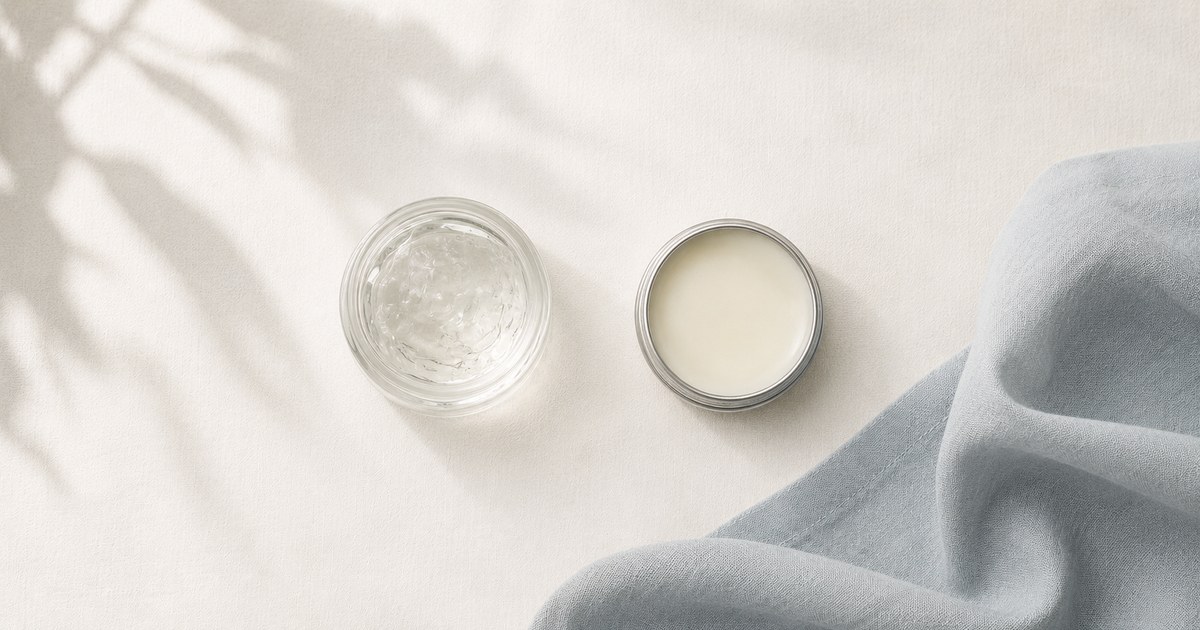
Petroleum jelly comes out of the jar as a soft, clear gel that spreads without any warming. It goes on slick and stays slick. Twenty minutes later it is still on the surface, still visible as a shine, and still transferring to anything you touch. It has no smell at all and no taste, which is part of why it is so common on lips and on small children.
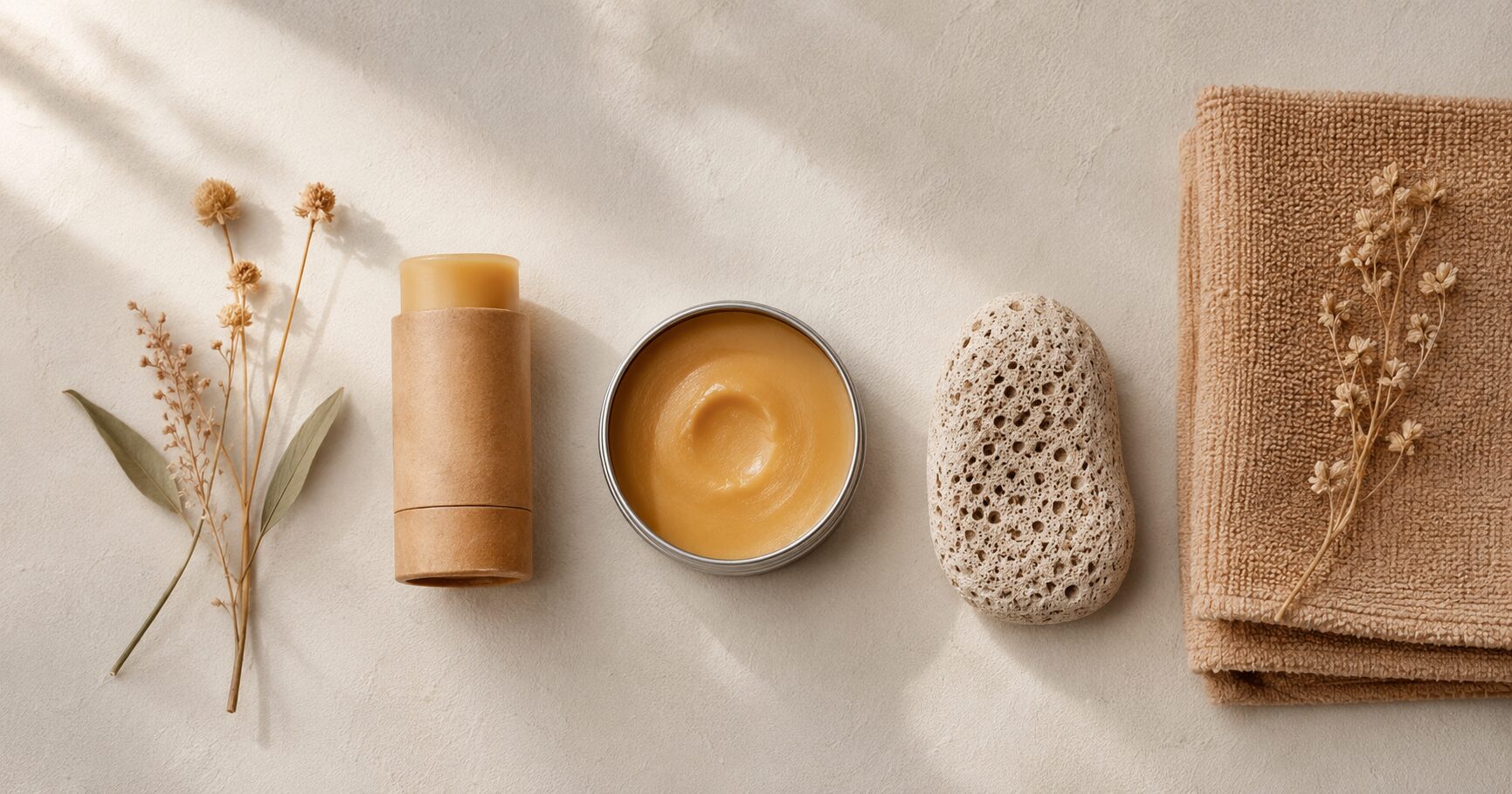
Tallow balm starts dense and opaque, because solid fat at room temperature has to be warmed between the fingers before it spreads. Once it melts against skin it goes on thinner than people expect, with a slight cushion rather than a slip, and over five to ten minutes it mostly disappears, leaving a soft, satin finish. Using too much is the most common mistake, and the technique is in how to use a tallow balm.
Tallow also has a smell of its own. Nothing is added to ours, but rendered fat has a faint, clean, slightly savoury note that some people notice in the tin and almost nobody notices on skin after a minute. Poorly rendered tallow smells much stronger, which is where the reputation comes from. Petroleum jelly wins outright for anyone who wants no smell of any kind.
Stability is the other half of texture. Petroleum jelly does not oxidize or go rancid, so a jar found at the back of a cupboard years later is unchanged. Tallow is an animal fat and does slowly oxidize; with vitamin E and cool, dark storage it holds for a year or two, and when it does turn, the smell changes from faintly neutral to unmistakably off.
Petroleum jelly behaves almost the same from a freezing car to a warm bathroom, while tallow changes texture noticeably with temperature. That difference matters more than people expect, because the seasons when you most need a balm are the ones that push it hardest.
In the cold, petroleum jelly stiffens slightly but still spreads straight from the jar, which is one reason it has long been used on exposed cheeks and noses for skiing, winter running and long days outside. A tallow balm left in a cold car or a chilly bathroom hardens much more and needs a longer warm-up between the fingers. Applied cold and unwarmed, it drags and goes on in patches, which is the usual reason someone decides tallow is waxy.
Outdoors in wind and cold, both make a useful windbreak on exposed skin. Petroleum jelly leaves a heavier, more obvious layer that lasts longer outside, and tallow leaves a lighter one that you may want to reapply after a few hours.
Heat reverses the picture. Petroleum jelly softens in a hot car and can turn runny, then thickens again as it cools, usually without much change in feel. Tallow melts to a clear liquid at car-interior temperatures and sets again when cooled, sometimes with a slightly grainy texture if it cooled slowly; what to do about that is in what to do if your balm melts.
On skin in hot, humid weather, both can feel heavy, but petroleum jelly feels heavier because it does not absorb at all. Trapping sweat under a thick layer of either can make skin feel hot and itchy, so in summer most people use less of both and keep them to the driest spots.
The two ingredients behave differently enough on different parts of the body that many households end up using each where it fits best. Lips, hands and heels are the clearest examples.
On lips, petroleum jelly is a reliable, tasteless seal that stays put through a cold walk, and it is hard to beat for a child with chapped lips who keeps licking them. Its weakness is that it sits on top as a glossy layer and transfers onto cups and collars. A tallow lip balm made with beeswax is denser, holds its shape as a stick, and settles into the lips rather than sitting on them, which many adults prefer during the day. The habits behind chapped lips are covered in how to fix chapped lips for good.
On hands, the difference is practical. Petroleum jelly leaves fingerprints on phone screens, door handles, steering wheels and paper for a long time after you put it on, which is why most people only use it on their hands at night. A thin layer of tallow balm settles within a few minutes, so you can get on with your day.
On heels, the balance tips back toward petroleum jelly, at least at night. Thick, rough skin on the heels benefits from a heavy layer that stays put for hours, and a sock over petroleum jelly does that better than anything else. Tallow works well on heels too, especially as a daily habit after a shower, and the full routine for rough heels and elbows is in cracked heels and rough elbows.
Overnight occlusion under cotton is where petroleum jelly is strongest, and fabric is where it costs you most. Covering a thick layer with gloves or socks for eight hours is an old habit for very dry hands and feet, and it works with either ingredient.
Under cotton gloves or socks, petroleum jelly stays on the skin almost entirely, while some of it soaks into the fabric. Tallow partly absorbs before the fabric goes on, so a little less of it is left to seal and a little less ends up in the cotton. For one split knuckle or a cracked heel, the jelly is the stronger choice. For whole hands or feet that are merely dry, tallow is usually enough and much less messy. The same overnight idea applied to the face is covered in slugging with a natural balm.
Feet coated in petroleum jelly are slippery, even in socks, on hard floors and in the bathtub. Put socks on immediately after applying, and be careful getting up in the night.
On pillowcases, sheets and pajamas, petroleum jelly leaves greasy marks that cold washes struggle to remove. Rubbing a little washing-up liquid into the mark before a warm wash usually lifts it. Tallow is a fat too and will mark fabric if you use too much, but once it has absorbed there is much less of it left to transfer.
One fact applies to both. Fabric that has soaked up any oily moisturizer, whether petroleum-based or a natural fat, catches fire more easily than clean fabric, and normal washing does not always remove all of it. If you use either product heavily, wash bedding and gloves often and keep them away from open flames and cigarettes.
Both go on after anything water-based, but petroleum jelly is always the very last layer, while tallow is more forgiving about what goes on top of it.
With a lotion or a water-based serum, the order is the same for both: the lighter product first, a minute or two to let it settle, then the occlusive on top to slow the water leaving. Put either under a lotion and the lotion mostly sits on the surface.
After that, they part ways. Almost nothing goes on well over petroleum jelly, because its surface stays slick. Sunscreen streaks over it, makeup slides, and a second moisturizer just smears. That makes it a night-time or last-thing product. A thin layer of tallow, once it has settled for several minutes, can sit under sunscreen or a little makeup without much trouble, and lip colour goes over a tallow lip balm more evenly than over a glossy layer of jelly.
The two also combine. Some people use tallow over their whole hands or feet and then add a dab of petroleum jelly only on the worst crack before bed. That pairing works, because the jelly goes last and only where it is needed. What does not add much is a heavy layer of both over the same broad area, which mostly adds grease.
Water-based products first, tallow next if you use it, petroleum jelly last and only where you want a layer that will not move.
There are situations where we would hand you the drugstore jar instead of our own product, and pretending otherwise would be silly.
The first is extremely reactive skin. Petrolatum is about as close to allergenically neutral as a topical gets. When someone has worked through a long list of products and reacted to most of them, the sensible next step is the one with the fewest things in it to react to, and that is plain white petrolatum.
The second is a tight budget. A large jar costs a few dollars and lasts most households a year. We are a small company making small batches, and our pricing reflects that. If the choice is between moisturizing with petroleum jelly and not moisturizing because a balm is out of reach, use the jelly.
The third is overnight occlusion on a small, stubborn spot. Heels that split every winter, a knuckle that keeps cracking, or a patch of skin that will be covered by a sock or a cotton glove for eight hours all call for a layer that does not go anywhere, and petroleum jelly stays put better than anything else on the shelf.
The fourth is anyone who wants no smell at all and a product that never changes. A jar that stays the same in a cold car, a hot bathroom, and the back of a cupboard for years has real advantages for something you use only a few times a winter.
Tallow is the better pick when you want something that absorbs, when you are covering a lot of skin, and when the composition of what you put on matters to you.
Absorption is the practical one. Anything you apply in the morning has to be compatible with getting dressed, holding a steering wheel, and picking up a child. A balm that sinks in over a few minutes clears that bar. A product that stays slick for an hour does not, which is why petroleum jelly tends to live in the nightstand rather than the handbag.
Composition is the one people care about more than they can always put into words. Tallow is a fat whose fatty acids overlap with some of those in your own skin. That does not make it a miracle, and it does not make petrolatum harmful. It is a genuine difference in kind, and a reasonable person can prefer a familiar fat to an inert hydrocarbon.
Area coverage matters too. Spreading petroleum jelly over both shins and both arms leaves you shiny and marking your clothes for the rest of the evening. A thin pass of balm over the same area is manageable, and it layers under sunscreen and lip colour where the jelly will not. If you are curious how tallow compares with other fats in this space, we put it next to lanolin in a separate piece.
There are a few situations where neither petroleum jelly nor tallow belongs, and an honest comparison should name them.
Cool the skin under running water first. Putting any thick grease or fat on a fresh burn holds the heat in, which is the opposite of what you want in those first minutes.
A jar of anything is the wrong tool for skin that is open, oozing, hot to the touch, or spreading. That needs someone to look at it, not a better occlusive.
A heavy occlusive over oily, breakout-prone skin is rarely comfortable. Tallow’s oleic acid sits badly with some faces, and a thick layer of jelly can feel suffocating. A light product, or nothing, often suits better.
Both are hard to wash out of hair, and petroleum jelly especially can take several shampoos to remove. Neither is a good leave-in for most people.
Coating whole limbs in either one on a sticky summer day traps sweat and feels unpleasant. Save them for the driest spots.
None of these are reasons to distrust either ingredient. They are reminders that an occlusive slows water loss and does one job, so the question is always whether that job is the one the skin in front of you needs.
Petroleum jelly is dramatically cheaper per ounce, and somewhat less dramatically cheaper per use. Both halves of that sentence are worth unpacking, because the sticker difference overstates the real one.
A large drugstore jar of petroleum jelly holds many ounces and costs less than a sandwich. Nothing in the natural-products aisle competes with that, and small-batch rendered fat in a tin never will.
The gap narrows a little in actual use. Because petroleum jelly does not absorb, a fair amount of what you apply ends up on your sheets, your socks, and the inside of your gloves instead of on you. Balm that sinks in stays where you put it. People also tend to use less balm per application once they learn the technique, because warming a small amount between the fingers spreads further than scooping.
The honest conclusion is that petroleum jelly still wins on cost, just by less than the shelf price suggests. If budget is the deciding factor, buy the jelly without guilt. If it is one factor among several, the difference is probably smaller than you are picturing. Either way, moisturizing with something cheap beats skipping it while you save up for something expensive.
Both are occlusives, both work, and petroleum jelly is the stronger seal of the two. The case for tallow is feel, absorption and composition, not safety.
Petroleum jelly is the better choice for the strongest overnight seal on a small area, for skin that reacts to almost everything, for cold-weather protection on exposed skin, and for a tight budget. It barely changes with temperature, has no smell, and lasts indefinitely. Its costs are a slick finish, marks on fabric, and a surface nothing else goes on top of.
Tallow is the better choice for daytime use, for larger areas, and for anyone who wants something that absorbs, layers under other products, and comes with a label short enough to read in one breath. It hardens in the cold, melts in a hot car, and has a faint smell of its own. Plenty of households keep both, and anyone telling you one of them is dangerous is selling something.
Megan co-founded Bear Basics and leads design. As a mom, she writes our gentlest, most practical guides — on ingredients, sourcing, and simple family skincare — with an emphasis on honest, well-sourced, and simple. Read the full story →