What causes it?
Saliva, then cold dry air.

That pink band is skin wet by licking and drool, then dried by cold air. A barrier layer, a gentle wipe, and a balm of their own usually break the cycle in a couple of weeks.

The red ring around a child’s mouth in winter is usually dryness and irritation from skin wet by licking, drool, thumbs, or pacifiers, then dried by cold air. Cover the whole ring with a thin barrier layer of balm at bedtime and before school, pat the area dry after meals, and give your child an unflavored balm of their own. Soft, dry scarves help too. Most rings fade noticeably within one to two weeks.
The red, dry ring around a child’s mouth in winter is almost always skin that has been wet with saliva over and over, then dried by cold air, until it turns rough and pink. Licking, drool, thumbs, pacifiers, wet scarves, and acidic snacks all add to it, and the ring usually traces exactly how far the tongue can reach.
Getting rid of it is mostly about interrupting that cycle. A thin barrier layer of balm over the whole ring at bedtime and before school, a gentle pat-dry after meals, a scarf that does not sit wet against the chin, and a balm the child owns themselves will cover most cases within a couple of weeks.
This post is about the skin around the mouth, which behaves a bit differently from the lips themselves. If you are looking for help with your own cracked lips, our guide on fixing chapped lips for good covers the adult version, and everything below assumes a small person who licks first and asks questions later.
The ring is dryness and irritation on the skin just outside the lips, caused by that skin being repeatedly wetted and left to dry. It shows up as a pink or red band, often with a slightly rough or flaky texture, and it can look surprisingly sharp-edged for something so ordinary.
Saliva feels like moisture, but it evaporates quickly and leaves the skin drier than before. Our post on why lip balm can make lips worse explains the licking cycle in detail, and the same thing happens on the skin around the mouth, only over a wider area.
What makes the area around the mouth particularly prone is that it gets almost no break. It is wet during meals, wet during drinks, wet from drool during sleep, wet from licking whenever lips feel tight, and then exposed to cold wind on the walk to school. Very little skin on the body goes through that many cycles in a day.
Look at where the ring ends. If the outer edge sits about where your child’s tongue can reach, licking is doing most of the work. If it runs down the chin in a stripe, drool or a wet scarf is the bigger factor.
Adults lick their lips too, but children lick far more often, far more widely, and without noticing they are doing it. A tight feeling around the mouth sends the tongue out automatically, and a young child has no reason to connect that habit to the sore skin that follows.
Several other childhood habits add to it. Thumb-sucking keeps the skin around the mouth wet for long stretches, especially at night. A pacifier holds saliva against the skin behind its shield. Teething babies and toddlers drool steadily, and that drool runs down the chin and collects in the creases at the corners of the mouth.
Most of these are normal parts of being small, and none of them need to stop entirely. The goal is to tip the balance so the skin spends less time wet and more time covered by something that slows moisture loss.
The ring spreads beyond the lips because the tongue does, and because once the skin is rough it feels tight, which invites more licking. Each round of licking reaches a little further, and over a couple of weeks the ring can widen into a band that is noticeable from across the room.
Children often lick in a circle, sweeping the tongue around the whole mouth rather than just across the lips. That is why the ring is often so even. The upper edge usually stops near the nose and the lower edge at the top of the chin, which is about as far as most tongues reach.
The tight, rough feeling is the part that keeps the cycle running. Dry skin pulls slightly when the face moves, and a child’s instinct is to wet it. The wetting feels good for a few seconds, then the saliva evaporates and the skin feels tighter than it did before. Left alone, the cycle can carry on for most of a winter.
This is also why simply putting balm on the lips is not enough. If the lips are covered and the skin around them is not, the ring keeps going. The balm needs to go over the whole area, out to the edge of the ring and a little beyond.
A few ordinary things make the ring worse without looking like the cause: citrus and tomato snacks, juice, flavored balms, toothpaste foam, and scarves. Each one is easy to change once you know to look for it.
Oranges, clementines, tomatoes, ketchup, pickles, and juice boxes leave acidic residue around the mouth, and kids rarely wipe it off properly. On skin that is already rough, that residue can sting. You do not need to cut these foods, just wipe up after them, which the mealtime section below covers.
Flavored and scented lip balms are a common surprise. A balm that tastes like candy invites the very licking you are trying to stop, and children will happily lick it off and reapply all day. An unflavored, unscented balm gives the tongue nothing to go looking for, which is one of the reasons we only make unscented products.
Toothpaste foam left around the mouth after brushing can bother already-irritated skin as well. A quick rinse of the face with plain water after brushing, followed by a pat dry, takes care of it.
A wool scarf or neck gaiter pulled up over the mouth gets damp from breath within minutes and then rubs that damp fabric against the chin all the way to school.
Reminding a child to stop licking forty times a day rarely works, and it tends to turn a skin problem into a power struggle. Changing the conditions works better than changing the child.
The most effective trick is to make the urge less frequent. A child licks because the skin feels tight, so keeping it covered with balm removes most of the reason. Many parents notice the licking drops off on its own within a few days of a consistent barrier layer.
For children old enough to understand, a short explanation once is better than constant correction. Something like “licking makes the skin drier, so when it feels tight, use your balm instead” gives them something to do rather than something to stop. Older kids often like being shown the ring in a mirror and then shown how it shrinks over a week.
For younger children, a gentle signal works better than words. Touching your own lips and handing over the balm is enough, and it does not draw attention in front of friends. Praise the times they remember on their own rather than pointing out the times they forget.
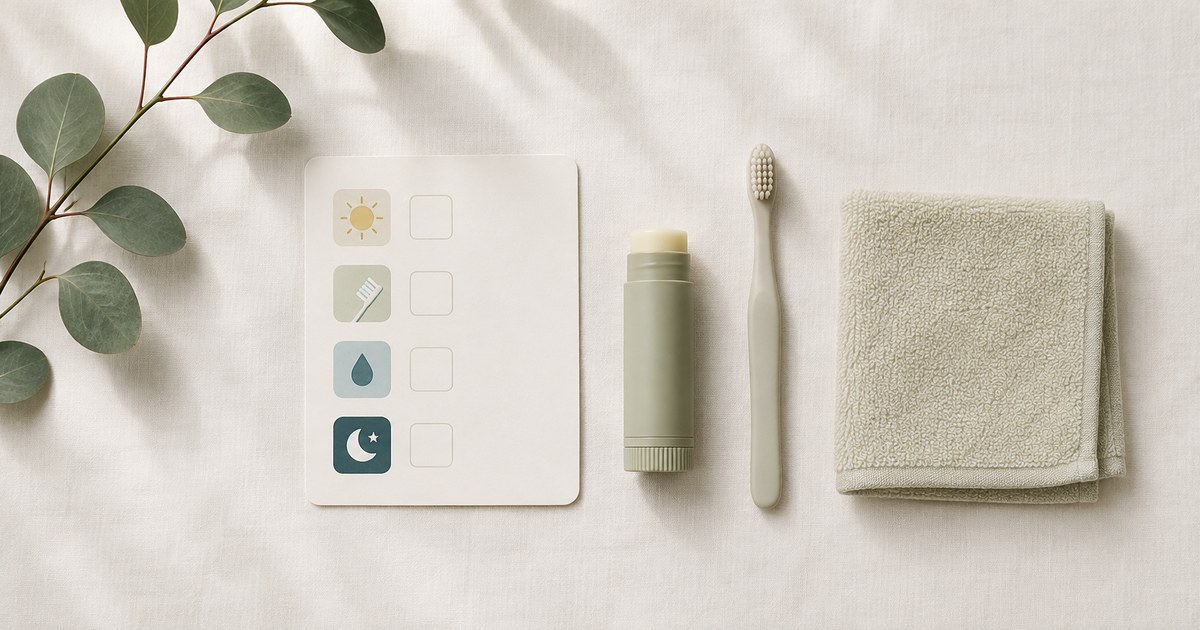
Two applications a day do most of the work: a slightly thicker layer at bedtime and a thin one before heading out into the cold in the morning. Those are the two times the skin faces the longest stretch without attention.
At bedtime, wash the face with plain lukewarm water, pat it dry with a soft towel, and apply a thin, even layer of balm over the whole ring, extending a little past its outer edge. The night is when drool and thumb-sucking keep the skin wet for hours, and a water-free balm sits between the skin and that moisture.
In the morning, after breakfast and brushing, wipe the area clean, pat it dry, and add a thinner layer before coats go on. The morning walk or wait at the bus stop is when cold wind hits skin that has just been wetted by breakfast, and a balm layer takes the edge off.
A layer thin enough that it barely shines is plenty. A thick, greasy layer is more likely to end up on a pillow or a coat collar, and more likely to bother a child enough that they wipe it straight off.
Daytime reapplication after lunch helps if your child’s school allows it, which is where a balm of their own comes in.
Children use a balm far more often when it belongs to them. A tube with their name on it, kept in a coat pocket or backpack, turns reapplying into something they do rather than something done to them.
Lip balm tubes work well for the skin around the mouth because they are small, easy to hold, and simple to run in a circle around the lips. Show your child how to go slowly around the whole ring rather than just across the lips, and let them practice in a mirror a few times.
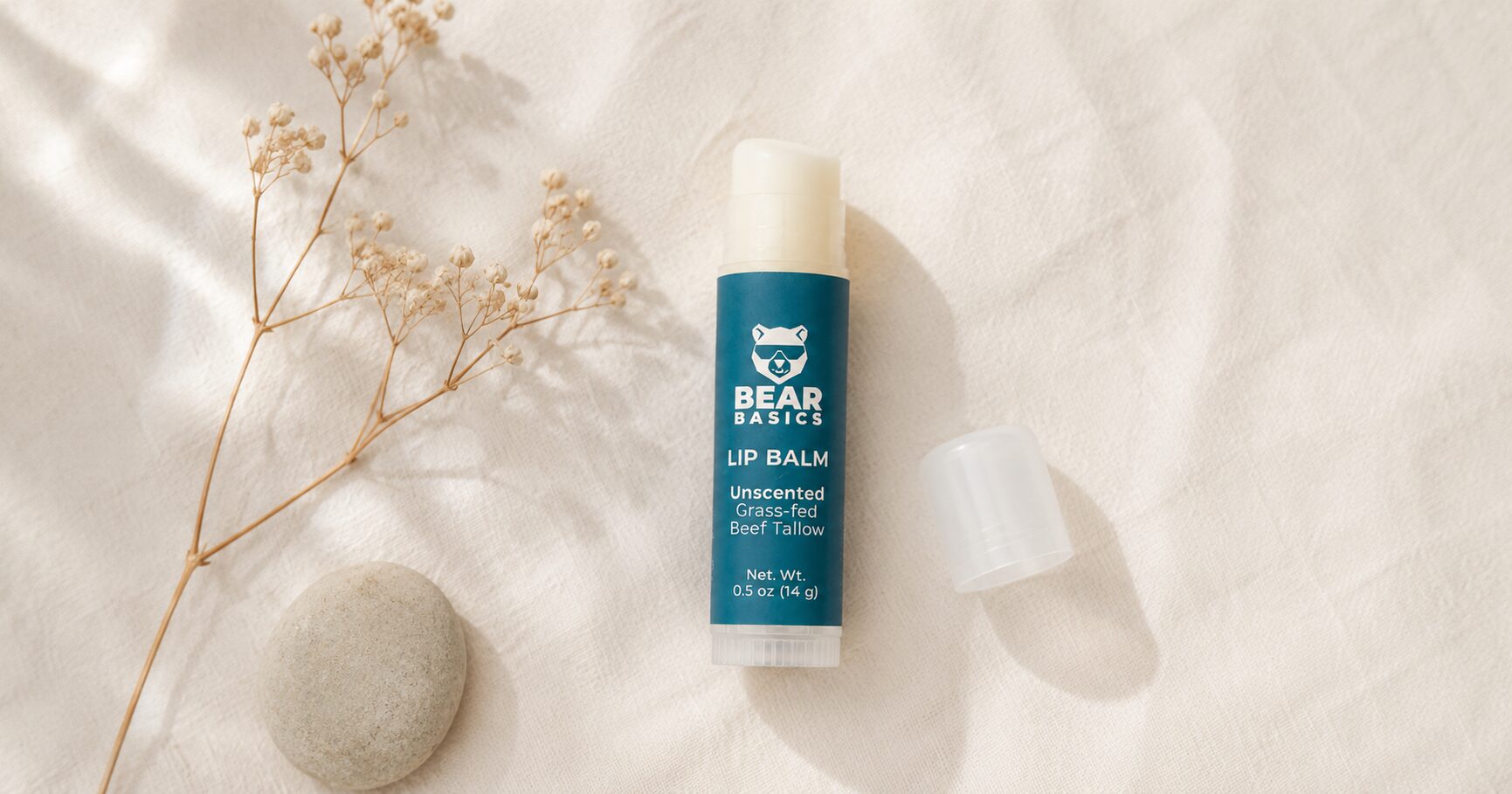
Our lip balms come in a beef tallow four-pack and a coconut oil four-pack, which makes it easy to keep one in each coat, one in the backpack, and one at the bedside. Neither has any flavor or added scent. Coconut used to be grouped with tree nuts on allergen lists and no longer is, and if anyone in the house has a known coconut allergy, choose the tallow version; the background is here.
For toddlers, keep the tube with you rather than with them, since very young children are more likely to chew on it than apply it. By preschool, most children can manage their own with a little guidance, and by school age most are happy to take it over completely.
A gentle wipe and pat dry after every meal and snack removes food residue and saliva before they sit on the skin for hours. It takes ten seconds and makes a noticeable difference within days.
Use a soft cloth dampened with plain lukewarm water. Press and lift rather than scrubbing, since rubbing already-rough skin with a napkin makes it rougher. Then pat the area dry with a second dry cloth, because leaving it damp starts the wet-and-dry cycle all over again.
After acidic foods like oranges, tomato sauce, or juice, this step matters most. A thin pass of balm after the wipe-down at home is a good habit through the worst weeks, since the skin around the mouth has just been wet for the length of a meal.
For babies and toddlers who drool, keeping a soft cloth in each room makes it easier to pat the chin dry throughout the day. Our toddler skincare basics mention drool around the mouth briefly; the point here is simply that patting dry often, rather than wiping hard occasionally, is what keeps the skin from staying wet.
Avoid scented baby wipes on this area if you can. Plain water and a cloth do the job, and they add nothing to skin that is already irritated.
Whatever sits against your child’s chin on the way to school gets damp from breath and then rubs, so the fabric choice matters more than most parents expect. A scratchy, wet wool scarf can keep the lower half of the ring going even when everything else is improving.
Smooth fabrics are kinder to irritated skin. A scarf or gaiter with a soft fleece or cotton lining on the inside sits more gently than coarse wool. If your child loves a particular wool scarf, wrapping it so a cotton layer or a turtleneck sits between the wool and the chin works too.
Dampness is the other half. A scarf that gets wet from breath, snow, or drool should be swapped for a dry one when possible, rather than left on. Keeping a spare in the backpack or the car is an easy fix, and hanging scarves to dry fully overnight means the morning starts with a dry one.
Applying the morning barrier layer before the scarf goes on helps as well. The balm sits between the skin and the fabric, so there is less friction and less moisture reaching the skin directly. In dry, cold places, the effect is especially noticeable, and our post on high-altitude winter dry skin explains why mountain winters are so hard on faces in general.
The routine stays the same at every age, and what changes is who does it and which habit is driving the ring. Here is how it usually shifts.
| Age | Usual main cause | Who applies the balm | Best extra step |
|---|---|---|---|
| Babies | Drool and pacifiers | You | Pat chin dry often |
| Toddlers | Drool, thumbs, food | You, with help | Wipe after every snack |
| Preschool | Licking, food residue | Child, with reminders | Their own named tube |
| School age | Licking, cold walks, scarves | Child | Morning layer before the scarf |
For babies, keep it very simple. Plain water, a soft cloth, and a thin layer of balm on the dry skin is plenty, and our guide to sensitive skin is a good reference if your baby reacts easily to new products. For pacifier users, wipe the pacifier shield and the skin behind it dry a few times a day.
School-age kids are often embarrassed by the ring, which works in your favor. Most are glad to take charge of the routine once they see it working.
Preschoolers sit in the middle and often need the most patience. They are old enough to lick constantly and young enough to forget the balm exists, so pairing it with something they already do, like putting on boots or climbing into the car seat, gives the habit a reliable cue.
Most rings start to fade within a few days of a consistent barrier layer and are much less noticeable within one to two weeks. The redness usually fades from the outer edge inward, and the roughness goes before the color does.
Expect a relapse or two. A cold, windy week, a stretch of thumb-sucking, or a new scarf can bring the ring back, and the answer is the same routine again. Many families simply keep the bedtime layer going through the coldest months as a habit, which keeps the ring from returning at all.
It helps to watch for patterns. If the ring flares every time a certain snack, toothpaste, or scarf appears, that is useful information and an easy change.
If the ring keeps spreading, starts crusting or weeping, or is not improving after a couple of weeks of this routine, have your child’s doctor take a look.
For everything short of that, the combination of less wetness, more cover, and a little patience is usually all it takes. A photo on day one and another a week later is an easy way to see progress that is hard to judge when you look at the same face every morning.
The red ring around a child’s mouth in winter comes from skin that is wet and dried over and over, and it fades when the skin is kept drier, covered, and left alone by the tongue.
Put a thin barrier layer over the whole ring at bedtime and before school, wipe and pat dry after meals, choose a soft scarf and swap it when it gets damp, and give your child a balm of their own with no flavor to tempt them. Skip the nagging, since the licking tends to fade once the skin stops feeling tight.
It is one of the most common winter sights at any school drop-off, and it is rarely more than a habit and some cold air. A few minutes a day, and a lot less reminding, is usually enough to see it gone.
Keep a spare tube in the car and another by the bed, and the routine mostly runs itself. By the second winter, many kids reach for their balm before anyone has to mention it.
Megan co-founded Bear Basics and leads design. As a mom, she writes our gentlest, most practical guides — on ingredients, sourcing, and simple family skincare — with an emphasis on honest, well-sourced, and simple. Read the full story →