Main cause?
Friction plus wet-dry cycles.

Seven habits for cold and allergy season, and the first three do most of the work. Softer tissues, a gentler technique, and a thin balm layer started before the skin gives out.

A raw nose from blowing comes from friction plus constant wetting and drying. What helps most is soft unscented tissues, pressing instead of wiping, and a thin layer of plain balm applied from the first day of sniffles. Reapply a little through the day, use a heavier layer at night, protect kids who wipe on sleeves with morning balm and soft cuffs, and keep menthol, eucalyptus, camphor, fragrance, and alcohol off raw skin.
A raw nose from constant blowing comes from friction and repeated wetting and drying, so what helps most is softer tissues, dabbing instead of wiping, and a thin layer of plain balm applied before the skin breaks down rather than after. Those three habits make the difference between a few pink days and a week of flaky, stinging skin under every nostril.
Every cold season in our house starts the same way. Someone gets the sniffles, the tissue box moves to the kitchen table, and within two days there is a red ring around a small nose and an upper lip that stings when they eat orange slices. Allergy season brings the same thing in spring, only it lasts longer.
This is a playbook for that situation: what to buy, how to blow, when and how to put something protective on the skin, what to do for kids who refuse tissues, and which popular products to keep away from skin that is already raw. It is about keeping skin comfortable while the cold or the pollen runs its course, and it assumes the cold itself is being handled however your family normally handles one.
Seven habits cover nearly everything, and the first three prevent most of the damage on their own. Each one is expanded in its own section below, so use this as the checklist to keep next to the tissue box.
Unscented, lotion-free or plainly lotioned, never paper towel or rough toilet paper for a nose that is already sore.
Blot moisture away with light pressure instead of dragging the tissue across the skin from side to side.
A thin protective layer on day one does far more than a thick one on day four, once the skin has already cracked.
A quick touch after every few blows keeps the film in place where tissues keep rubbing it away.
Eight hours without tissues is the best stretch the skin gets, so use it well.
Kids will wipe on whatever is closest, so make the closest thing soft and keep their skin covered.
Menthol, eucalyptus, camphor, fragrance, and alcohol all sting raw skin and do nothing to protect it.
If you only change one thing, make it number three. Almost every raw nose I have dealt with got bad because nobody put anything on it until it already hurt.
The skin around the nostrils and upper lip is thin, constantly moving, and during a cold it is wiped dozens of times a day while being repeatedly soaked and dried, which is a combination very few patches of skin could tolerate. Understanding that makes the fixes obvious.
Every blow brings two kinds of stress. The tissue itself creates friction, which gradually wears down the outermost layer of skin. And each time the area gets wet from a runny nose and then dries in room air, it loses a little more of the oils that keep it flexible. Repeat that cycle forty times in a day and the surface becomes rough, red, and flaky, then tight, and then it starts to split at the creases beside the nostrils.
Cold weather adds to it. Indoor heating and winter air pull moisture from skin everywhere, so a nose that might cope in July struggles in January. If you live somewhere high or very dry, as we do, our guide to high-altitude winter dry skin covers the room-air side of the problem, including whether a humidifier is worth it.
Every useful step in this playbook does one of two things: it reduces friction or it reduces the wet-dry cycling. Anything that does neither, however pleasant it smells, is not helping the skin.
The best tissue for a sore nose is the softest one you can find with no fragrance, and the worst options are paper towels, napkins, and rough toilet paper. Tissue choice is the cheapest change with the biggest effect.
Plain, soft, multi-ply facial tissues are the baseline. Tissues sold with lotion or balm on them can be genuinely gentler, because they leave a little protective film behind with each use. The catch is that some carry added fragrance or menthol, so read the box rather than assuming. If a lotion tissue lists fragrance, eucalyptus, or menthol, skip it for a raw nose.
| Option | On a sore nose | Notes |
|---|---|---|
| Soft plain facial tissue | Good | The reliable default |
| Unscented lotion tissue | Good | Check the box for fragrance or menthol |
| Scented or menthol tissue | Avoid | Stings broken skin |
| Soft cotton handkerchief | Good | Use a fresh one each time; hot wash after |
| Toilet paper or napkins | Avoid | Rough and leaves lint in sore creases |
| Paper towel | Avoid | The roughest option in the house |
Cloth handkerchiefs are worth a mention because they are very soft once washed a few times. The trade-off is hygiene: a used one should not go back in a pocket, so keep a small stack and wash them hot. Keep a tissue box in every room someone is sick in, too, because the person will grab whatever is nearest.
Blow gently one nostril at a time, then press the tissue against the skin to absorb moisture instead of dragging it across, and use a fresh section each time. Technique matters as much as tissue quality.
Wiping side to side under the nose is the habit that does the most harm. It drags paper across the same patch of skin repeatedly, and it moves from the wet center outward, spreading moisture onto skin that was dry. Pressing and lifting, a dab rather than a wipe, does the same job with a fraction of the friction.
Blowing gently helps too. Forceful blowing is not more effective and often leads to more wiping afterward. Blow softly through one nostril while holding the other closed, then the other side. For a constant drip rather than a full blow, simply hold the tissue under the nose and let it absorb.
When you wash your face during a cold, pat the area dry with a soft towel rather than rubbing. Small changes repeated forty times a day add up quickly.
The most useful moment to protect the skin under your nose is the first day of sniffles, before any redness appears, because a protective layer prevents damage far better than it covers it. By the time skin is cracked, every option stings a little.
Most of us wait. We reach for something only once the skin is sore, and by then the outer layer is already worn and split. Applying a thin balm at the very start means the tissue rubs against the balm instead of the skin, and the wet-dry cycles have a barrier to get through. It is the same reasoning behind putting something on chapped hands before a long day of dishes.
My own rule is simple. The day someone in the house says they have a runny nose, a lip balm goes next to the tissue box and a small tin of body balm goes on the nightstand. That is the whole preparation, and it has shortened our raw-nose weeks more than any special product.
Lotions are mostly water, so they add one more wet-dry cycle to skin that is already getting too many. A water-free balm made of fats and waxes stays put and gives tissues something to slide over.
If you are wondering how this fits with the advice you have heard about lip balm making lips worse, the short version is that plain fat and wax balms behave differently from ones full of fragrance and flavor, and our post on why some lip balms make lips worse explains the difference.
Use a small amount, warmed on a fingertip, and press a thin layer around the outer edge of each nostril, into the creases beside the nose, and across the upper lip. Thin and often works better than thick and occasional.
A rice-grain amount is enough for the whole area. Warm it between a clean fingertip and thumb for a few seconds so it softens, then press and pat it onto the skin rather than rubbing, which would add friction to sore skin. Cover the rim of the nostril and the crease where the nostril meets the cheek, since that crease is usually the first place to split. Keep it to the outside of the nose.
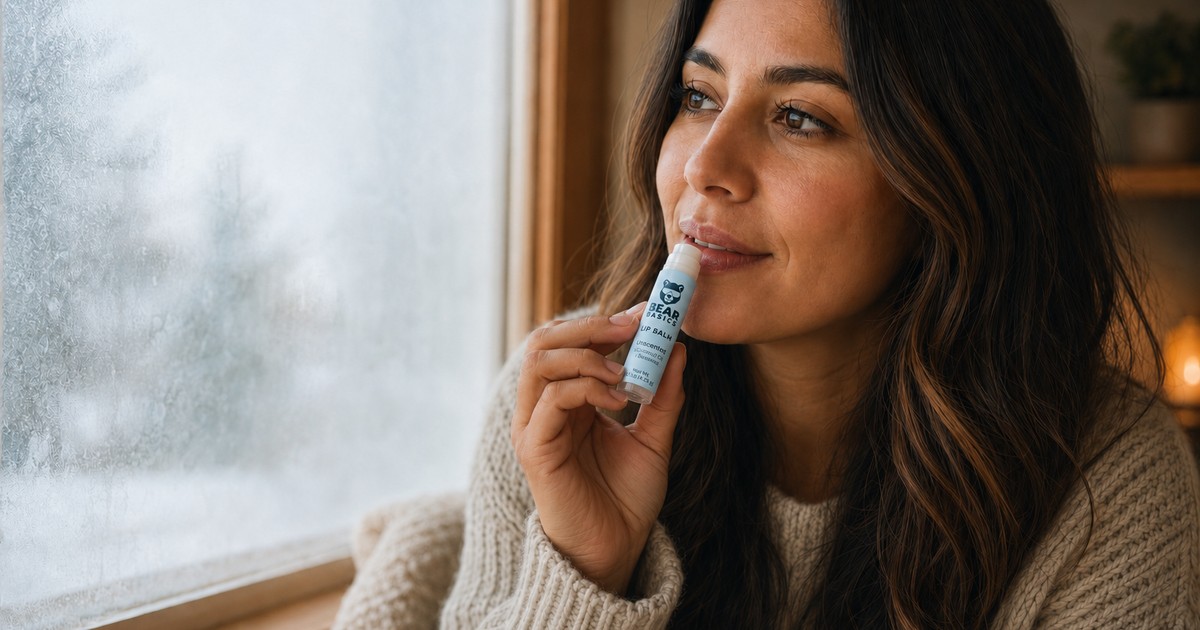
For quick touch-ups during the day, a lip balm stick is the most practical tool, because it goes on cleanly without fingers and fits in a pocket. Our tallow lip balm and the coconut oil version are unscented and unflavored, so there is nothing in them to sting. A quick pass along the upper lip and under each nostril after every few blows keeps the layer in place.
For the evening layer, a body balm gives more coverage. The tallow body balm is the richer of our two, and the coconut oil body balm is lighter. Both are four ingredients, unscented, and water-free. They contain beeswax, so they are not vegan, which we would rather tell you plainly. If anyone in your house has a known coconut allergy, choose the tallow versions; coconut used to be grouped with tree nuts and no longer is, as we explain in our post on coconut and tree nuts. Our guide to using a tallow balm covers amounts for face and body.
Night is the best recovery window a raw nose gets, because for several hours nothing is wiping it, so a slightly heavier layer of balm at bedtime makes a noticeable difference by morning. It is the one time thicker is better.
Before bed, wash the face gently with lukewarm water, pat dry, and apply a more generous layer of balm than you would use during the day, covering the nostril rims, the creases, and the upper lip. This is a small, targeted version of what some people call slugging, and our post on slugging with a natural balm explains the idea for the whole face.
Keep tissues and a lip balm within reach of the bed. Colds tend to wake people up with a drip, and a half-asleep wipe with whatever is closest, often a sheet corner or a sleeve, undoes the layer quickly. A box on the nightstand means the night wipe is a gentle press with a soft tissue and a quick touch of balm afterward.
A soft cotton pillowcase that gets changed every couple of days during a cold is easier on a sore face than a rough or synthetic one, and it keeps balm residue from building up on the fabric.
Mouth breathing during a blocked-nose night dries the lips and the skin just above them. A layer of balm across the lips as well as under the nose covers both.
Young children almost always wipe their noses on sleeves, hands, or the nearest blanket, so the realistic goal is to make those surfaces gentler and to protect the skin in advance rather than to change the habit overnight. You will not win every wipe, and that is fine.
Dress them in soft cotton long sleeves during a cold rather than anything with a rough or synthetic cuff, since the cuff is going to become the tissue. Put a balm on the upper lip and nostril rims in the morning before school or daycare, so the sleeve rubs against balm rather than bare skin. A small packet of soft tissues in a coat pocket helps older kids, and teachers are often happy to keep a box nearby if you ask.
For toddlers who resist tissues, try handing them the tissue and letting them do it themselves, or make the press-and-lift a small game, a quick dab on each side. Children are far more cooperative with a routine they control. Our toddler skincare basics covers the rest of the simple routine for that age.
Vapor rubs containing camphor, menthol, or eucalyptus should never go on or near a small child’s nostrils or on broken skin. Their strong vapors can bother young airways, and they sting raw skin at any age. A plain, unscented balm is the right choice for a child’s nose.
Wash hands and sleeves often during the cold, both for comfort and to cut down on what gets spread around the house.
Anything with menthol, eucalyptus, camphor, peppermint, fragrance, or alcohol will sting skin that is already raw, and none of them protect it. Several of these are sold specifically for colds, which is exactly why they end up on sore noses.
Vapor rubs and cooling balms work by creating a cold or tingling sensation, and on intact chest skin that may feel pleasant. On a cracked nostril it burns. Scented tissues and fragranced lotions add ingredients that broken skin is more likely to react to; we explain why we avoid scent altogether in our post on fragrance-free versus unscented. Essential oils fall in the same group, since many of them are common sources of irritation on sensitive skin.
Resist picking at flakes and dry crusts, however tempting. Pulling them off takes fresh skin with them, and the area restarts. A layer of balm softens flakes so they come away on their own within a day or two.
Allergy season follows the same playbook as a cold, but it can last weeks or months instead of days, so the routine needs to become a habit rather than a short emergency measure. Consistency matters more than intensity.
With a cold, you can get away with a rough few days because the end is in sight. With seasonal allergies, the runny nose may last the whole spring or fall, and skin under the nose never gets a break. That is when the morning and bedtime balm layers really pay off, along with keeping a lip balm in every bag and coat.
Pollen itself sits on skin and in the creases around the nose after time outdoors, so a gentle rinse of the face with lukewarm water after coming inside, followed by a pat dry and a thin layer of balm, is a sensible habit during heavy pollen days. Keep it gentle: washing the face many times a day with soap creates its own dryness.
Think of the balm like brushing teeth during allergy season: once in the morning, once at night, and touch-ups when needed. A routine you do without thinking beats a heroic effort after the skin has already cracked.
Lips often suffer alongside the nose in long allergy seasons, especially for mouth breathers. If the lips need more than a touch of balm, our chapped lips guide covers the rest.
Almost every raw nose from blowing settles within a few days of the cold or allergy flare easing, provided the friction stops and the skin is protected. Most families never need more than this playbook.
It helps to know what normal looks like. Redness, flaking, a tight feeling, and small splits in the creases beside the nostrils are all ordinary for a raw nose. Some stinging when you eat salty or acidic food is ordinary too. These usually fade over three to five days once tissue use drops, and faster with a balm in place.
A crack that will not close after the cold is over, honey-colored crusting, spreading redness, swelling, increasing pain, or fever returning are signs of infection or something else that needs a doctor to look at it. That is the one point where a change of routine is not the right answer.
Short of that, give the skin time and protection. Keep the tissues soft, keep the dabbing gentle, keep a thin layer of balm on through the day and a heavier one at night, and the skin will usually look like itself again within a week.
A raw nose from blowing comes from friction and repeated wetting and drying, and the fix is soft unscented tissues, gentle dabbing, and a thin layer of plain balm started on the first day of sniffles. Prevention is far easier than catching up.
Reapply a little balm through the day, use a heavier layer at night, dress sleeve-wiping kids in soft cotton, and keep menthol, eucalyptus, camphor, fragrance, and alcohol away from raw skin. Allergy season calls for the same steps done every day until the pollen passes.
Keep a lip balm next to the tissue box and a tin of balm on the nightstand from the first sniffle. It is the simplest preparation there is, and it turns a week of sore skin into a few mildly pink days.
Megan co-founded Bear Basics and leads design. As a mom, she writes our gentlest, most practical guides — on ingredients, sourcing, and simple family skincare — with an emphasis on honest, well-sourced, and simple. Read the full story →