Is it regulated?
No — no legal definition exists.

There is no legal definition of clean beauty, and the closest thing to one is a set of retailer lists that disagree with each other. Where the word came from, how the programs work, and how to judge a badge.

“Clean beauty” is an unregulated marketing term. No law defines it, no government body audits it, and any brand can print it on any product. The nearest thing to a definition is retailer clean programs, which publish exclusion lists, usually verify compliance through brand paperwork, and disagree with each other about preservatives, fragrance and scope. A badge is worth what its standard is worth, so check who wrote it, whether the list is published, how it is checked, and whether it covers what you actually care about.
“Clean beauty” is a marketing term with no legal definition and no agreed meaning, which means any brand can put it on any product and nobody can tell them not to. It is not a certification, no government body audits it, and two companies using the phrase rarely mean exactly the same thing by it.
The closest thing the word has to a definition comes from retailers, several of which run their own clean programs with published lists of excluded ingredients. Those programs are a real improvement on the bare word, but they disagree with each other, they mostly rely on paperwork supplied by the brands, and they describe what a product leaves out rather than what it contains.
This post covers the parts of the story that rarely get told in one place: where the phrase came from, how it spread, why the law leaves it undefined, what shoppers actually mean when they use it, how retailer programs work and differ, and how to judge a clean badge when you see one. We would qualify under every version of the term, and we still do not use it, for reasons that come at the end.
The word grew out of a real frustration: shoppers began reading ingredient panels, found them unreadable, and wanted a shorthand for products made by people who had thought about it. The phrase did not arrive all at once, and it borrowed from several older movements.
The natural-products movement of the 1970s and 1980s set the first layer, built around health-food shops, simple soaps, and the idea that fewer additives was better. Through the 2000s, ingredient awareness grew sharply as parenting forums, early wellness blogs, and online ingredient databases made it easy to look up any name on a label, and a handful of ingredient families became widely discussed worries.
By the early 2010s, “clean” had become fashionable in food, through the clean-eating trend, and the word carried over to skincare with its meaning already loaded. It suggested purity, restraint, and a kind of virtue, without committing to any particular rule. Small independent brands and boutiques adopted it first, as a way to signal that their formulas left out the ingredients being argued about online.
None of that is sinister. A shopper asking for simpler products is asking a reasonable question, and a company answering it is doing something normal. The structural problem is that the phrase was created by the market to describe the market, so it never had an outside referee, and nobody was ever in a position to say what it should or should not cover.
It signals an intention rather than describing a formula. The intention may well be real, but it is not something you can verify from the front of a package, which is where it is printed.
Once large retailers built shelf programs around the word, it stopped being a niche signal and became a category, and categories attract everyone. The spread followed a predictable pattern.
First came the dedicated shelves. Big beauty retailers created clean sections and badges in the second half of the 2010s, which gave the word a physical home and a visual stamp. Brands that wanted that shelf space reformulated or relabelled to qualify, and brands that did not qualify started using the word anyway on their own packaging, because nothing stopped them.
Then came social media, where the word worked well as a hashtag and a search term. Content creators built audiences around clean swaps, and every swap video reinforced the idea that there was a clean version and a dirty version of every product. Private-label ranges from supermarkets and pharmacies followed, and the word travelled into household cleaners, laundry detergent, candles, baby wipes and even supplements.
At each step the word got broader and thinner. A term that started as shorthand for a few specific exclusions ended up covering everything from a carefully formulated four-ingredient balm to a thirty-ingredient serum with a botanical on the front. It also picked up companions, such as natural, pure, gentle and green, which share the same lack of definition and which we untangle in what natural really means.
The result is a word that most shoppers recognize and almost none could define, which is exactly the condition that makes a marketing term valuable and an information term useless.
Cosmetics law in the United States regulates what is on a label and whether a product is adulterated or misbranded, but it does not define most of the marketing words printed on the front. “Clean” sits in the same undefined space as “natural,” “gentle,” and “pure.”
The rules that do apply are real. A cosmetic must list its ingredients in a set order, it cannot contain substances that make it harmful under normal use, and its labeling cannot be false or misleading. A 2022 update to US cosmetics law added facility registration, product listing, adverse-event reporting and a duty to have evidence that products are safe. None of it created a definition of clean, and no agency has proposed one.
The reason is partly practical. To define clean, someone would have to decide which ingredients are unclean, at what concentrations, and on what evidence, and the arguments about many of those ingredients are exactly the arguments the word was invented to sidestep. A legal definition would also have to survive challenge from every company whose products fell on the wrong side of it.
General rules against deceptive advertising still apply, and class-action lawsuits in recent years have challenged clean claims on products that turned out to contain ingredients the buyers assumed were excluded. Those cases have had mixed results, largely because a vague word is hard to prove false. That is the core difficulty in one sentence: the less a word means, the harder it is to show it was used wrongly.
A defined word, like an ingredient name on the back panel, has a meaning someone can check. A marketing word, like clean, describes how a company wants you to feel about a product, and there is nothing on the label it has to match.
Ask ten people what clean beauty means and you will get several overlapping answers, most of them coherent on their own. The word is vague because it is carrying different requests for different people.
Many shoppers mean a shorter, more readable list, made of things they can look up in a minute.
People with reactive skin, and parents, often mean nothing added for fragrance, because scent is a common source of reactions and an undisclosed one.
Some mean the absence of a particular set of preservatives, surfactants or plasticizers they have read about, usually the ones that appear on retailer exclusion lists.
Others mean packaging, sourcing, or manufacturing practices, which are separate questions from what goes on skin.
Pregnancy and new parenthood are when many people first start reading labels, and for them the word often means “something I feel comfortable using right now,” a question we take up in skincare during pregnancy.
Each of those is a reasonable thing to want, and each can be checked against a label or a company’s published practices. The trouble is that one word is being asked to carry all five, so a product can be clean in the sense one shopper means and not at all in the sense another means. Knowing which of the five you mean yourself is the most useful step, because it turns a vague word into a specific question.
There is no clean beauty standard, no governing body, and no penalty for using the term loosely. Three common assumptions about the word are worth naming, because none of them is reliably true.
It does not mean a defined ingredient list. Two products on the same shelf, both labelled clean, can disagree about dozens of ingredients. One brand excludes a preservative another considers essential, and both keep the word.
It does not mean third-party tested. Some brands test their finished products, publish results, and will send a certificate of analysis if you ask. That is a real practice, and it is a separate one from calling yourself clean.
It does not mean short. A twenty-eight-ingredient serum can carry the word as easily as a four-ingredient balm. Why a short list matters, and the narrower reason it actually helps, is laid out in the short-list philosophy.
Somebody decided the word would help the product sell. That is the only claim the phrase makes that you can count on being true.
A retailer clean program is a store policy: a published list of ingredients a product must be formulated without, plus a badge for products that meet it. It is the closest thing the word has to a working definition, and it is worth understanding how one actually runs.
The core document is an exclusion list. Some retailers name a dozen or so ingredient families, while others list individual substances running into the thousands. A product qualifies when none of the listed ingredients appear in its formula, and it then gets a badge on the shelf, on the product page, or both.
Verification is usually based on documents rather than testing. In most programs the brand submits its full formula or an attestation that the product meets the standard, sometimes backed by statements from ingredient suppliers. The retailer reviews the paperwork against its list. Some programs review products again when the list changes or a formula is updated, and a few say they carry out spot checks. Routine independent lab testing of finished products is uncommon.
This structure has real strengths. The criteria are published, the same rule applies to every brand on that shelf, and small brands get a defined bar to clear rather than a vague impression to create. A list you can read is far better than a word you cannot check.
It also has built-in limits. An exclusion list says what is absent and nothing about what is present, how much of anything is used, or whether the product is any good. A formula can clear every exclusion and still be mediocre, and a formula can fail one exclusion and be excellent.
Retailer clean programs disagree with each other in ways that matter, so the same product can be clean in one store and not in the next. The differences fall into a few predictable areas.
| Where they differ | A narrower program | A broader program |
|---|---|---|
| Length of the list | A dozen or so ingredient families | Hundreds or thousands of named substances |
| Amounts | Bans an ingredient at any level | Allows trace amounts or sets limits |
| Fragrance | Allows it if no listed parts are used | Requires disclosure or bans undisclosed blends |
| Scope | Ingredients only | Also packaging, sourcing, animal testing |
| Verification | Brand attestation | Attestation plus documents or spot checks |
Preservatives are where programs split most often. Nearly all of them exclude a few well-known preservative families, but they disagree about others, so a widely used preservative can be allowed by one retailer and excluded by the next. Fragrance is the second big split: some programs accept a fragrance blend as long as it contains none of their listed components, which means a clean-badged product can still be heavily scented. How to tell what a scent claim on the front actually means is covered in fragrance-free vs unscented.
Programs also differ in how often they update and what happens to older products when they do. Some re-review every product against a new list, while others apply changes only to new submissions. And some badge individual products while others badge whole brands, which matters when a brand sells one strict line and several looser ones.
None of this makes the programs worthless. It means a badge tells you that a product met one specific retailer’s rule at one point in time, and nothing more general than that.
A clean badge is worth exactly as much as the standard behind it, and a few questions will tell you how much that is. You can usually answer them in five minutes on the retailer’s or brand’s website.
A retailer, an independent organization, or the brand itself. A badge a company awards to its own products is a design element rather than a standard.
A real program lets you read every excluded ingredient. A summary of a few headline exclusions with “and more” at the end is much weaker.
Look for whether the program relies on brand attestation alone, asks for documents, or does any testing. Most say so somewhere.
Some ingredients matter at one level and not at another. A list that only says yes or no cannot capture that.
A standard that has not changed in years may be enforcing an old argument, and one that changes constantly may be chasing headlines.
If your concern is fragrance, check how the program handles it. If your concern is packaging, check whether the program covers packaging at all.
Independent certifications for specific claims, such as how ingredients were farmed, follow a similar logic, and how to tell the meaningful ones from decorative seals is covered in how to spot greenwashing. Whatever the badge says, the ingredient list on the back is still the document that has to be accurate, and the basics of reading one are in how to read a skincare ingredient label.
Reformulating a product to fit a clean list does not always make it better, and sometimes it makes it worse. This is the least discussed side effect of the whole movement.
The most common problem is substitution. When a well-studied ingredient lands on an exclusion list, a brand has to replace it with something, and the replacement is often newer, less studied, or less effective at the same job. Preservatives are the clearest case: swapping a familiar preservative for a weaker system can shorten shelf life or leave a water-based product more vulnerable to contamination once it has been opened, which is why creams need preservatives in the first place.
Fragrance offers a second example. A brand that drops a synthetic fragrance blend to satisfy a clean list sometimes replaces it with essential oils, which are also fragrance compounds and include several well-known contact allergens. The label looks more natural and the product is no gentler for a person who reacts to scent.
There is also churn. Exclusion lists grow over time, and each addition can trigger another round of reformulation. A product you relied on for years can change quietly to keep its badge, and the only sign is a different ingredient list on the next bottle.
The honest lesson is that an exclusion is a decision with costs as well as benefits. A good formula leaves things out for a reason that applies to that product, rather than because a list somewhere says so, and it says what it uses instead.
There is a version of this post that is smug about the whole thing, and it is not worth writing. Plenty of good companies use “clean” because it is the phrase their customers already search for, and refusing to use a word your audience uses is a strange hill to pick.
The term does real work as a search term. Someone typing it into a search bar is usually asking a clear question: show me products with shorter lists, no added scent, and ingredients I can look up. That is a coherent request even though the word carrying it is vague, and a search engine or a shop filter that understands it is doing the shopper a favour.
It also works as a first filter in a shop with four thousand products. Narrowing to a few hundred with a retailer badge and then reading panels is a sensible way to shop, and the word is genuinely useful in that first step. The failure is treating it as the last step instead of the first, and stopping at the badge.
Finally, the word has pushed the industry in some useful directions. Ingredient lists are easier to find online than they were, more brands publish what they leave out and why, and more shoppers read the back of the box. Those are real gains, even if the word that drove them never acquired a meaning of its own.
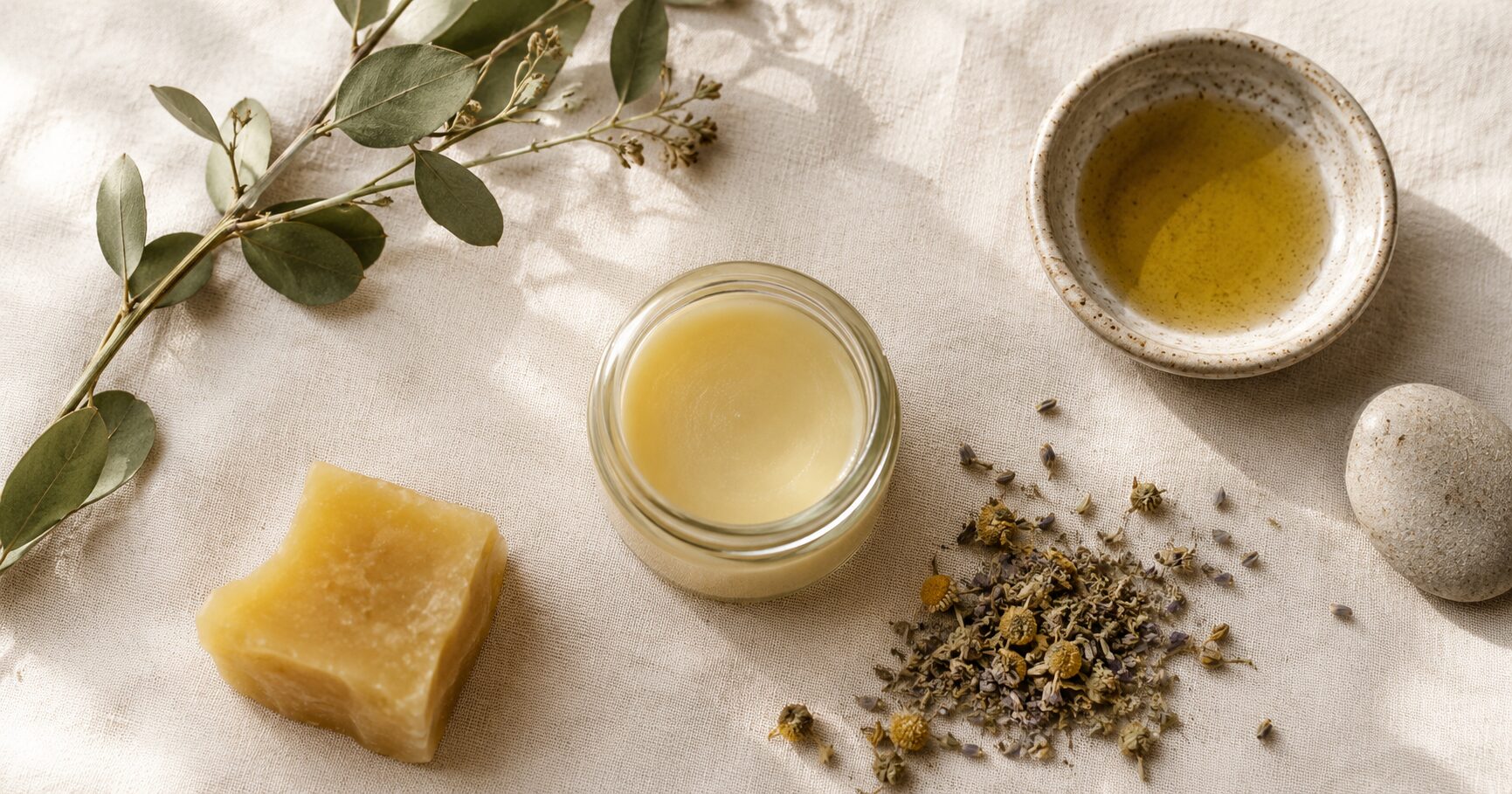
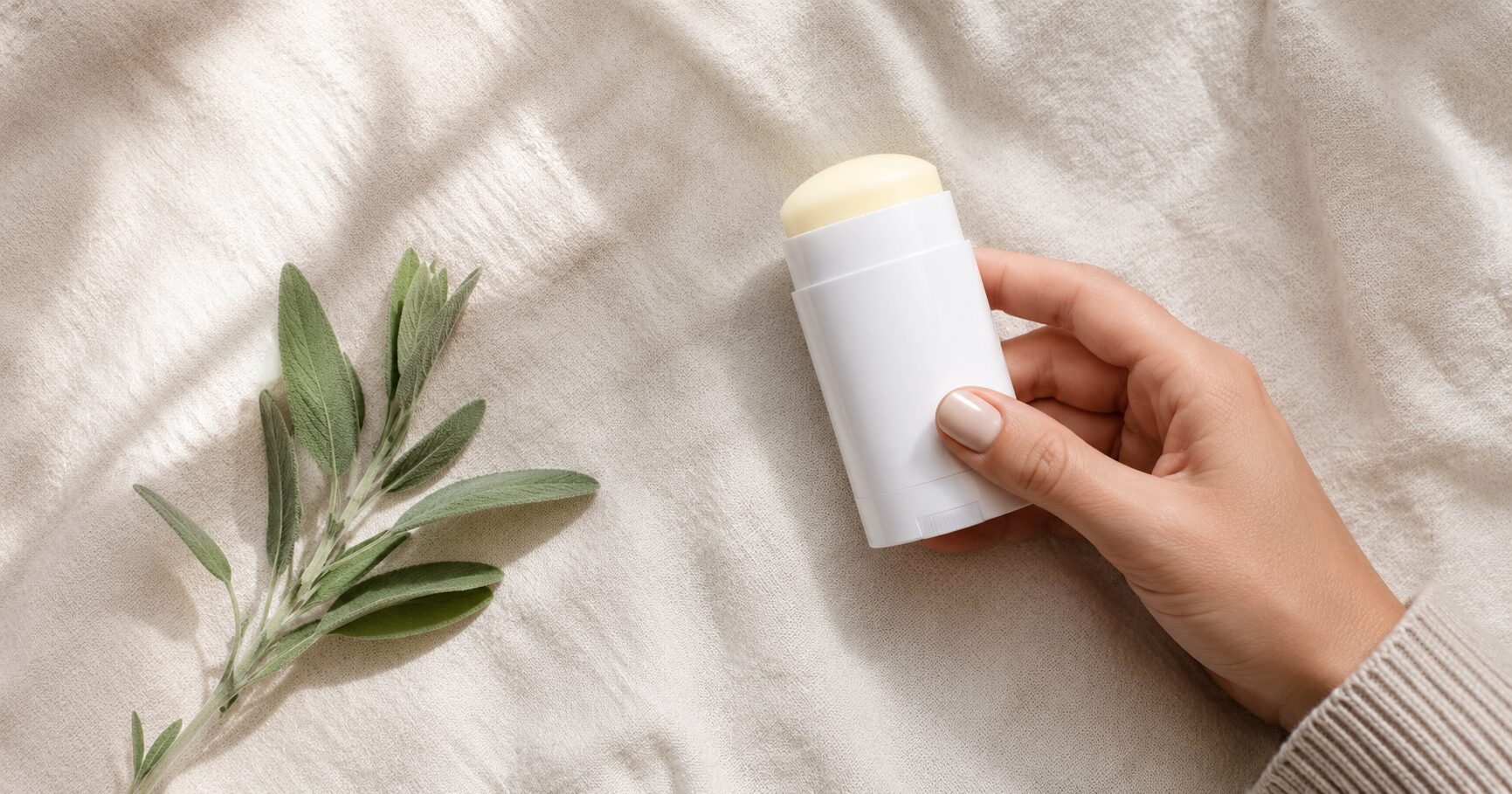
Our body balm has four ingredients and our deodorant has five, and by any reading of the term anyone has proposed, we would qualify as clean. We do not use the word because it would tell you nothing. Our rule is that every claim on the package has to be checkable against the panel.
Four ingredients in the body balm, five in the deodorant. A number can be checked, so you can count it and catch us if it is wrong.
Grass-fed beef tallow or coconut oil, and we say which. Coconut used to be grouped with tree nuts on US allergen lists and no longer is, as we explain in is coconut a tree nut, but anyone with a known coconut allergy should choose the tallow version.
Beeswax comes from bees, which makes these products unsuitable for anyone avoiding animal-derived ingredients. We chose it on purpose, because it does a structural job we have not found a better answer to.
Castor oil is a seed oil and it is in the deodorant, which we point out ourselves before anyone else does.
The deodorant controls odor and does not reduce how much you sweat, because it is a deodorant and not an antiperspirant. Saying that up front costs us some sales and saves a lot of disappointment.
None of that requires the word clean, and all of it survives a sceptical reader turning the box over.
“Clean beauty” is an unregulated marketing phrase that grew out of a reasonable request, spread through retail shelves and social media, and was never given a legal meaning. Anyone can use it on anything, including us, which is why it tells you so little.
Retailer programs give the word a working definition, and they are worth more than the bare phrase. They are also exclusion lists that disagree with each other, mostly rely on paperwork, and say nothing about what a product contains or how well it works. Judge a badge by who wrote the standard, whether the list is published, how it is checked, and whether it covers the thing you actually care about.
Most of all, decide which of the several meanings of clean you mean yourself, whether that is fewer ingredients, no added scent, particular exclusions, or something about the planet. Then check that specific thing on the back of the box. A specific question gets a useful answer, and a vague word rarely does.
Megan co-founded Bear Basics and leads design. As a mom, she writes our gentlest, most practical guides — on ingredients, sourcing, and simple family skincare — with an emphasis on honest, well-sourced, and simple. Read the full story →